
CLINICAL THINKING
The body is not a collection of symptoms.
It is a system trying to regulate.
Fasciapuncture® approaches pain, fatigue, tension, burnout, and chronic symptoms through the lens of fascial regulation, autonomic balance, compensation, and systemic adaptation. Clinical Thinking is not a collection of techniques. It is the process of understanding what the body is trying to accomplish before deciding how to intervene. Before treatment comes observation. Before observation comes understanding.
From symptom to regulation
WHY THIS SPACE EXISTS
Clinical Thinking is where the method becomes visible.
This page gathers Fasciapuncture® reflections on how the body speaks before it breaks, why symptoms are not always failures, and how protection, exhaustion, movement, rest, and recovery can be read as part of one living system.
These articles are not ordinary blog posts. They are a growing library of clinical principles, practitioner reflections, and rhythm-based thinking.
FEATURED FOUNDATIONAL ESSAYS
Start here
From Huangdi Neijing to Fascia-Oriented Clinical Judgment
How classical medical principles become clinically observable through fascia.
THE BODY SPEAKS FIRSTSymptoms as Warnings, Not Failures
A symptom is not a verdict. It is a request for adjustment.
COMPENSATION & COMFORTWhen “Correct” Becomes Compensation
Why comfort may reveal more than correctness.
CLINICAL MAPFrom Symptom to Pattern
Learn how conditions, patterns, and clinical cases connect.
CLINICAL RESPONSIBILITY
Presence, boundaries, and safety
When a Patient Cries
Expression is not always integration. Regulation remains the clinical goal.
CLINICAL ETHICSKnowing When Not to Enter
Clinical responsibility includes timing, restraint, and respect for the system.
FOUNDATIONAL PATTERNGlobal Protective State
When the body remains organized around vigilance, effort, and protection.
REGULATION PATTERNAutonomic Dysregulation
Where emotional intensity, breathing, sleep, and recovery become unstable.
MODERN LIFE & REGULATION
When recovery becomes difficult
When Rest Feels Unsafe
Burnout is not a failure to rest. It is a loss of the capacity to feel safe while resting.
RECOVERY & MODERN LIFEModern Life: Able to Move, Unable to Rest
Many people retain the ability to perform while losing the ability to recover.
RECOVERY PATTERNSystem Exhaustion
When output has continued for too long and recovery can no longer keep pace.
BREATHING PATTERNDiaphragm Restriction
When breath, pressure, and regulation can no longer descend freely.
THE RHYTHM SERIES
Clinical reflections on recovery, protection, adaptation, and human limits.
Kidney Essence and the Illusion of Infinite Energy
A reflection on depletion, time, recovery, and finite reserve.
Read →When Movement Is Not Yet Regulation
Movement becomes healing only when the system can receive it.
Read →When Calm Comes Before Technique
Precision begins with system availability, not with technique.
Read →ALL CLINICAL THINKING ARTICLES
Continue exploring the library
The Rhythm Series

When Movement Is Not Yet Regulation
Many people are told to move more, exercise more, or activate the system. But regulation does not begin with activity. It begins with safety, availability, and the body’s ability to receive movement as nourishment rather than threat.

Modern Life: Able to Move, Unable to Rest
Many people remain productive, active, and functional while gradually losing the ability to rest. A Fasciapuncture® clinical reflection on burnout, recovery, and regulatory rhythm.

Longevity Is a Rhythm, Not a Performance
Modern life often treats longevity as something to optimize. But the body does not last through performance alone. It lasts through rhythm, recovery, and the ability to adapt over time.

Symptoms as Warnings, Not Failures
Symptoms are rarely random events. They may be the body’s last intelligent attempt to communicate before compensation reaches its limits. A Fasciapuncture® perspective on warning signals, regulation, and recovery.

The Illusion of Infinite Energy
Many people believe energy can always be restored later. But the body does not operate on infinite reserves. A clinical reflection on depletion, recovery, Kidney Essence, and long-term vitality.

When Rest Feels Unsafe: The Nervous System Behind Burnout | Fasciapuncture®
Some people are not exhausted because they work too much. They are exhausted because their nervous system no longer knows how to rest. A clinical reflection on burnout, safety, and recovery.
Foundations & Clinical Reasoning
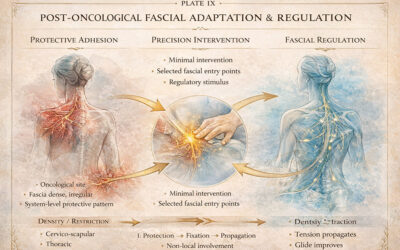
Post-Breast Cancer Pain and Fascial Regulation | Fasciapuncture® Case
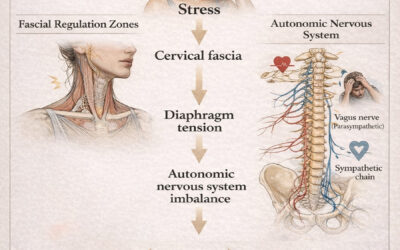
When Stress Becomes Pain – A Fascia-Based Clinical Insight

When Calm Comes Before Technique | Availability Before Precision in Fasciapuncture®
Many practitioners focus on what technique to apply. In Fasciapuncture®, the first question is different: Is the body available to receive change? This article explores why system availability often matters before intervention.

Learning to Stop – A Clinical Shift Toward Presence, Respect, and Trust
In clinical practice, progress does not always come from doing more. Sometimes the most important shift occurs when the practitioner learns to stop, listen, and trust the body’s own regulatory process.

When Heat Leaves the Body

When “Correct” Becomes Compensation — and Comfort Reveals What Is True
Sometimes what we call correctness is only a well-organized compensation. In Fasciapuncture®, comfort is not weakness. It may be the moment when the body no longer needs to hold itself together.

When a Patient Cries
Emotional expression may emerge during treatment, but crying alone is not a measure of healing. This reflection explores regulation, containment, and clinical responsibility when a patient’s system begins to open.

Smoking Is Not the Problem — It’s a Compensation
Smoking is rarely the real problem. In many cases, it functions as a temporary regulator of breathing, autonomic tension, and internal pressure. A clinical reflection on compensation and regulation.

Receptivity Before Intervention
In reproductive medicine, preparation is often discussed through hormones, protocols, and timing. Yet another question may come first: is the body ready to receive? A clinical reflection on receptivity, regulation, and embryo transfer preparation.

From Huangdi Neijing to Fascia-Oriented Clinical Judgment
Fasciapuncture® proposes that fascia is the living tissue where classical regulation becomes clinically observable. This essay explores how Huangdi Neijing can be understood through fascia-oriented clinical judgment.