
FASCIAPUNCTURE® CONDITION MAP
Arm Numbness
A clinical pillar exploring how arm numbness, forearm tension, elbow pain, wrist pressure, and hand tingling may reflect cervical tension, upper exit restriction, scapular lock, thoracic limitation, and neuro-fascial irritation.
CORE READING
The numb arm may not be where the problem begins.
When the arm feels numb, heavy, weak, painful, or disconnected, the body may be protecting a deeper chain — through the neck, shoulder blade, upper chest, elbow, forearm, wrist, or hand.
CLINICAL OPENING
When arm numbness remains after local treatment
Many people arrive with arm numbness, hand tingling, elbow pain, wrist pressure, or finger discomfort after months or years of local treatment. Some have already tried medication, physiotherapy, injections, or even surgery — yet the arm still feels numb, painful, weak, or sensitive.
In Fasciapuncture®, this is often read differently. The arm may be where the symptom appears, but the pattern may involve the neck, shoulder blade, thoracic outlet, rib cage, forearm fascia, or the way the whole upper limb transmits pressure and movement.
WHAT PATIENTS MAY FEEL
Common expressions of arm and hand symptoms
Arm numbness may appear together with discomfort in the forearm, elbow, wrist, hand, or fingers.
Arm numbness
A numb, heavy, weak, or disconnected feeling in the arm, sometimes worse at night or after certain postures.
Forearm tension
Tightness, density, pulling, or fatigue through the forearm, especially with gripping, typing, lifting, or repetitive use.
Elbow pain
Pain around the lateral or medial elbow, often linked with gripping, rotation, computer work, or upper limb compensation.
Wrist pressure
Pressure, compression, or stiffness around the wrist, sometimes resembling carpal tunnel-like symptoms.
Hand tingling
Pins and needles, burning, electric sensations, numb fingers, or loss of fine sensitivity.
Persistent symptoms after surgery
When local surgery changes one structure but the wider fascial and neuro-fascial chain remains under tension.
WHY IT MAY NOT BE ONLY LOCAL
The arm is part of a transmission chain
The arm is not isolated. It is connected to the cervical spine, shoulder blade, clavicle, rib cage, thoracic outlet, elbow, forearm, wrist, and hand. A restriction higher in the chain may increase tension, pressure, or irritation along the pathway toward the distal arm.
This is why treating only the wrist, elbow, or fingers may not always be enough. When the upper exit, cervical axis, scapula, or thoracic region remains locked, arm symptoms may return again and again.
RELATED CLINICAL PATTERNS
Patterns often involved in arm numbness
Fasciapuncture® reads arm symptoms through pattern relationships, not only through the location of pain or numbness.
Upper Exit Block
When the neck, clavicle, and upper chest restrict transmission toward the arm.
02Cervical Axis Tension
When deep cervical load influences nerve sensitivity, shoulder tension, and arm symptoms.
03Scapular Lock
When the shoulder blade loses glide and the arm compensates through the elbow, forearm, wrist, or hand.
04Thoracic Restriction
When rib cage stiffness and breathing limitation influence upper limb tension.
05Neuro-Fascial Irritation
When the nerve is irritated by surrounding fascial density, pressure, or protective tension.
06Compensation Loop
When the arm becomes the final expression of a larger adaptive pattern in the body.
FASCIAPUNCTURE® APPROACH
We do not only chase the numb finger
In Fasciapuncture®, the numb or painful area is important, but it is not always the starting point. We observe posture, cervical tension, shoulder blade movement, thoracic openness, elbow rotation, forearm density, wrist pressure, and how the whole arm participates in movement.
The aim is not simply to silence the symptom. The aim is to restore better transmission through the chain, so the nervous and fascial system can reduce irritation, pressure, and protective tension.
UPPER LIMB CLUSTER
Related upper limb condition pages
Arm numbness can connect with elbow, wrist, hand, and repetitive-use symptoms.
Elbow Pain
Elbow pain may reflect forearm density, gripping compensation, scapular restriction, or upper limb chain tension.
Explore Elbow Pain →Wrist & Hand Pain
Wrist and hand symptoms may be the distal expression of a larger neuro-fascial chain.
Explore Wrist & Hand →Carpal Tunnel
Carpal tunnel-like symptoms may involve more than local wrist compression.
Explore Carpal Tunnel →Tennis Elbow
Tennis elbow may reflect tendon irritation, forearm fascia, gripping overload, and shoulder blade restriction.
Explore Tennis Elbow →Shoulder Pain
Shoulder and scapular restriction may influence symptoms travelling down the arm.
Explore Shoulder Pain →Neck Pain
Cervical tension and upper exit restriction may participate in arm, hand, and sensory symptoms.
Explore Neck Pain →CLINICAL EVIDENCE
Cases where the arm was not the whole story
Clinical cases will show how arm symptoms may change when the wider fascial and regulatory pattern is addressed.
After Wrist Surgery, the Problem Was No Longer the Wrist
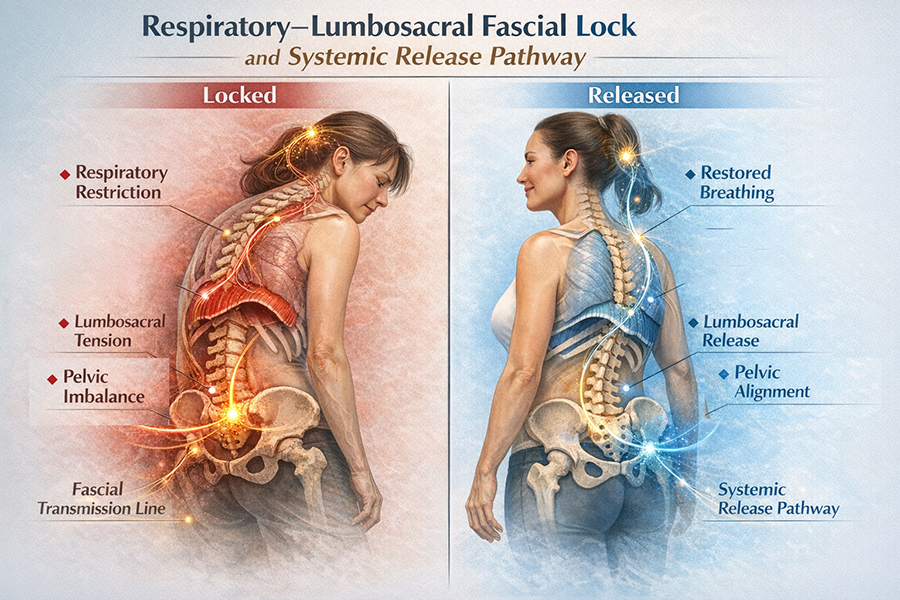
A fascia-oriented clinical case showing how persistent arm pain, breathing restriction, sleep disturbance, and anterior collapse may become part of a broader protective pattern.
When Shoulder Movement Was Restricted
A case showing how shoulder and scapular restriction may influence upper limb movement and discomfort.

When the Body Remembers How to Rest
A systemic case showing how nervous system regulation may change pain, tension, sleep, and protective holding.
TRAINING CONNECTION
Learn to read the chain before treating the hand
Arm numbness is a powerful example of why Fasciapuncture® training begins with pattern recognition, not only local technique.
Fasciapuncture® Training Pathway
Understand the method, the clinical map, and the transition from local symptoms to pattern-based reasoning.
CLINICAL ASSESSMENTModule 2 · Myofascial Diagnosis
Learn how to observe posture, palpate fascial tension, and identify functional chains behind pain.
UPPER LIMBModule 6 · Elbow, Forearm, and Hand
Explore elbow, wrist, hand, forearm fascia, nerve irritation, and upper limb safety zones.
CLINICAL MAP
The arm may be where the symptom appears. It may not be where the story begins.
Explore how Fasciapuncture® reads arm numbness through fascia, posture, nerve irritation, and whole-chain compensation.