
FASCIAPUNCTURE® CONDITION MAP
Wrist & Hand Pain
A fascia-based clinical perspective on wrist pressure, hand tension, finger discomfort, repetitive use, gripping fatigue, and distal upper limb overload.
CORE READING
The hand may be overloaded because the chain above it is no longer moving well.
Wrist and hand pain may not begin only in the hand. The forearm, elbow, shoulder blade, neck, thoracic outlet, gripping pattern, and repetitive micro-tension may all participate.
CLINICAL OPENING
When the hand never fully rests
Many people live with wrist pressure, hand pain, finger stiffness, thumb discomfort, gripping fatigue, or tingling sensations after long hours of typing, scrolling, lifting, cooking, treating, playing music, or using tools.
In Fasciapuncture®, the hand is not viewed as an isolated structure. It is the distal end of a larger chain. When the shoulder blade, forearm, neck, thoracic outlet, or gripping strategy remains under tension, the wrist and hand may continue to carry the load.
WHAT PATIENTS MAY FEEL
Common expressions of wrist and hand symptoms
Wrist and hand pain may appear as stiffness, pressure, numbness, weakness, or fine-motor discomfort.
Wrist pressure
A compressed, tight, blocked, or overloaded feeling around the wrist, often worse after repetitive work.
Hand pain
Pain in the palm, back of the hand, thumb, fingers, or around small joints during use.
Finger stiffness
Difficulty opening, closing, gripping, or relaxing the fingers, especially after work or in the morning.
Grip fatigue
Loss of endurance when holding objects, using tools, typing, cooking, or performing precise hand work.
Tingling or numbness
Pins and needles, burning, electric sensations, or numb fingers that may suggest neuro-fascial irritation.
Forearm connection
Wrist and hand symptoms often appear together with forearm density, elbow pain, shoulder heaviness, or neck tension.
WHY IT MAY NOT BE ONLY LOCAL
The hand works at the end of the chain
The wrist and hand are the final expression of the upper limb. They receive tension from the forearm, elbow, shoulder blade, neck, clavicle, rib cage, and posture.
When the chain above the hand loses glide or becomes overloaded, the hand may compensate through gripping, stabilizing, clenching, or holding micro-tension throughout the day.
This is why local treatment to the wrist or hand may not always be enough. The distal symptom may remain if the upper limb chain still cannot transmit movement and pressure freely.
REPETITIVE PRECISION
Modern hands carry silent overload
Wrist and hand pain often appears in people who use their hands with precision: office workers, therapists, musicians, cooks, artists, manual workers, parents, athletes, and people who spend long hours with phones or computers.
These activities may not feel forceful, but they require continuous stabilization. Over time, small repeated tensions may accumulate in the forearm fascia, wrist, palm, fingers, and upper limb chain.
RELATED CLINICAL PATTERNS
Patterns often involved in wrist and hand pain
Fasciapuncture® reads wrist and hand symptoms through the relationships between forearm tension, nerve sensitivity, shoulder mechanics, posture, and compensation.
Neuro-Fascial Irritation
When nerves and surrounding fascia become sensitive through density, pressure, or repetitive tension.
02Scapular Lock
When the shoulder blade loses glide, distal symptoms may appear in the elbow, wrist, or hand.
03Upper Exit Block
When the neck, clavicle, and upper chest restrict transmission toward the arm and hand.
04Compensation Loop
When the hand becomes the final expression of a larger adaptive pattern.
05Cervical Axis Tension
When neck tension influences the shoulder, arm, forearm, wrist, and fingers.
06Thoracic Restriction
Rib cage stiffness and breathing restriction may increase upper limb tension and distal overload.
FASCIAPUNCTURE® APPROACH
We do not only treat the painful hand
In Fasciapuncture®, the painful wrist or hand is important, but it is not always the only place to begin. We observe forearm density, elbow rotation, gripping strategy, shoulder blade movement, cervical tension, thoracic openness, and the way the hand participates in daily function.
The aim is to reduce unnecessary load through the upper limb chain, restore fascial glide, calm neuro-fascial irritation, and help the hand recover its ability to move, grip, release, and rest.
UPPER LIMB CLUSTER
Related upper limb condition pages
Wrist and hand pain often connects with arm numbness, elbow pain, carpal tunnel-like symptoms, and shoulder restriction.
Arm Numbness
Arm numbness may involve cervical tension, upper exit restriction, scapular lock, and neuro-fascial irritation.
Explore Arm Numbness →Elbow Pain
Elbow pain may reflect gripping overload, forearm fascia, scapular restriction, and upper limb compensation.
Explore Elbow Pain →Carpal Tunnel
Carpal tunnel-like symptoms may involve the wrist, forearm, neck, shoulder blade, and thoracic outlet together.
Explore Carpal Tunnel →Tennis Elbow
Tennis elbow may reflect forearm fascia, gripping overload, and scapular restriction.
Explore Tennis Elbow →Shoulder Pain
Shoulder and scapular restriction may increase load through the elbow, forearm, wrist, and hand.
Explore Shoulder Pain →Neck Pain
Cervical tension may influence arm, wrist, hand, and sensory symptoms.
Explore Neck Pain →CLINICAL EVIDENCE
Cases where the hand was not the whole story
Clinical cases showing how wrist and hand symptoms may change when the wider upper limb and regulatory pattern is addressed.
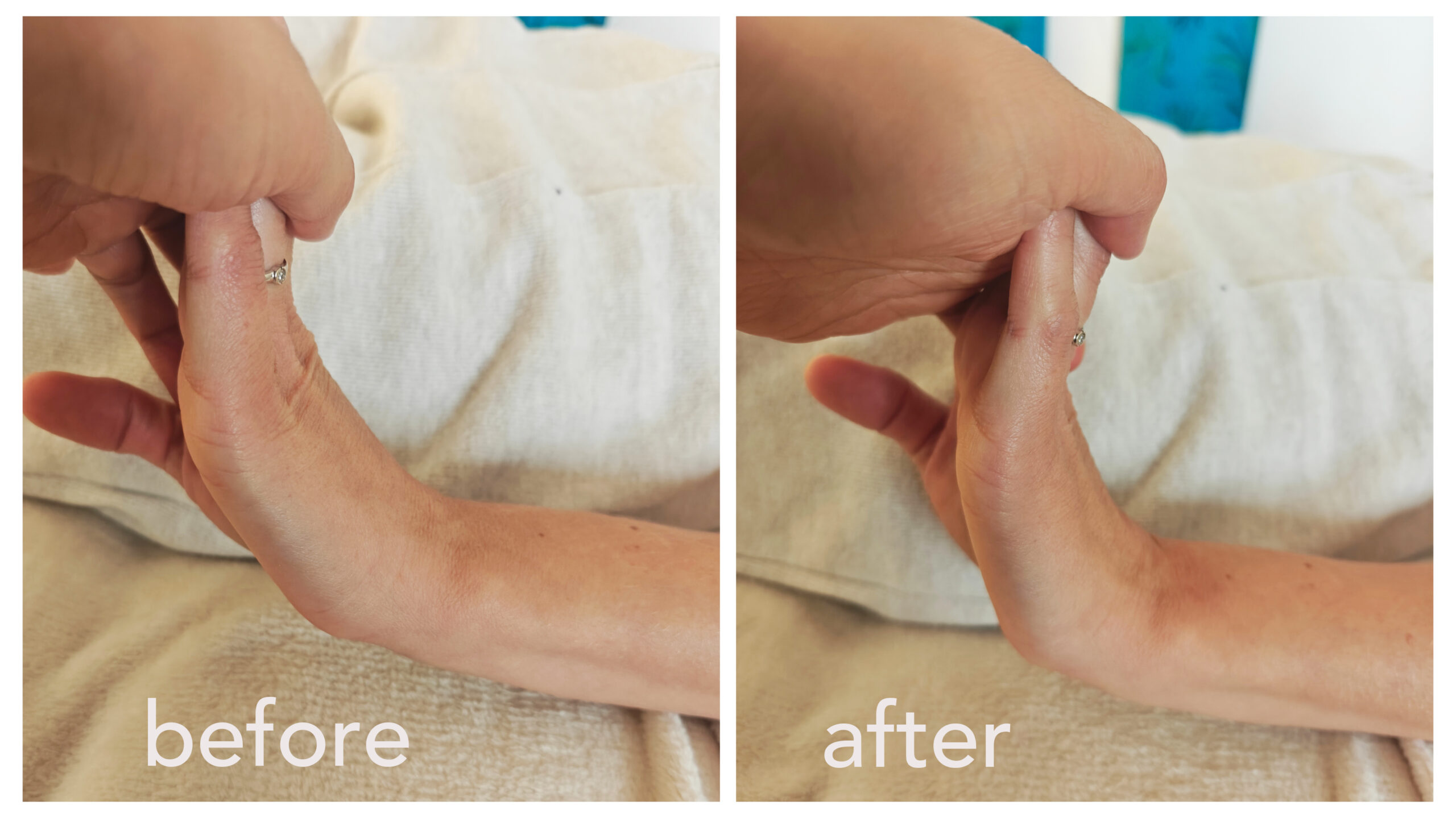
When Wrist Problems Didn’t Come From the Wrist
A fascia-based clinical case showing how wrist stiffness, numbness, and restricted mobility may reflect upstream cervical and upper-limb fascial tension.
When Her Hands Became Free Again
A seamstress arrived with painful, swollen fingers and wrist pain. Instead of treating only the hands, the cervical–arm pathway was released. Three sessions later, her hands returned—and years later, the change was still there.
After Wrist Surgery, the Problem Was No Longer the Wrist
A fascia-oriented clinical case showing how persistent arm pain, breathing restriction, sleep disturbance, and anterior collapse may become part of a broader protective pattern.
TRAINING CONNECTION
Learn to read the chain before treating the hand
Wrist and hand pain is a powerful example of why Fasciapuncture® begins with pattern recognition, not only local tissue treatment.
Fasciapuncture® Training Pathway
Understand the method, the clinical map, and the transition from local symptoms to pattern-based reasoning.
CLINICAL ASSESSMENTModule 2 · Myofascial Diagnosis
Learn how to observe posture, palpate fascial tension, and identify functional chains behind pain.
UPPER LIMBModule 6 · Elbow, Forearm, and Hand
Explore forearm fascia, wrist pressure, hand symptoms, gripping patterns, nerve irritation, and upper limb safety zones.
CLINICAL MAP
The painful hand may be carrying a larger upper limb pattern.
Explore how Fasciapuncture® reads wrist and hand pain through fascia, repetitive use, gripping mechanics, neuro-fascial irritation, and upper limb compensation.