
FASCIAPUNCTURE® SIGNATURE CLINICAL CASE
When Life Became Beautiful Again
A 68-year-old woman came with restless legs, foot pain, coldness, poor sleep, anxiety, and long-term emotional burden after her husband’s stroke. After five sessions, warmth, sleep, digestion, energy, and joy began to return.
Aujourd'hui la vie est belle.
CLINICAL OPENING
The complaint was foot pain. The story was much larger.
Marie first came with foot pain, restless legs, shoulder restriction, poor sleep, chronic coldness, anxiety, and a deep sense of pressure in life.
Her husband had suffered a stroke two years earlier. Since then, she had been carrying not only her own body, but also the emotional and practical weight of caring, worrying, and staying strong.
What appeared at first as a musculoskeletal complaint gradually revealed a much deeper clinical pattern: a body that had been living in protection for too long.
INITIAL SYSTEM STATE
Cold, tense, tired, and unable to fully rest.
Main complaints
Restless legs, foot pain, lumbar discomfort, shoulder limitation, chronic coldness, poor sleep, anxiety, and digestive tension.
Body expression
The body presented as tired, contracted, and guarded. The feet were cold, the abdomen was tense, and the breath remained high.
Life context
Her husband’s stroke had created a long period of responsibility, worry, and emotional pressure.
Clinical impression
The symptoms were not isolated. They reflected a system organized around endurance, vigilance, and long-term adaptation.
PATTERN ATLAS
A body living in long-term protection.
Global Protective State
The body had remained organized around protection, vigilance, and adaptation after prolonged emotional and physical stress.
System Exhaustion
Coldness, fatigue, poor sleep, and low vitality suggested that the system had been spending too much energy simply holding itself together.
Autonomic Dysregulation
Restless legs, sleep disturbance, digestive changes, anxiety, and body temperature dysregulation pointed toward autonomic imbalance.
Pelvic Protection
Leg discomfort, foot symptoms, lumbar tension, and restlessness suggested a deeper pelvic and lower-body protective pattern.
BEFORE & AFTER CLINICAL ATLAS
The first visible change was not only pain relief. It was warmth.
Before
Cold feet, restless legs, shoulder restriction, poor sleep, anxiety, digestive discomfort, lumbar tension, and emotional pressure.
After five visits
Legs felt better, shoulder symptoms were almost forgotten, sleep improved, digestion improved, warmth returned, and energy became more visible.
What changed first?
The body began to feel warm again. The breath softened. Sleep improved. Digestion became easier. The face opened. The patient began speaking not only about pain, but about life.
ENTRY STRATEGY
The treatment did not chase the foot.
The abdomen was used as a regulatory entry point to allow the breath to descend and the system to begin softening.
Cervical and lumbar tension were addressed as part of the global protective chain rather than as isolated local pain zones.
Lower-limb symptoms were understood through circulation, pelvic protection, nervous system regulation, and fascial chain response.
CLINICAL TURNING POINT
“I feel that life is protected now.”
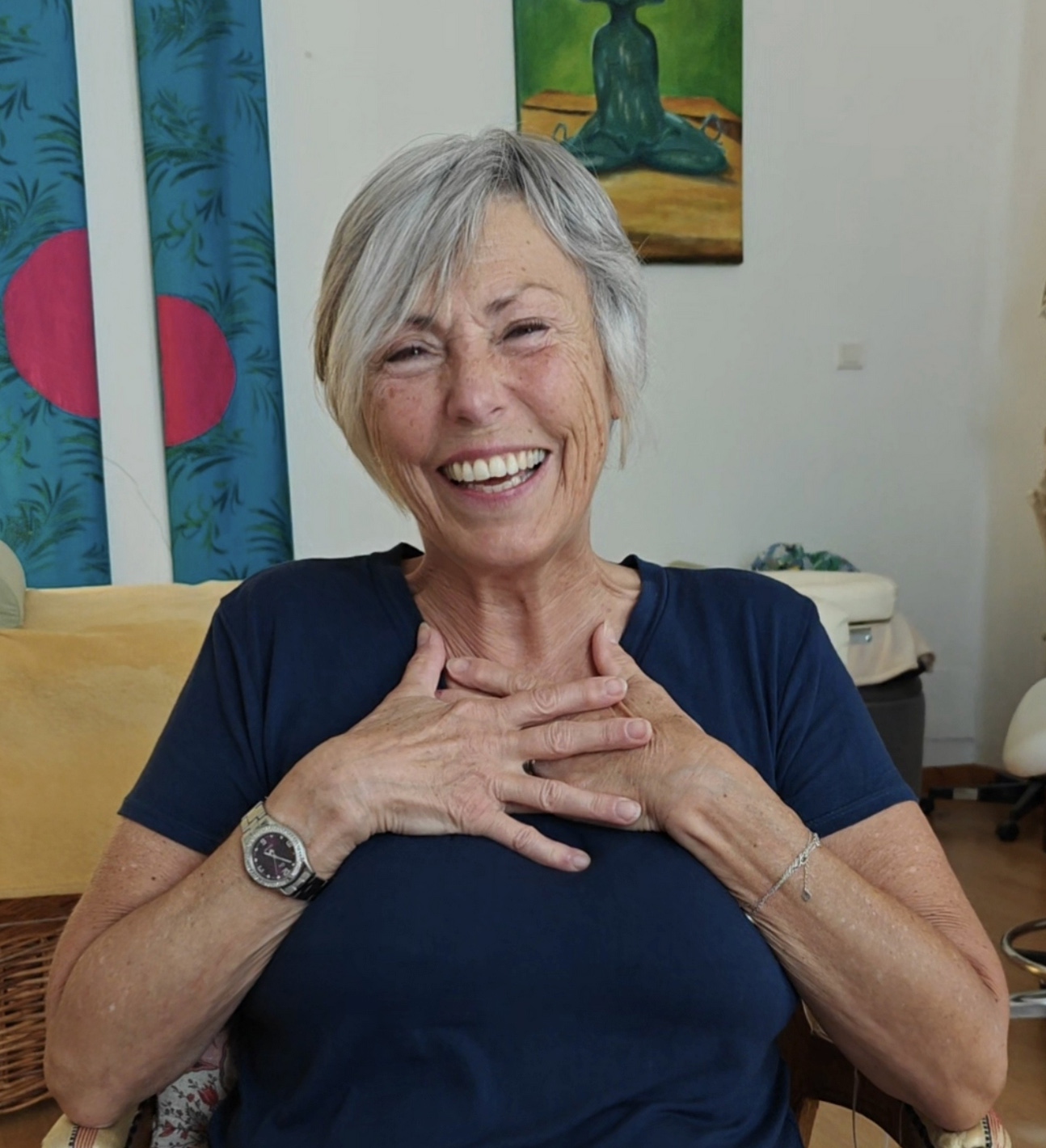
During the fifth visit, Marie spoke for a long time. She described less coldness, more warmth, better sleep, improved digestion, and a feeling that energy had returned.
She also expressed something deeply important: since meeting this care, she felt that life had become more secure.
This was not only a comment about treatment. It was a sign that her nervous system had begun to feel less alone.
“Aujourd'hui la vie est belle.”
WHAT BECAME VISIBLE
The smile was not cosmetic. It was regulatory.
Warmth returned
She reported more heat in the body and much less sensitivity to cold.
Sleep improved
Rest became easier, and the body no longer felt as constantly tense.
Digestion softened
Abdominal tension reduced and digestive comfort improved.
Joy appeared
Her language shifted from survival to vitality, family, future, and the desire to continue living.
CLINICAL REFLECTION
Pain was the doorway. Trust was the medicine underneath.
This case began with foot pain, restless legs, shoulder limitation, and coldness. But the deeper shift was not simply symptom reduction.
As the system became safer, the body began to reorganize: warmth returned, breathing softened, sleep improved, digestion settled, and emotional expression became easier.
The most meaningful clinical sign was the patient’s renewed relationship with life. She did not only say that her legs were better. She said life was beautiful again.
KEY LEARNING POINTS
What this case teaches.
Do not reduce the case to the symptom.
Restless legs and foot pain may express a deeper regulation problem.
Warmth is a clinical sign.
The return of body warmth can indicate improved circulation, autonomic regulation, and systemic safety.
Trust changes the body.
When a person feels supported, the nervous system may begin to release long-held protective patterns.
Vitality is evidence.
A relaxed face, spontaneous laughter, future orientation, and emotional openness are meaningful clinical changes.
CONNECTED CLINICAL MAP
Related patterns in the Fasciapuncture® Clinical Map.
Global Protective State
The body remains organized around vigilance, endurance, and protection.
System Exhaustion
Fatigue, coldness, poor sleep, and reduced vitality after long adaptation.
Autonomic Dysregulation
Sleep, digestion, temperature, anxiety, and breathing lose coordination.
Pelvic Protection
Lower-body tension, leg discomfort, pelvic guarding, and internal holding.
RELATED CONDITIONS
Symptoms that may belong to a larger system story.
RELATED CASES
Other cases where the body remembered safety.
CONTINUE LEARNING
From symptom relief to system regulation.
Module 1 · Foundations
Learn how Fasciapuncture® reads the body through regulation, protection, pressure, and fascial response.
Module 2 · Clinical Assessment
Understand how to observe breathing, posture, tension, emotional holding, and systemic clues.
Explore the Clinical Map
Follow the connections between conditions, patterns, clinical systems, and real patient stories.