
FASCIAPUNCTURE® SIGNATURE CLINICAL CASE
When Life Became Worth Living Again
An 84-year-old cancer survivor whose body slowly moved from chronic protection toward comfort, confidence, and the desire to keep living.
Cela me donne vraiment envie de continuer de vivre, de profiter de la famille, des amis et de la vie.
CLINICAL OPENING
The First Thing That Changed Was Not the Pain
When Bernard first arrived, I was not optimistic.
He was 84 years old. He had survived colon cancer, chemotherapy, immunotherapy, and multiple spinal surgeries. His back remained painful, his walking was difficult, and his body carried a deeply flexed posture.
Yet what stayed in my memory was not his spine.
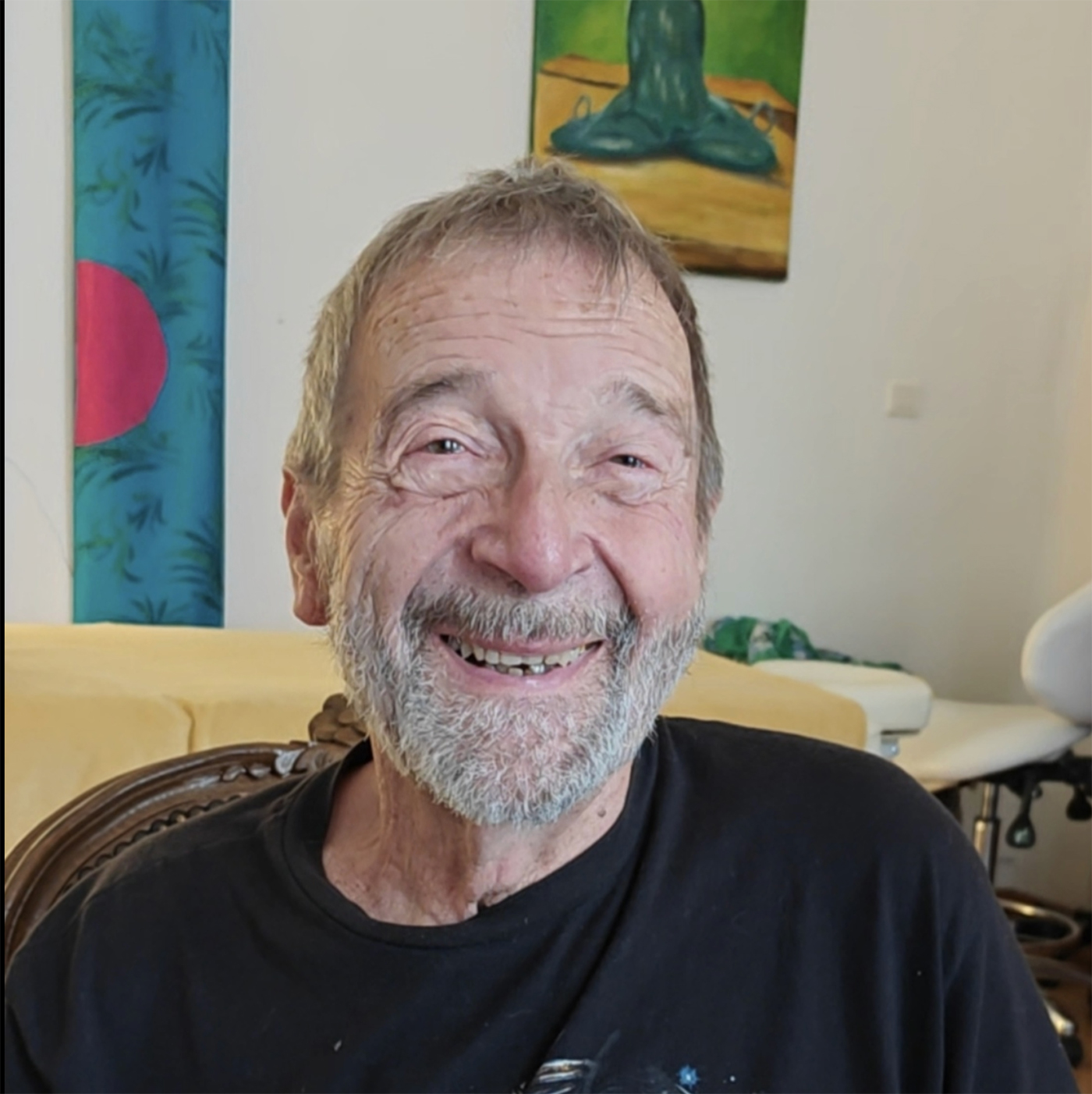
It was his face after a few needles were placed in the abdomen. A look of relief. A look of gratitude. A look of disbelief.
It was as if his body suddenly remembered a state it had not felt for many years: comfort, safety, and the possibility of letting go.
INITIAL SYSTEM STATE
A Body Organized Around Survival
Patient
Bernard ANDRÉ
84 years old
Visit 10 follow-up
Medical Background
Colon cancer in 2018, chemotherapy, immunotherapy, history of spinal trauma, and multiple lumbar surgeries with instrumentation.
Main Complaint
Chronic low back pain, difficulty walking, forward-flexed posture, and reduced quality of life.
System State
Fatigue, loss of muscular support, poor comfort in daily life, sleep difficulty, and long-term protective adaptation.
PATTERN ATLAS
The Patterns Behind the Pain
Global Protective State
Years of illness, treatment, pain, and adaptation gradually organized the body around survival and protection.
System Exhaustion
Chemotherapy and long-term physical stress left the system depleted, with reduced strength and reduced postural reserve.
Posterior Compression
Loss of spinal muscular support increased load on the posterior chain, reinforcing pain and flexed posture.
Compensation Loop
The body continued adapting around weakness, pain, and old trauma, instead of returning to free movement.
BEFORE & AFTER CLINICAL ATLAS
From Survival Posture to a Softer Body
Before
- Marked forward-flexed posture
- Severe low back pain
- Difficulty walking
- Fatigue after cancer treatment
- Reduced comfort and confidence
After 10 Visits
- Less low back pain
- Greater relaxation
- Better sleep
- Good appetite and stable bowel function
- Renewed joy and desire to keep living
What Changed First?
Not the pain itself, but the sense of safety in the body. Once the protective state began to soften, comfort, sleep, digestion, and emotional openness gradually returned.
ENTRY STRATEGY
A Gentle Abdominal Entry
Minimal Intervention
The first session did not begin with aggressive work on the lumbar spine. Only a few abdominal needles were used.
System Regulation First
The aim was to allow the body to experience relaxation and safety before directly addressing structural pain.
Visible Response
His face softened, the body relaxed, and a deep expression of relief appeared. This first response became the doorway into the whole case.
CLINICAL TURNING POINT
After Three or Four Sessions, Something Began to Shift
Bernard initially came with skepticism. He did not know this practice and had little reason to believe that his body could still change.
Yet after three or four sessions, he began to notice improvement. The change was not limited to pain. He described feeling much more relaxed, more comfortable, and more at ease in his body.
“Au bout de trois, quatre séances, j’ai commencé à sentir une amélioration. En état général, beaucoup plus décontracté, beaucoup plus à l’aise.”
WHAT BECAME VISIBLE
The Return of Basic Life Functions
Sleep
He reported no sleep problem at follow-up.
Digestion
Appetite returned and remained good.
Bowel Function
Transit became correct and stable.
Relaxation
He described himself as much more relaxed and comfortable.
Quality of Life
He felt able to enjoy what he could still do.
Life Motivation
He expressed a renewed desire to continue living.
PATIENT WORDS
“It Gives Me the Desire to Keep Living”
“Cela me donne vraiment envie de continuer de vivre, de profiter de la famille, de profiter des amis, de profiter de la vie.”
“This gives me the real desire to keep living, to enjoy my family, my friends, and life.”
CLINICAL REFLECTION
This Was Never Only About Back Pain
Bernard had survived cancer. The disease was no longer visible, but his body remained organized around protection, fatigue, and pain.
In this case, the most meaningful change was not simply the reduction of low back pain. It was the gradual return of basic regulation: sleep, appetite, bowel function, relaxation, facial softness, and emotional availability.
Over time, the body suffered less. Then something deeper became visible: the desire to participate in life returned.
Clinical Principle
Sometimes the most meaningful outcome is not the disappearance of symptoms. Sometimes it is the return of the wish to live.
KEY LEARNING POINTS
What This Case Teaches
1. Pain may be the visible complaint, but not the whole story.
In elderly patients with cancer history and surgery, pain often belongs to a larger protective state.
2. Gentle abdominal regulation can open the system.
A few carefully chosen abdominal points may help the body feel safe before structural release begins.
3. Quality of life is a clinical marker.
Sleep, appetite, bowel function, relaxation, and social enjoyment may reveal deeper regulation than pain scores alone.
4. The return of joy matters.
When a patient says he wants to continue living, this becomes one of the strongest signs of systemic change.
CONNECTED CLINICAL MAP
Where This Case Belongs in the Fasciapuncture® Atlas
Global Protective State
Long-term protection after illness, trauma, treatment, and pain.
PatternSystem Exhaustion
Depletion of adaptive capacity after prolonged physical stress.
PatternPosterior Compression
Spinal loading and posterior chain compression after structural collapse.
PatternCompensation Loop
Repeated adaptation around unresolved weakness, pain, and trauma.
RELATED CONDITIONS
Clinical Entry Points
RELATED CASES
Other Stories of Regulation and Return
CONTINUE LEARNING
From a Clinical Case to a Clinical Principle
For Patients
Fasciapuncture® does not only look at isolated pain. It observes how the body breathes, protects, compensates, and slowly returns to comfort.
Explore Conditions →For Practitioners
This case belongs to the deeper study of system regulation, protective states, abdominal entry, and long-term clinical observation.
Explore Training →