
SIGNATURE CLINICAL CASE · UPPER EXIT REGULATION
When the Throat Finally Opened Again
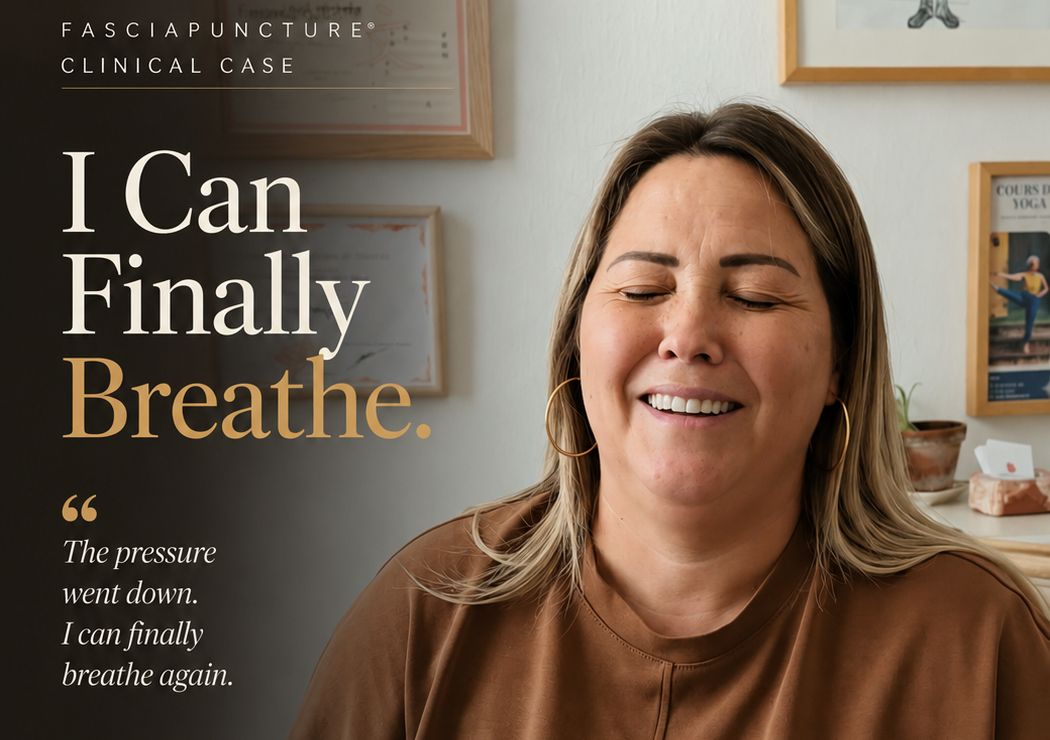
A 40-year-old woman with migraine, globus sensation, reflux, neck tension, anxiety, and persistent throat blockage after three courses of antibiotics. The first clinical shift was simple and profound: “I can finally breathe.”
CLINICAL OPENING
When the throat was not only a throat problem
She came with a persistent sensation of blockage in the throat. Three courses of antibiotics had already been taken, yet the feeling remained.
Alongside the throat discomfort, she described migraine with aura, vestibular migraine, neck tightness, reflux, anxiety, and significant weight gain.
The body was not presenting one isolated complaint. It was showing a larger pattern of pressure, protection, and upper-body congestion.
INITIAL SYSTEM STATE
The body remained functional, but pressure was trapped above
Throat
Persistent globus sensation, as if something remained blocked despite repeated antibiotic treatment.
Head
Headache, heaviness, migraine with aura, and vestibular-type symptoms.
Neck
Strong cervical tension with a visible short, compressed anterior neck profile.
Regulation
Anxiety, reflux, weight gain, and a sense that breathing could not fully descend.
PATTERN ATLAS
Patterns observed in the clinical presentation
Global Protective State
The body appeared organized around vigilance, holding, and long-term protection.
PRIMARY PATTERNUpper Exit Block
Pressure concentrated around the throat, neck, jaw, cranial region, and thoracic outlet.
ASSOCIATED PATTERNDiaphragm Restriction
Breathing remained high, and pressure could not easily descend.
ASSOCIATED PATTERNAutonomic Dysregulation
Anxiety, reflux, migraine, and vigilance suggested systemic regulation involvement.
BEFORE & AFTER CLINICAL ATLAS
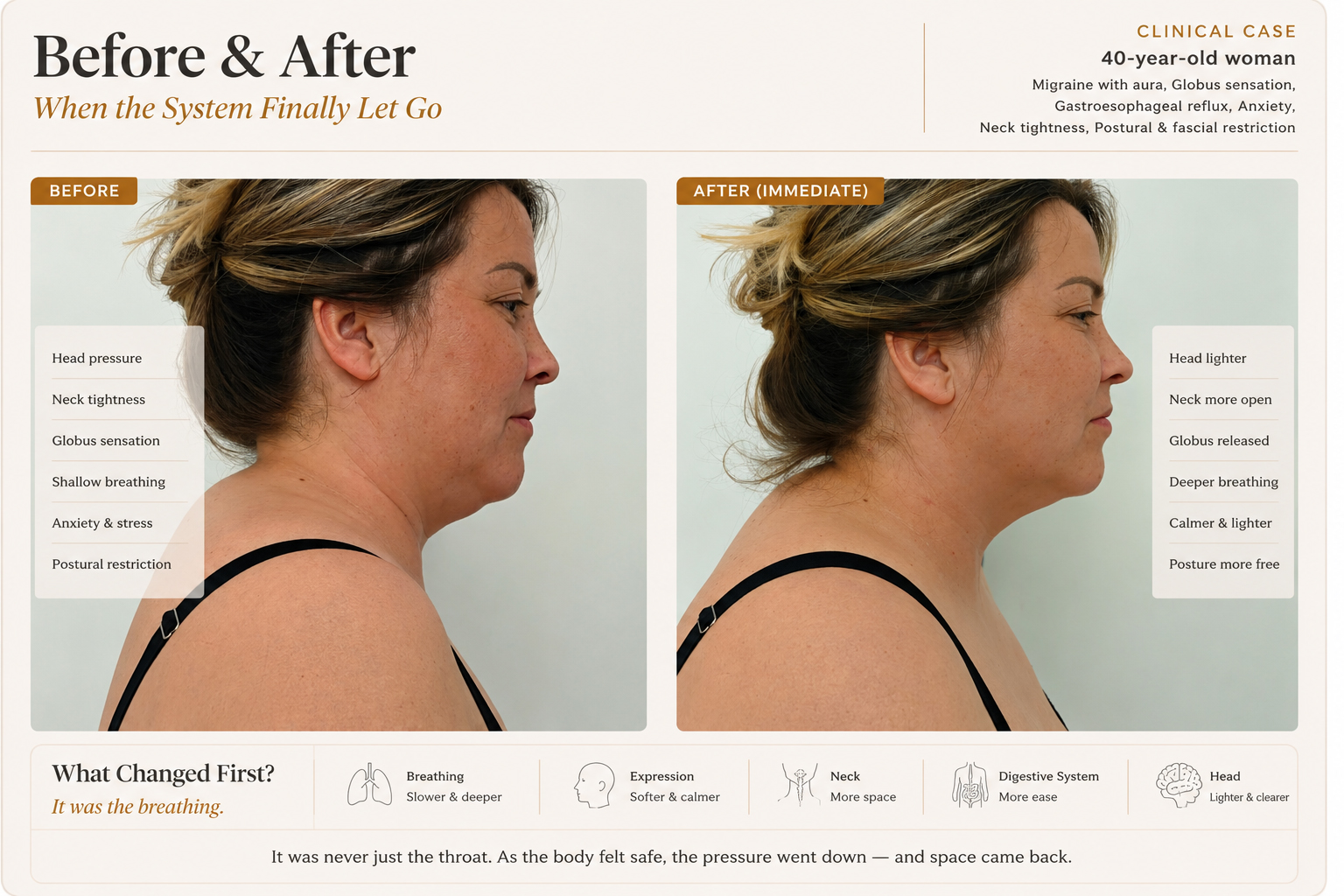
What changed first was not a symptom, but the state of the system
Before Regulation
- Forward head position
- Compressed cervical contour
- Throat pressure sensation
- Upper fascial tension
- Breathing held high
After Regulation
- Longer cervical profile
- More visible throat space
- Head felt clearer and lighter
- Breathing descended
- Emotional relief with tears
“I can finally breathe.”
ENTRY STRATEGY
Supporting downward pressure movement instead of chasing the throat
CLINICAL TURNING POINT
She did not first say the pain was gone. She said there was space.
During the session, the patient repeatedly described that the “qi” had moved downward.
Her throat felt more open. Her breathing became easier. Her head felt clearer. The neck felt longer.
When she expressed gratitude, tears appeared spontaneously. This was not simply an emotional reaction. It was a visible sign that the system no longer needed to hold pressure in the same way.
WHAT BECAME VISIBLE
The body no longer carried pressure in the same place
“My neck feels longer.”
CLINICAL REFLECTION
The throat was not the origin. It was the place where pressure became visible.
In this case, the persistent throat sensation was not read only as a local throat issue. It was interpreted as part of an upper exit pattern involving cervical tension, thoracic pressure, breathing restriction, and autonomic overload.
The result did not come from forcing the throat to change. It came from helping the system redistribute pressure.
When the body found a downward path again, the throat, head, neck, and breathing all began to change together.
KEY LEARNING POINTS
What this case teaches
Globus may be systemic
A blocked throat sensation may reflect pressure and regulation patterns, not only local irritation.
Breathing is a clinical marker
When breathing descends, the system often begins to leave protection.
The neck reveals pressure
A visible change in cervical length may reflect a shift in upper fascial loading.
Emotion may follow release
Tears, sighing, and relief may appear when the autonomic system softens.
CONNECTED CLINICAL MAP
Related Patterns
RELATED CONDITIONS
Clinical entry points connected to this case
RELATED CASES
Other stories of pressure, breathing, and regulation
When Breathing Becomes Quiet
A clinical moment where breathing, pressure, and the body shifted together.
Head PressureWhen Head Pressure Won’t Let You Sleep
A case exploring head pressure, neck tension, sleep disturbance, and upper exit overload.
Pressure RegulationWhen the Abdomen Finally Let Go
A case showing how abdominal pressure, breathing, and walking protection may shift together.
Clinical LibraryExplore More Clinical Cases
Continue through the Fasciapuncture® Clinical Evidence Library.
CONTINUE LEARNING
The body may speak through the throat when pressure has nowhere else to go.
Fasciapuncture® is not only about relieving a local sensation. It is about helping the body recover its ability to breathe, regulate, transmit pressure, and return to safety.