FASCIAPUNCTURE® CONDITION MAP
Hip Pain
Hip discomfort may reflect pelvic tension, abdominal restriction, lumbar compensation, gait imbalance, or neuro-fascial irritation. Explore the deeper patterns behind persistent hip symptoms.
CORE READING
Hip pain is not always a hip problem.
Persistent hip symptoms may emerge from protective pelvic patterns, abdominal pressure, lumbar compensation, altered walking mechanics, or irritation along interconnected fascial and neural pathways.
COMMON PRESENTATIONS
How hip pain may appear
The hip often becomes the visible site of a deeper fascial, pelvic, lumbar, or compensatory pattern.
Groin Pain
Pain felt in the front of the hip or groin during walking, rising, or rotation.
Lateral Hip Pain
Discomfort around the outer hip, often aggravated by standing or side-lying.
Buttock Pain
Deep gluteal discomfort sometimes mistaken for lumbar or sciatic pain.
Hip Pain While Walking
Symptoms that appear during gait, weight transfer, or prolonged movement.
Hip Stiffness
Restriction of movement, difficulty bending, crossing legs, or squatting.
Hip Pain at Night
Pain during rest that may reflect protective tension or deeper holding patterns.
CLINICAL PATTERNS
Patterns commonly behind hip pain
Fasciapuncture® reads hip pain through the relationship between pelvis, abdomen, lumbar fascia, gait, and neuro-fascial tension.
Pelvic Lock
Restriction around the sacroiliac and pelvic system affecting hip mobility, gait, and load transfer.
ANTERIOR CHAINAnterior Chain Lock
Protective shortening through the abdomen, psoas, and anterior fascial chain influencing hip and groin pain.
POSTERIOR LOADPosterior Compression
Accumulated lumbar-sacral pressure that may affect gluteal tension, hip mechanics, and standing posture.
ADAPTATIONCompensation Loop
Movement adaptations transferring stress between the foot, knee, pelvis, lumbar spine, and hip.
NEURO-FASCIALNeuro-Fascial Irritation
Tension around neural pathways contributing to buttock pain, radiating symptoms, or sciatic-like discomfort.
CONNECTED CONDITIONS
Hip pain belongs to a wider map
CLINICAL EVIDENCE
Where hip-related patterns become visible
These cases show how hip, pelvis, lumbar, and anterior chain patterns may shift when the system is read differently.
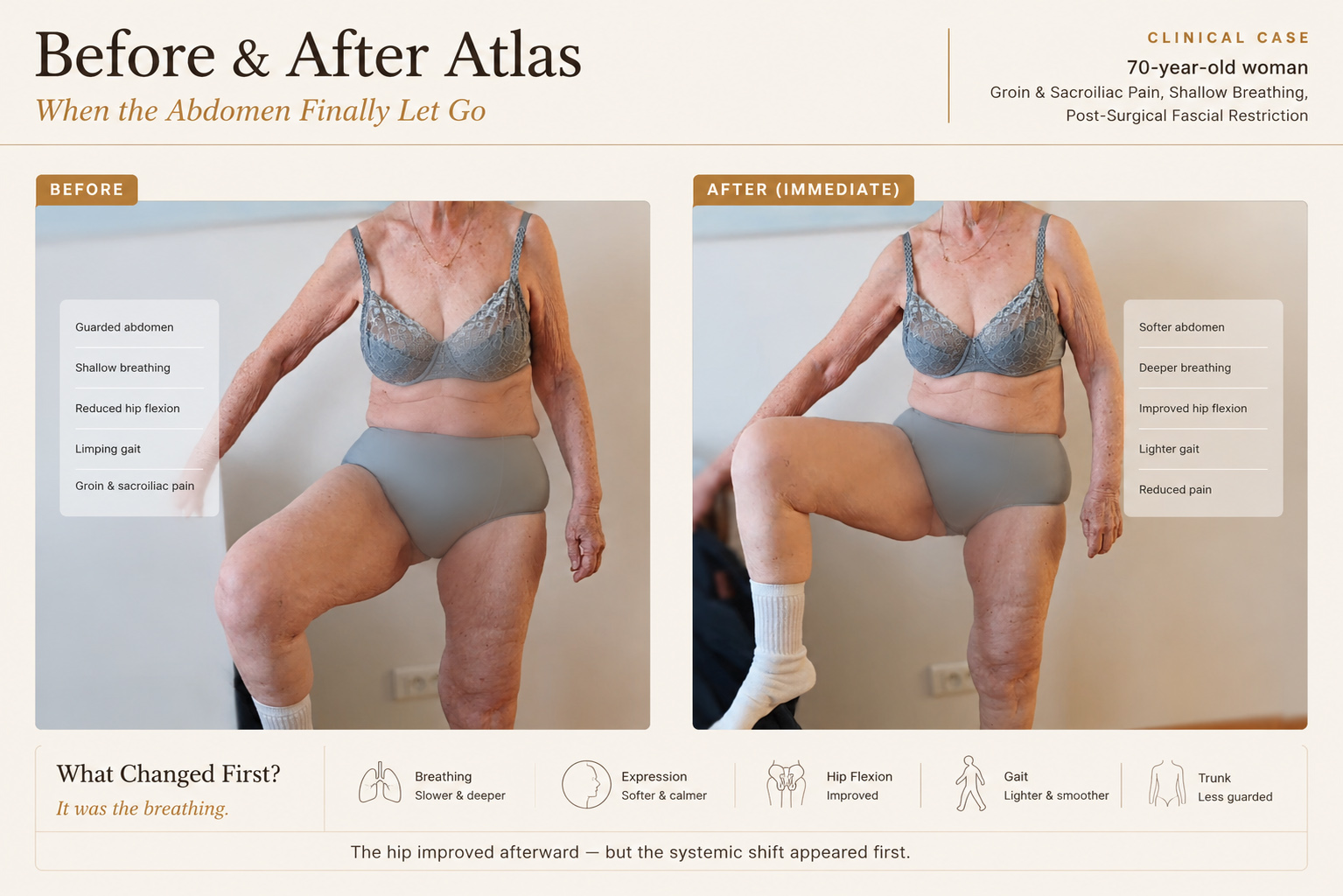
When the Abdomen Finally Let Go
A case where abdominal protection, groin pain, guarded walking, and breathing restriction revealed an anterior holding pattern.
When the Body Finally Felt Safe Enough to Sleep
A young father arrived seeking relief from low back pain. What emerged was a deeper story of pressure, exhaustion, poor sleep, thoracic tension, and a nervous system that had forgotten how to rest.
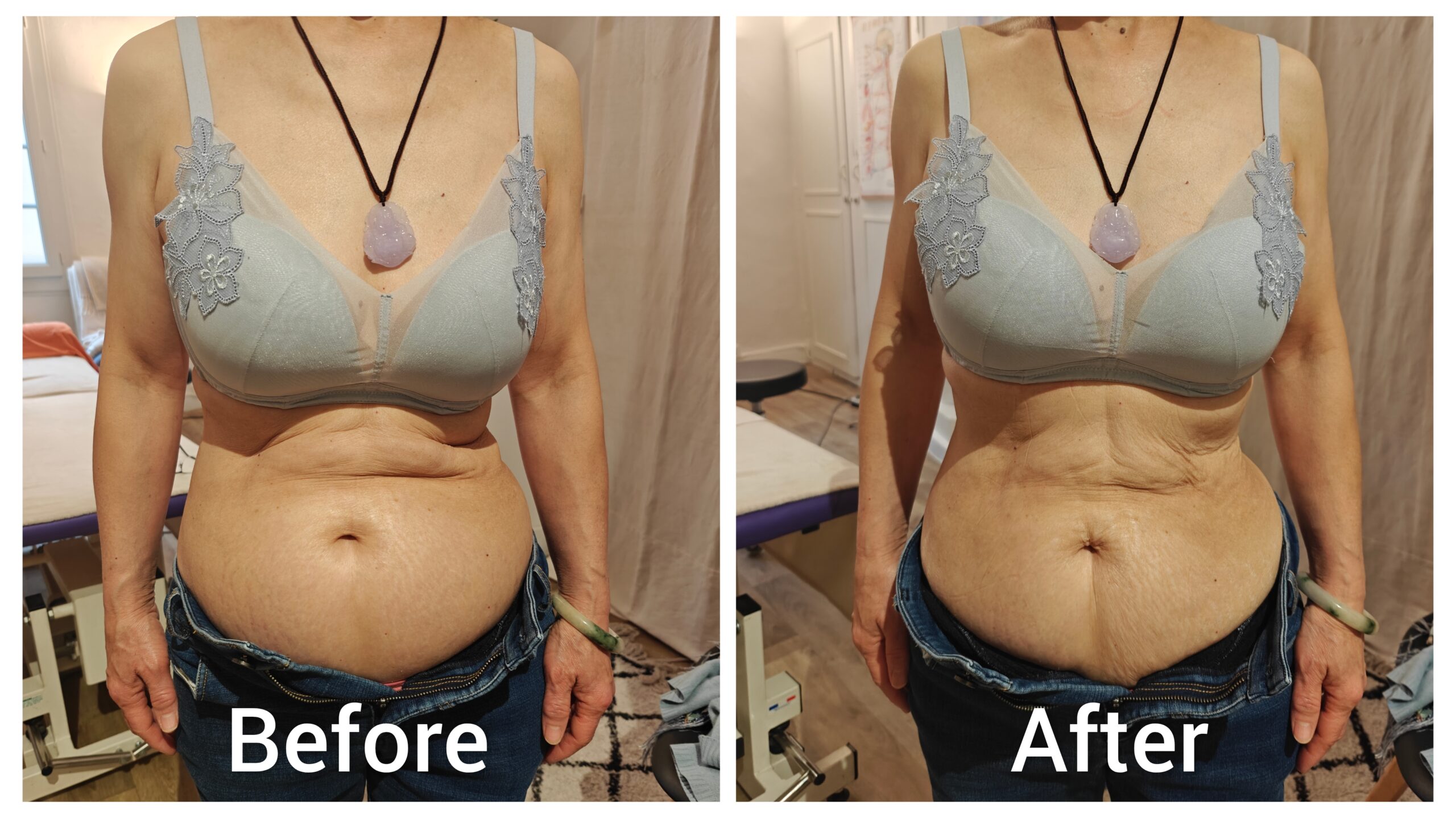
When the Spine Begins to Rise Again
A case of low back pain, postural collapse, pelvic compensation, and visible spinal reorganization.
FASCIAPUNCTURE® APPROACH
How Fasciapuncture® reads hip pain
Rather than focusing only on the painful area, Fasciapuncture® explores how tension is distributed through the pelvis, abdomen, lumbar region, and fascial chains influencing hip function.
The goal is not merely to suppress symptoms, but to understand how the system organizes protection, movement, compensation, and load transfer.
CONTINUE EXPLORING