FASCIAPUNCTURE® CONDITION MAP
Knee Pain
A fascia-based clinical perspective on knee pain, walking compensation, load redistribution, pelvic imbalance, foot mechanics, and lower limb transmission.
CORE READING
The knee may be carrying pressure from above and below.
Knee pain may not begin only in the knee. Pelvic tension, hip restriction, posterior chain compression, foot imbalance, scar restriction, and walking compensation may all converge here.
CLINICAL OPENING
When the knee absorbs the chain
Many people experience knee pain while walking, climbing stairs, standing up, turning, kneeling, or carrying weight. The pain may be felt at the front, inside, outside, or behind the knee.
In Fasciapuncture®, knee pain is often read as a transmission problem. The knee may be the place where pressure appears, but the pattern may involve the pelvis, hip, thigh, calf, ankle, foot, gait, or the way the body protects itself during movement.
WHAT PATIENTS MAY FEEL
Common expressions of knee pain
Knee pain may appear locally, but it often reflects how the body distributes load through the lower limb.
Inner knee pain
Pain along the medial knee, often linked with adductor tension, pelvic load, foot mechanics, or gait compensation.
Front knee pain
Pain around the kneecap or anterior knee, especially with stairs, squatting, standing up, or prolonged sitting.
Outer knee pain
Lateral knee tension may appear with hip restriction, iliotibial chain load, foot imbalance, or asymmetrical walking.
Back of knee tension
Posterior knee tightness may connect with hamstring, calf, posterior chain compression, or protective gait patterns.
Walking limitation
Limping, instability, stiffness, fear of loading, or difficulty walking smoothly may reveal a broader compensation pattern.
Recurring knee pain
Knee pain may return when the same pelvic, hip, foot, or gait pattern continues to overload the joint.
WHY IT MAY NOT BE ONLY LOCAL
The knee is a bridge, not an isolated joint
The knee sits between the pelvis and the foot. It receives load from above through the hip and thigh, and from below through the ankle, arch, and ground contact.
When the pelvis loses balance, the hip becomes restricted, the foot changes support, or the posterior chain becomes compressed, the knee may become the visible place where the body expresses pressure.
This is why local treatment to the knee alone may not always resolve recurring knee pain.
WALKING COMPENSATION
Walking changes everything
Knee pain often becomes visible during movement. A person may avoid loading one side, shorten the step, turn the foot outward, lock the hip, or protect the pelvis without realizing it.
In Fasciapuncture®, walking is not only a test of the knee. It is a way to see how the whole system distributes pressure, balance, rotation, and protection.
WHY IT RETURNS
When the same load keeps arriving at the knee
Knee pain may improve temporarily with rest, injections, exercises, or local care. But if the same gait pattern, pelvic imbalance, foot support issue, or protective chain remains, the knee may continue to receive the same excessive load.
The question is not only “what is wrong with the knee?” It is also: why does the body keep sending pressure to this place?
RELATED CLINICAL PATTERNS
Patterns often involved in knee pain
Fasciapuncture® reads knee pain through load transfer, gait, pelvic organization, posterior chain tension, and compensation.
Pelvic Lock
When pelvic mobility is restricted, load may be redistributed through the hip, knee, ankle, and foot.
02Posterior Compression
When posterior chain tension affects the hamstrings, calf, knee, heel, and gait.
03Compensation Loop
When the knee becomes the visible expression of a repeated adaptive strategy.
04Cross Compensation Loop
When asymmetrical loading crosses through pelvis, knee, foot, and opposite-side compensation.
05Anterior Chain Lock
When anterior hip, thigh, abdominal, or pelvic tension changes knee loading.
06Scar Restriction
Surgical or traumatic scars may influence load transfer, protection, and lower limb compensation.
FASCIAPUNCTURE® APPROACH
We do not only treat the painful knee
In Fasciapuncture®, the painful knee is important, but it is not always the only place to begin. We observe posture, pelvic balance, hip mobility, thigh tension, calf density, ankle support, foot position, and walking pattern.
The aim is to reduce unnecessary load through the chain, improve fascial glide, restore better transmission between pelvis and foot, and help the knee stop carrying pressure that belongs to the wider system.
LOWER LIMB CLUSTER
Related lower limb condition pages
Knee pain often connects with hip restriction, low back load, sciatic-type symptoms, calf tension, and foot mechanics.
Sciatic Pain
Sciatic-type symptoms may involve lumbar, pelvic, posterior chain, and leg fascia.
Explore Sciatic Pain →Heel & Foot Pain
Foot support and pressure redistribution may influence knee loading.
Explore Heel & Foot →Low Back Pain
Lumbar and pelvic compensation may change how pressure reaches the knee.
Explore Low Back Pain →Pelvic Lock
Pelvic restriction may affect gait, hip rotation, knee load, and lower limb transmission.
Explore Pattern →Posterior Compression
Posterior chain tension may affect the back of the knee, calf, heel, and foot.
Explore Pattern →CLINICAL EVIDENCE
Cases where walking revealed the pattern
Clinical cases can show how knee pain changes when gait, pelvic organization, foot support, and lower limb compensation are read together.

When the Foot Was Not the Whole Story
A clinical reading of lower limb pain through gait, pelvis, foot support, and pressure redistribution.
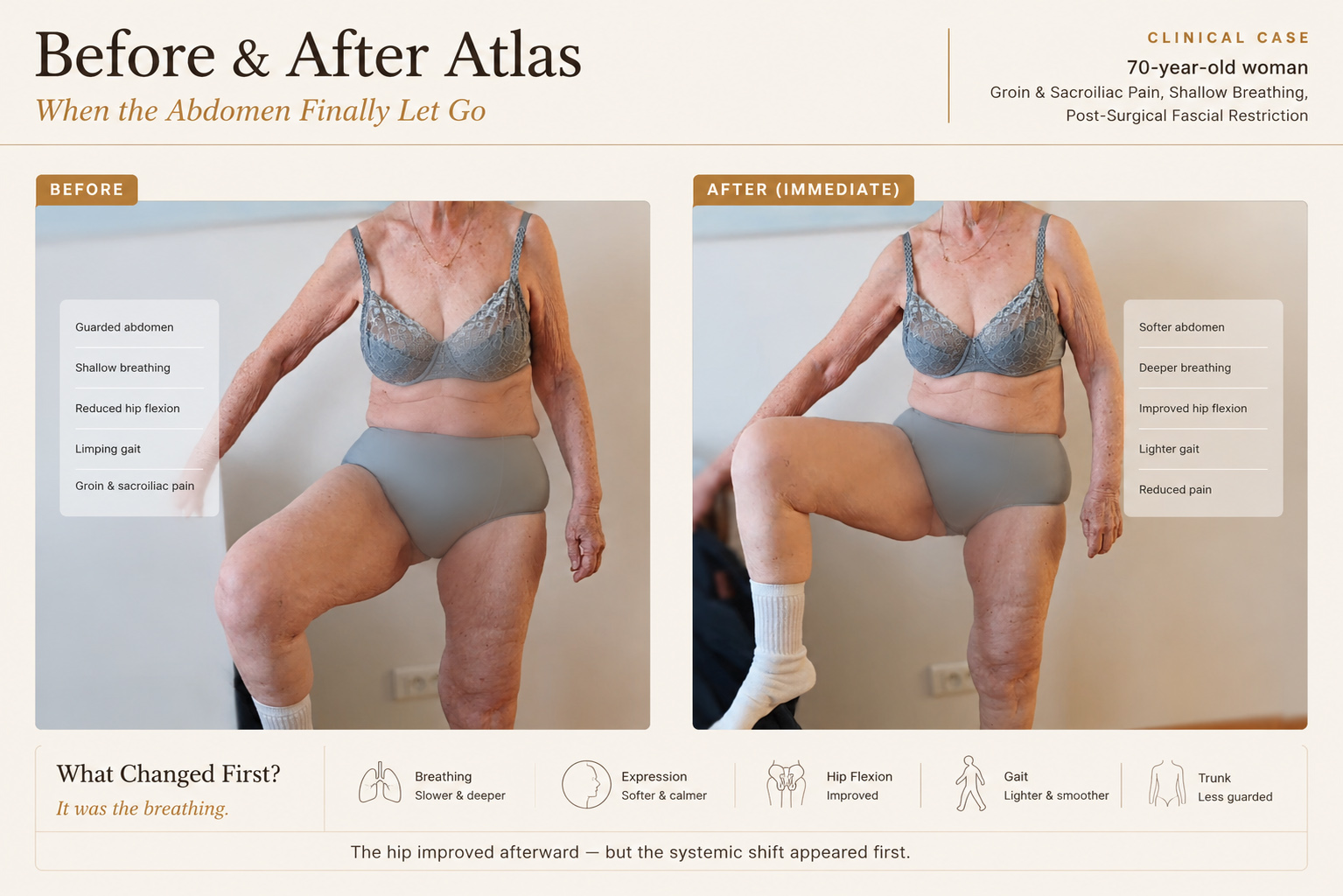
When the Abdomen Finally Let Go
A case showing how abdominal and pelvic protection may influence walking, groin pain, and lower limb transmission.
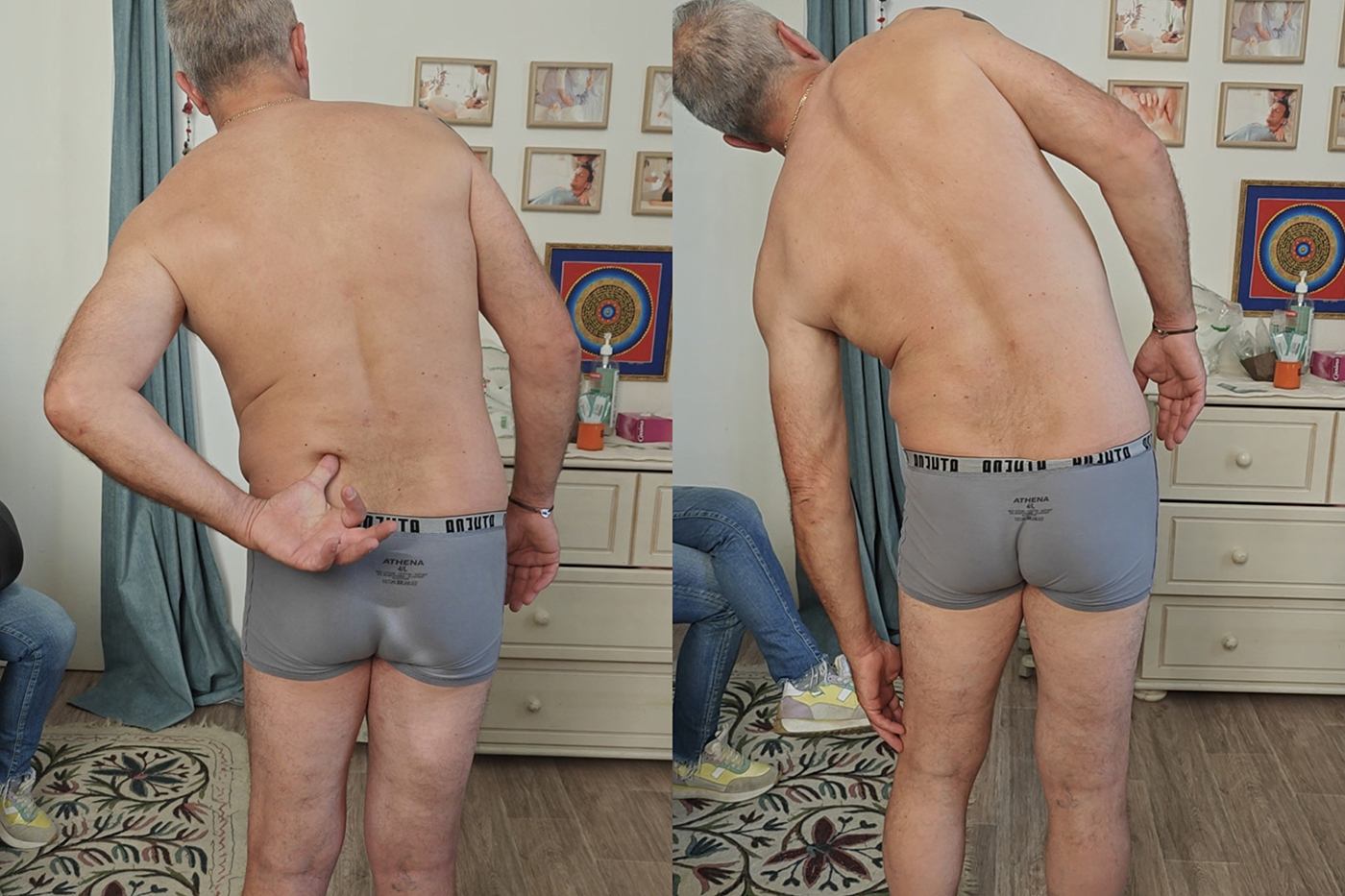
Four Years After Surgery, the Body Began to Move Again
A case showing how scar-related protection may influence movement, loading, and lower limb compensation.
TRAINING CONNECTION
Learn to read gait before treating the knee
Knee pain is a strong example of why Fasciapuncture® begins with pattern recognition, load transfer, and movement reading.
Fasciapuncture® Training Pathway
Understand the method, the clinical map, and the transition from local symptoms to pattern-based reasoning.
CLINICAL ASSESSMENTModule 2 · Myofascial Diagnosis
Learn how to observe posture, palpate fascial tension, and identify functional chains behind pain.
LOWER LIMBModule 10 · Lower Limb Disorders
Explore thigh, knee, calf, ankle, foot mechanics, gait patterns, and lower limb Fasciapuncture® strategies.
CLINICAL MAP
The knee may be where the pressure appears. It may not be where the story begins.
Explore how Fasciapuncture® reads knee pain through fascia, walking compensation, pelvic balance, foot mechanics, and lower limb load transmission.