SIGNATURE CLINICAL CASE
When the Spine Begins to Rise Again
A clinical case of low back pain, postural collapse, spinal asymmetry, abdominal compensation, and visible structural reorganization.
CLINICAL ATLAS
Anterior Compensation Before and After
STRUCTURAL OBSERVATION
The Body Had Lost Vertical Support
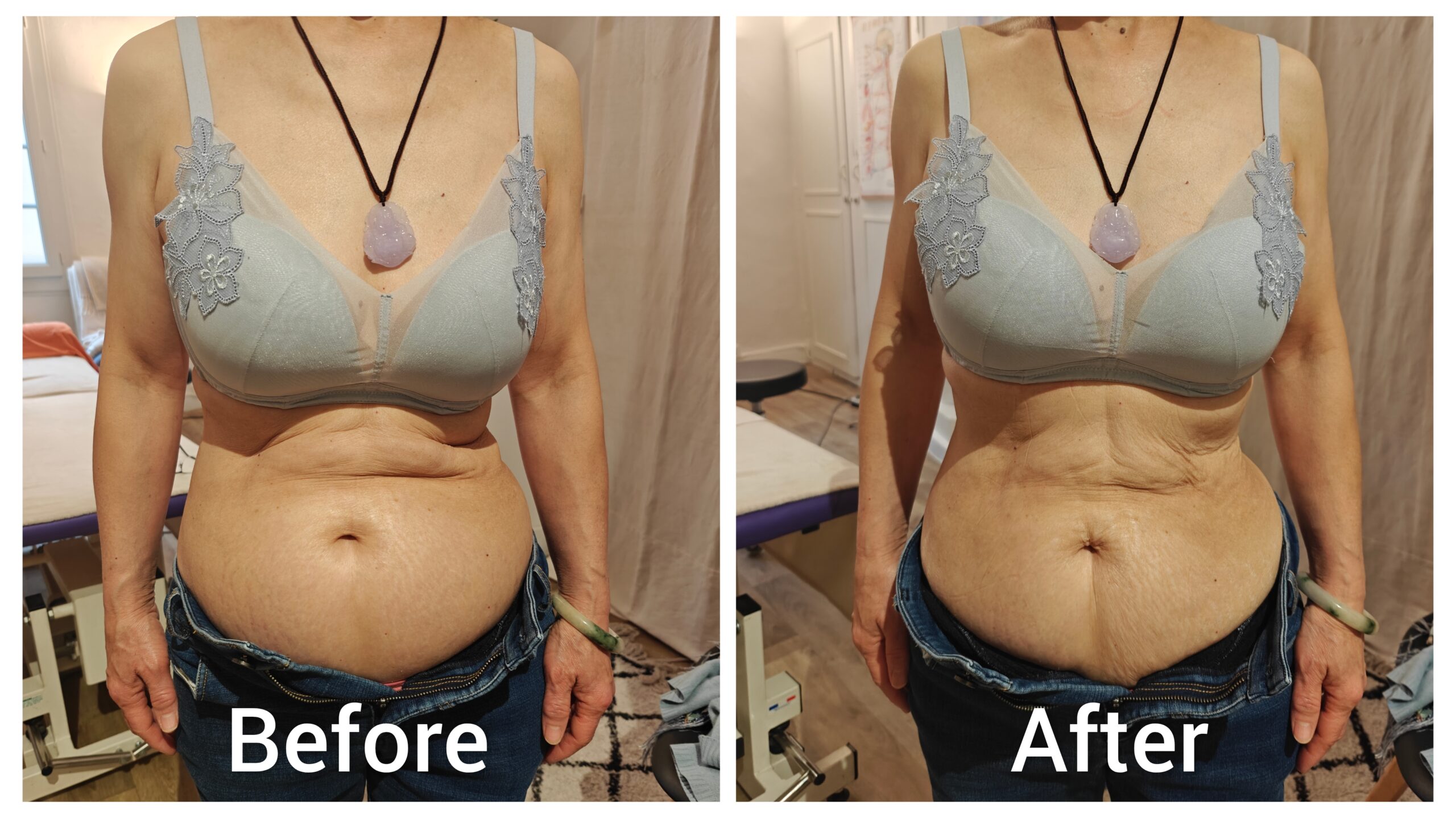
From a fascia-oriented perspective, the body did not appear simply “overweight” or “weak.” It appeared compressed.
- Thoraco-lumbar collapse
- Reduced spinal extension
- Posterior fascial shortening
- Rib cage compression
- Abdominal pressure displacement
- Forward trunk compensation
The abdomen was functioning as part of a compensation system. As the back lost vertical tone and posterior support, the front of the body carried more pressure.
POSTERIOR VIEW
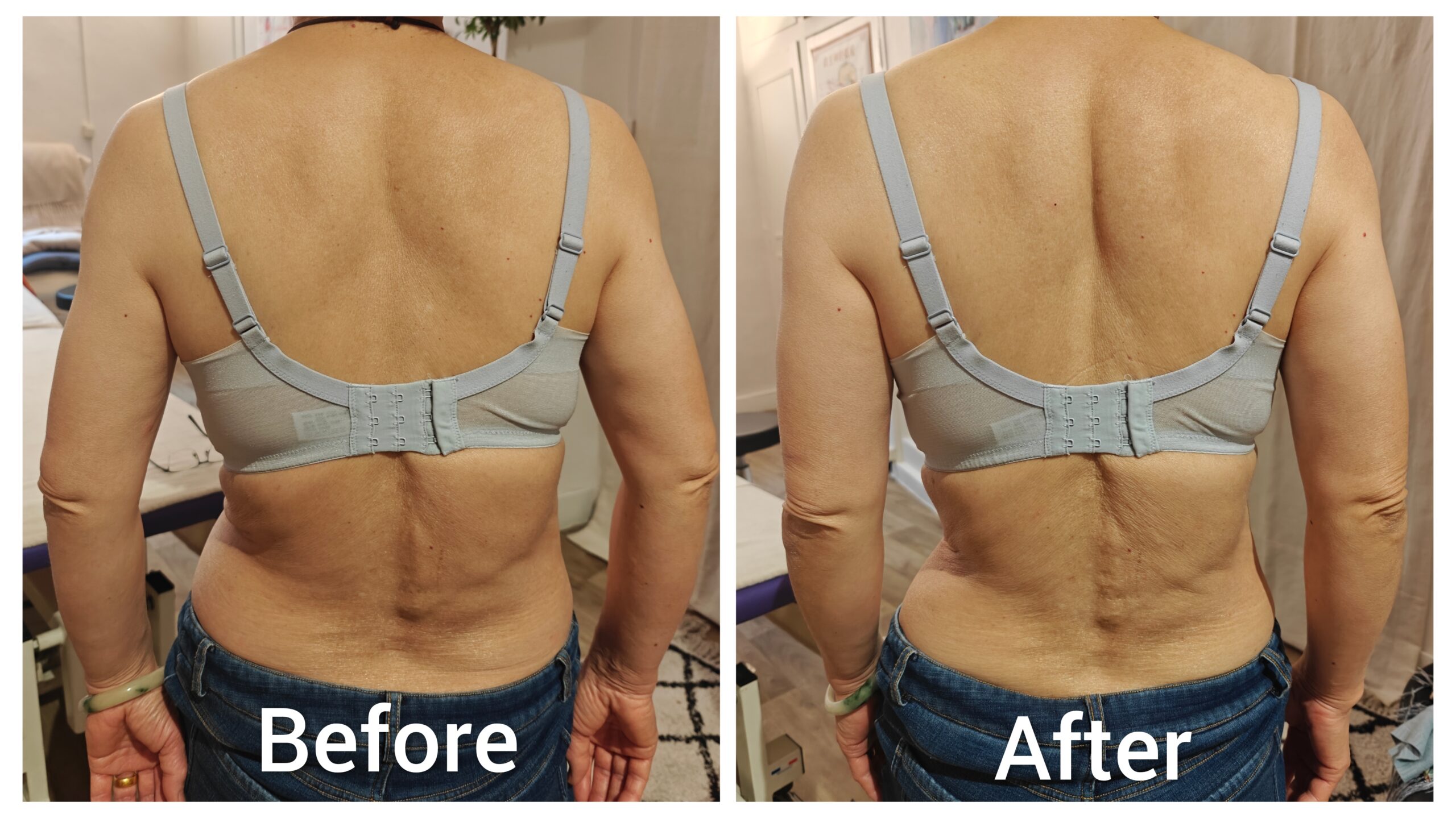
When the Back Begins to Open
THERAPEUTIC APPROACH
Restoring Posterior Support
The treatment did not aim to “flatten” the abdomen or force the posture into correction.
The clinical strategy focused on restoring adaptability in the thoraco-lumbar fascial system, reducing internal pressure constraints, and allowing the posterior chain to recover its supportive function.
- Releasing thoraco-lumbar fascial tension
- Improving posterior fascial glide
- Reducing anterior pressure loading
- Restoring diaphragmatic and trunk mobility
- Allowing spinal extension to re-emerge naturally
CLINICAL SHIFT
The Spine Did Not Need to Be Forced
After the treatment, the body appeared taller, lighter, and less compressed. The spine began to rise again, and the abdomen softened as the trunk no longer needed to stabilize through forward collapse.
The abdominal change was not removed. It reorganized as spinal support returned.
PATIENT EXPERIENCE
“It Felt Different From Acupuncture”
The 67 year old patient was Chinese and had been very familiar with acupuncture. She had often used acupuncture to regulate her body and relieve discomfort.
However, after this session, she described the experience as different. For her, the treatment did not feel like a local intervention on painful points, but like a global adjustment of the whole body.
“After the treatment, I felt my body had stretched upward. It felt as if I had grown two centimeters taller.”
This subjective response was clinically important: the patient did not only notice pain relief. She felt a change in her vertical axis — as if the body had recovered length, space, and internal support.
CLINICAL INTERPRETATION
Shape Follows Tension
This case illustrates an essential principle in Fasciapuncture®: body shape is not always a matter of fat, weakness, or aging.
Sometimes, shape reflects tension, compression, pressure distribution, and the body’s attempt to protect itself.
When these tension patterns change, the body may reorganize its form spontaneously — without aggressive correction, exercise, or cosmetic intention.
A NOTE ON INTERPRETATION
This Was Not a Weight-Loss Case
This case does not represent weight loss or cosmetic reshaping. It documents a functional change in posture, fascial tension, trunk pressure, and spinal organization.
The images are shared with consent and serve to document clinical adaptation, not aesthetic outcome.
CONTINUE EXPLORING