
PATTERN DEMONSTRATION CASE · UPPER LIMB FASCIAL CHAIN
When Wrist Problems Don’t Come From the Wrist
A fascia-based clinical case showing how wrist numbness, coldness, and limited mobility may change when the upper-limb fascial chain releases.
CLINICAL OPENING
The wrist may not be the source of the problem
Wrist pain, stiffness, hand numbness, coldness, and reduced mobility are often interpreted as local wrist problems.
But in Fasciapuncture®, the wrist is frequently read as the endpoint of a larger fascial chain.
In this case, the visible change at the wrist occurred after releasing tension higher in the upper-limb and cervical fascial system.
INITIAL SYSTEM STATE
A local symptom with a wider fascial background
Presenting Signs
- Wrist stiffness
- Reduced wrist extension
- Hand numbness
- Coldness or temperature difference
- Tightness around the thumb-wrist junction
- Reduced comfort during hand movement
Clinical Impression
The wrist was not interpreted as an isolated joint problem.
It appeared to be the distal expression of upstream tension involving the neck, shoulder, pectoral region, forearm fascia, and neural gliding pathways.
PATTERN ATLAS
The wrist as the endpoint of a tension chain
Cervical Axis Tension
Cervical fascial restriction may influence neural pathways, circulation, and upper-limb tone.
Scapular Lock
Shoulder and scapular restriction may alter how force travels toward the forearm and wrist.
Neuro-Fascial Irritation
Numbness and coldness may reflect irritation or compression along neuro-fascial pathways.
Forearm Fascial Compartment
The wrist may become the visible outlet when forearm fascial tension accumulates downstream.
BEFORE & AFTER CLINICAL ATLAS
When the chain released, the wrist followed
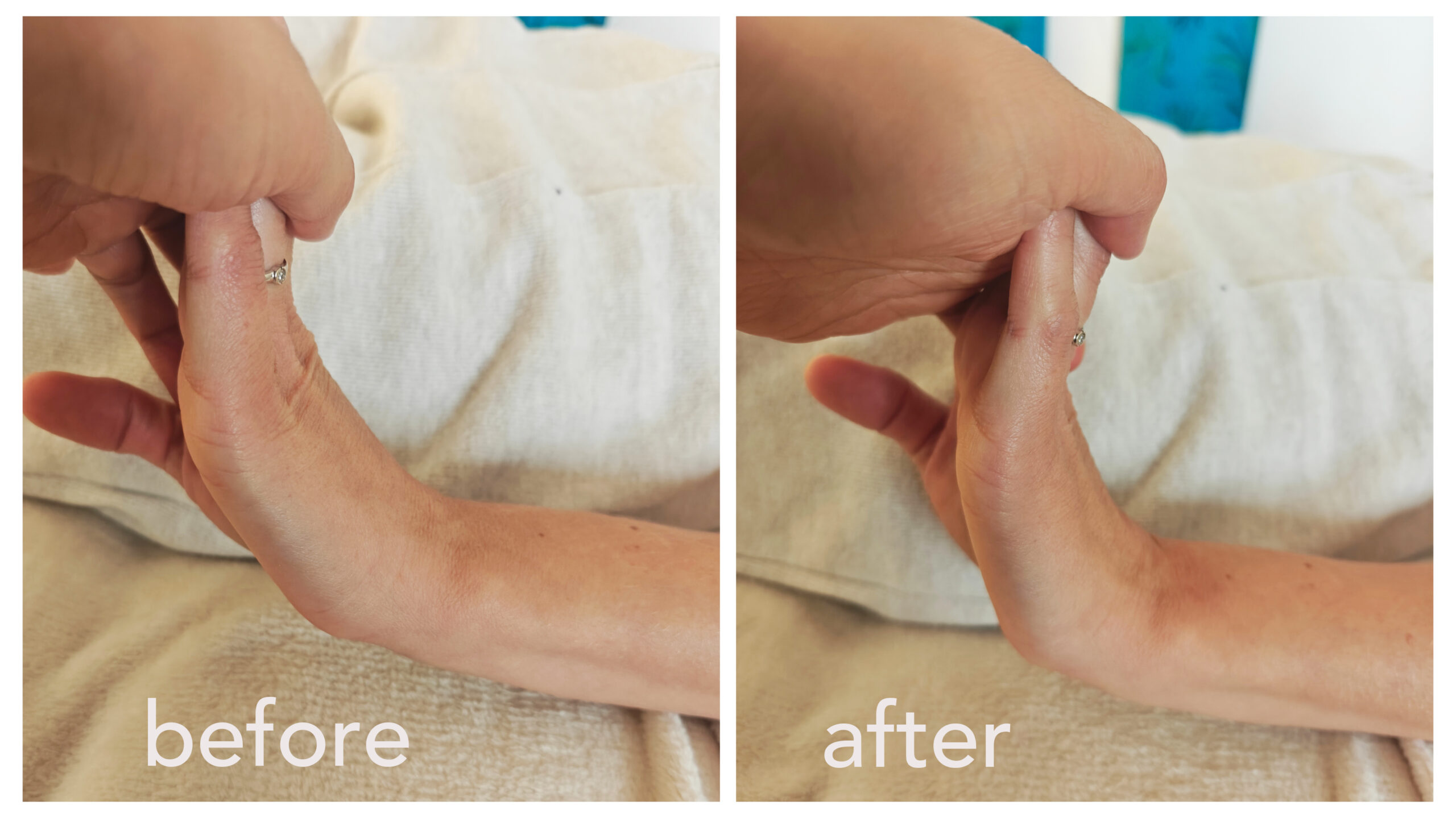
Before
- Limited wrist extension
- Visible stiffness
- Reduced hand opening comfort
- Possible numbness or cold sensation
- Distal tension expressed at the wrist
After
- Improved wrist extension
- Greater hand openness
- Reduced visible restriction
- Improved distal comfort
- Better transmission through the upper limb
ENTRY STRATEGY
The treatment did not begin at the wrist alone
The clinical strategy focused on releasing upstream fascial restriction rather than treating the wrist as an isolated local structure.
- Reducing cervical and shoulder fascial tension
- Improving upper-limb fascial transmission
- Restoring forearm gliding capacity
- Reducing distal mechanical pulling at the wrist
- Supporting neural and circulatory freedom through the chain
The wrist was treated as a responder, not as the primary source.
CLINICAL TURNING POINT
The visible change appeared rapidly
After the fascial release, the wrist showed a rapid improvement in mobility and openness.
The change suggested that the local restriction was not only a wrist problem, but part of a larger upper-limb fascial tension pattern.
This is why the wrist often responds quickly when the correct upstream tension is released.
WHAT BECAME VISIBLE
The wrist became freer when the system stopped pulling
Mobility
Wrist extension improved visibly after release.
Sensation
Numbness and coldness may reduce when neuro-fascial pressure decreases.
Grip
Hand opening and functional comfort may improve as fascial tension normalizes.
Chain Response
The distal change reflected a release through the upper-limb chain.
CLINICAL REFLECTION
The wrist was the messenger, not the source
This case illustrates a key Fasciapuncture® principle:
Distal symptoms often reveal upstream fascial restriction.
When the cervical, shoulder, pectoral, and forearm fascial chain is restricted, the wrist may become the narrow outlet where symptoms appear first.
Local treatment may help temporarily, but lasting change often requires reading the chain behind the symptom.
KEY LEARNING POINTS
What this case teaches
- Wrist symptoms may reflect upstream fascial tension.
- Numbness and coldness may involve neuro-fascial irritation.
- The wrist can behave as a pressure outlet.
- Improving the chain may change distal mobility rapidly.
- The symptom location is not always the source location.
- Fasciapuncture® reads relationships before treating points.
CONNECTED CLINICAL MAP
From neck to shoulder, forearm, and wrist
Neck
Cervical fascia may influence neural and vascular pathways toward the upper limb.
Shoulder
Scapular and pectoral restriction may increase downstream tension.
Forearm
Fascial compartments transmit tension toward the wrist and hand.
Wrist
The wrist expresses the final visible limitation in the chain.
RELATED CONDITIONS
Conditions connected to this case
Hand Numbness
When hand symptoms may reflect cervical and upper-limb fascial restriction.
Wrist Pain
A fascia-based view of wrist stiffness, pain, and reduced mobility.
Neck Tension
Cervical restriction may influence symptoms far beyond the neck.
Shoulder Pain
Shoulder and scapular restriction may affect the entire upper limb.
RELATED CASES
Other cases from the Clinical Evidence Library
When Shoulder Pain Wakes You at Night
A case showing how shoulder pain may reflect deeper fascial protection.
When the Neck Was Holding the Arm
A clinical story of upper-limb symptoms connected to cervical tension.
When the Body Stopped Protecting
A regulation-based case showing how local symptoms change through system release.
Explore More Clinical Cases
Continue through the Fasciapuncture® Clinical Evidence Library.
CONTINUE LEARNING
Learn to read the chain behind the wrist symptom
This case connects directly to clinical pattern reading, upper-limb fascial assessment, and the neuro-fascial patterns behind distal symptoms.
Module 2 · Clinical Pattern Reading
Learn how to observe posture, palpate fascial tension, and identify the functional chains behind local symptoms.
Module 6 · Elbow, Forearm & Hand Disorders
Explore forearm fascia, wrist pressure, hand symptoms, neuro-fascial irritation, and upper-limb safety zones.
Neuro-Fascial Irritation Pattern
Understand how numbness, coldness, neural irritation, and distal discomfort may emerge from fascial compression patterns.
Cervical Axis Tension
See how cervical restriction can influence the shoulder, arm, wrist, hand sensation, and upper-limb fascial transmission.