
SIGNATURE CASE · PATTERN DEMONSTRATION
When Central Regulation Changes,Peripheral Symptoms May No Longer Need Treatment.
clinical reflection on abdominal regulation, systemic adaptation, shoulder pain, ankle sprain, and the moment when the body begins to reorganize itself.
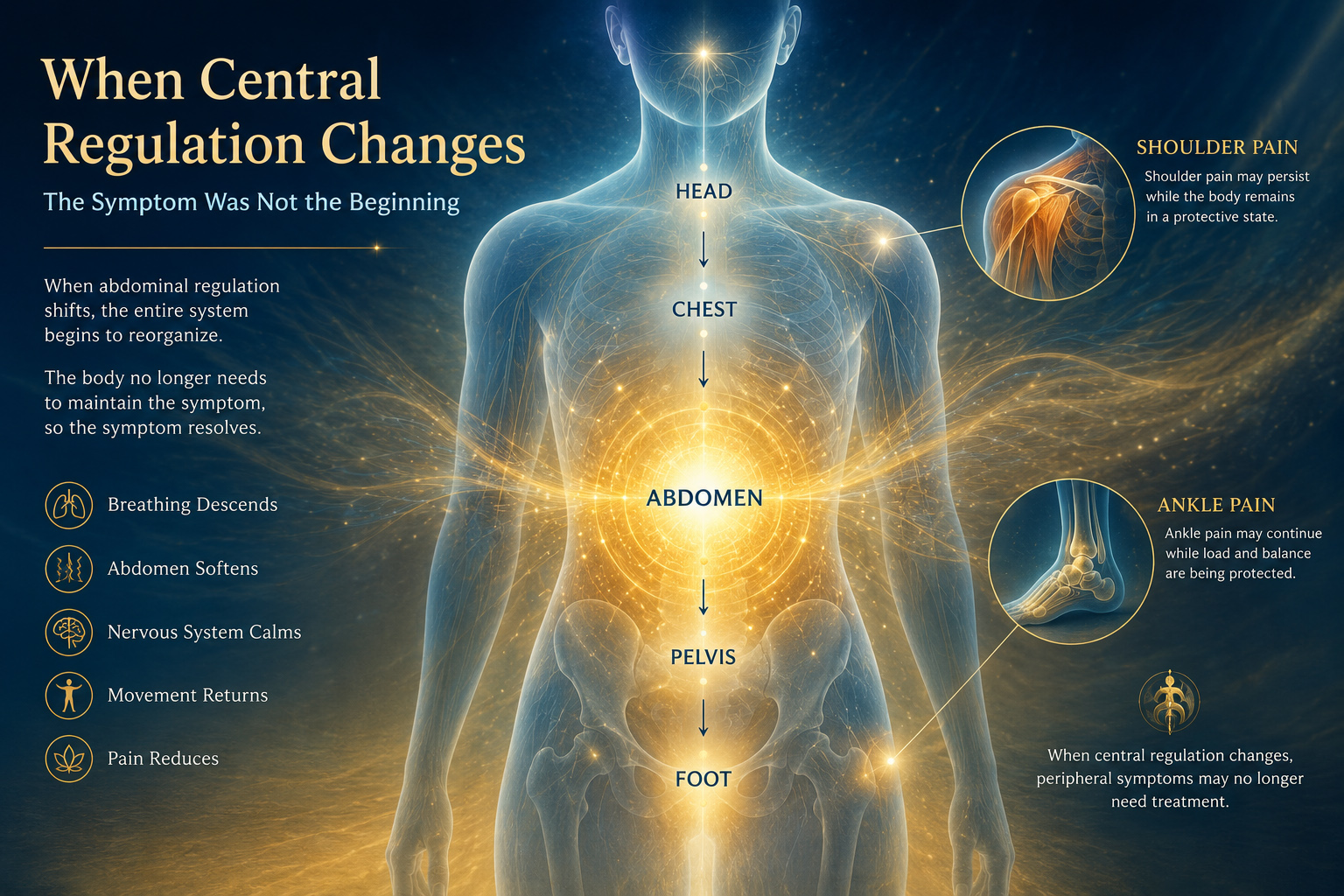
CLINICAL OPENING
Two different symptoms. One central response.
Two patients arrived with completely different complaints. One came because of shoulder pain. The other came because of a chronic ankle sprain.
Neither received direct treatment to the symptomatic area during the first sessions. Instead, treatment was directed toward central abdominal regulation.
What if the symptom was not the primary problem?
INITIAL SYSTEM STATE
What was visible before treatment
Clinical Observation 1 · Shoulder Pain
A woman in her fifties presented with chronic shoulder pain associated with sleep disturbance and persistent anxiety.
- Painful backward shoulder extension
- Long-term shoulder guarding
- Reduced internal comfort
- Fragmented sleep
- Persistent systemic tension
Clinical Observation 2 · Chronic Ankle Sprain
Another patient presented with a three-month-old ankle sprain, swelling, protective walking, and reduced confidence in loading the foot.
- Persistent ankle swelling
- Protective walking pattern
- Instability and limping
- Dependence on a support bandage
- Fear of normal movement
PATTERN ATLAS
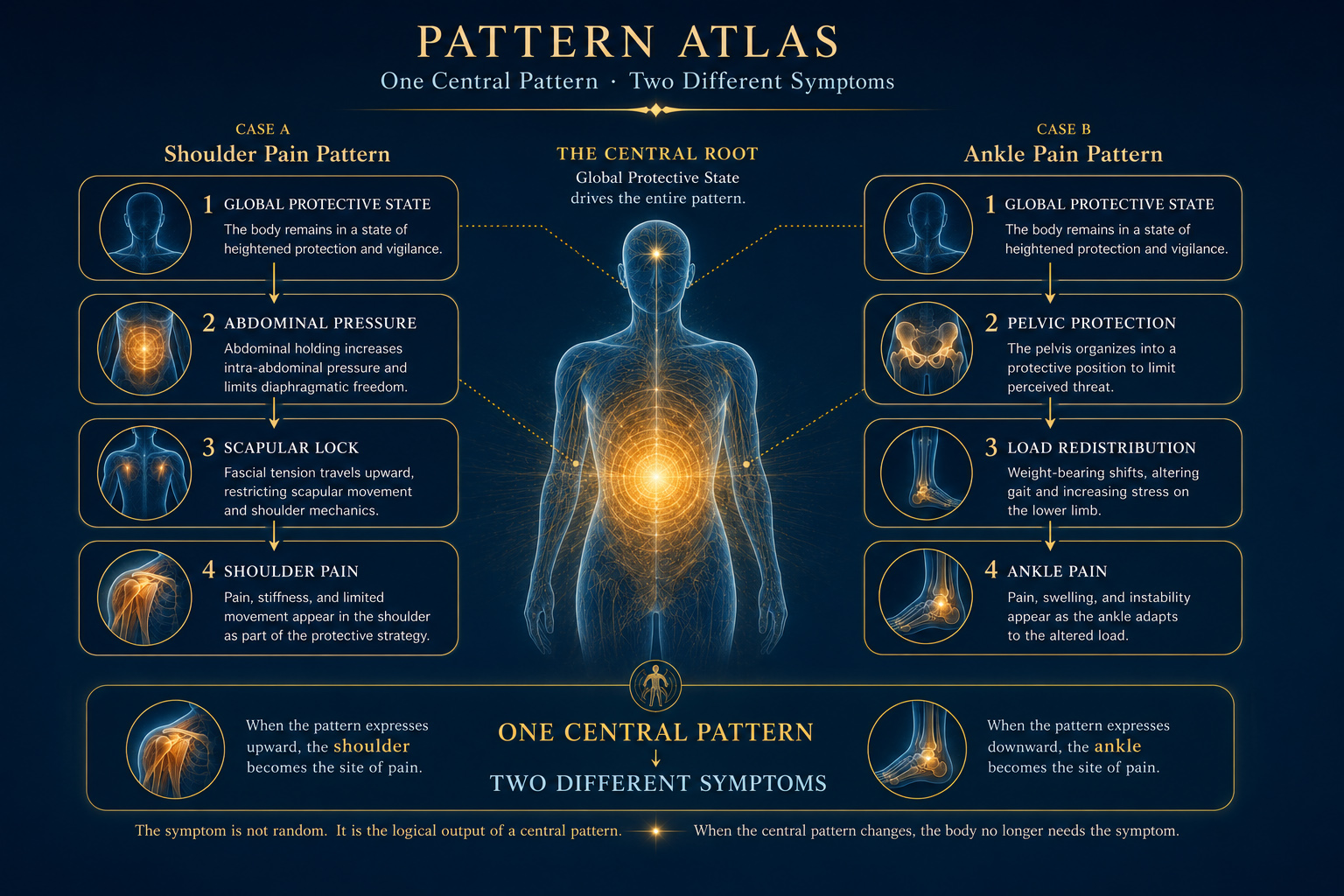
The symptom was peripheral. The pattern was central.
Shoulder Pain Pattern
Global Protective State → Abdominal Pressure → Scapular Lock → Shoulder Pain
Ankle Sprain Pattern
Global Protective State → Pelvic Protection → Load Redistribution → Ankle Pain
Central regulation first
The body was not only protecting one painful region. It was organizing itself around a broader protective state.
BEFORE & AFTER CLINICAL ATLAS
What changed first was regulation
Before
- Breathing remained high and restricted
- The abdomen felt guarded
- Movement was protective
- The nervous system stayed alert
- Peripheral pain remained active
After
- Breathing descended
- The abdomen began to move internally
- Warmth and lightness appeared
- Movement became freer
- Pain reduced without direct local treatment
ENTRY STRATEGY
The decision was not to chase the symptom
The clinical decision was not to pursue the shoulder or ankle directly. Instead, intervention focused on areas associated with abdominal pressure regulation, diaphragmatic freedom, and central fascial tension.
The objective was not pain suppression. The objective was to observe whether the system could reorganize itself once protective load decreased.
CLINICAL TURNING POINT
Immediate systemic responses appeared
Breathing
Breathing became deeper and descended toward the abdomen.
Abdomen
Internal movement, warmth, and audible intestinal activity appeared.
Legs
Sensations of warmth and lightness descended into the lower limbs.
Nervous System
A quiet and pleasant calm appeared from inside outward.
The system did not need more stimulation. It needed space to continue reorganizing.
WHAT BECAME VISIBLE
Peripheral symptoms began to resolve
Shoulder Case
- Sleep quality improved
- Internal agitation reduced
- Shoulder pain disappeared spontaneously
- Backward shoulder movement returned without discomfort
Ankle Case
- The ankle felt lighter immediately
- Stability improved
- The protective bandage was removed
- One week later, swelling had resolved and walking was normal
CLINICAL REFLECTION
Why stopping became appropriate
These cases do not suggest that shoulder pain or ankle pain should never be treated locally. They suggest that symptoms sometimes persist because the system still requires them.
When central regulation changes, the need for protection may diminish. The symptom may disappear not because it was directly treated, but because it is no longer required.
When central regulation is achieved, the body often resolves peripheral symptoms on its own.
KEY LEARNING POINTS
What this case teaches
01
Symptoms may reflect adaptation rather than isolated local damage.
02
The first observable shift is often regulatory, not mechanical.
03
Breathing changes frequently precede pain changes.
04
Peripheral symptoms may improve when central pressure decreases.
05
Clinical restraint can be an active therapeutic decision.
CONNECTED CLINICAL MAP
Where this case belongs in the Fasciapuncture® map
Global Protective State
The body remains organized around vigilance, adaptation, and protection.
PatternAbdominal Pressure
Central abdominal holding may influence breathing, posture, and peripheral symptoms.
PatternScapular Lock
Shoulder pain may reflect broader upper-body protective organization.
PatternPelvic Protection
Pelvic guarding may influence gait, loading, ankle confidence, and lower-limb symptoms.
RELATED CONDITIONS
Symptoms connected to this pattern
RELATED CASES
Other cases showing systemic regulation
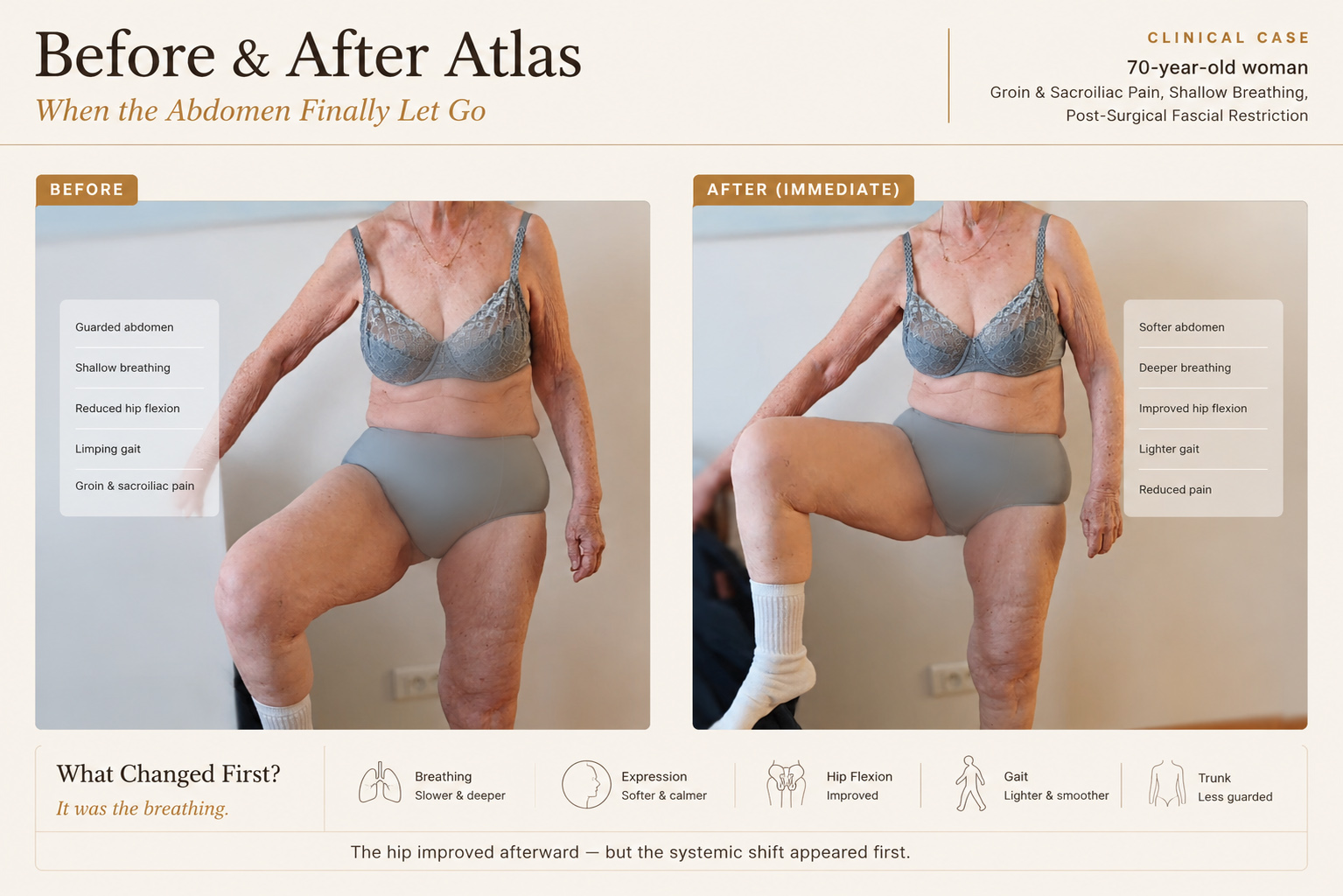 Signature Case · Abdominal Pressure
When the Abdomen Finally Let Go
A case showing how abdominal guarding, breathing, pelvis, and walking may shift together.
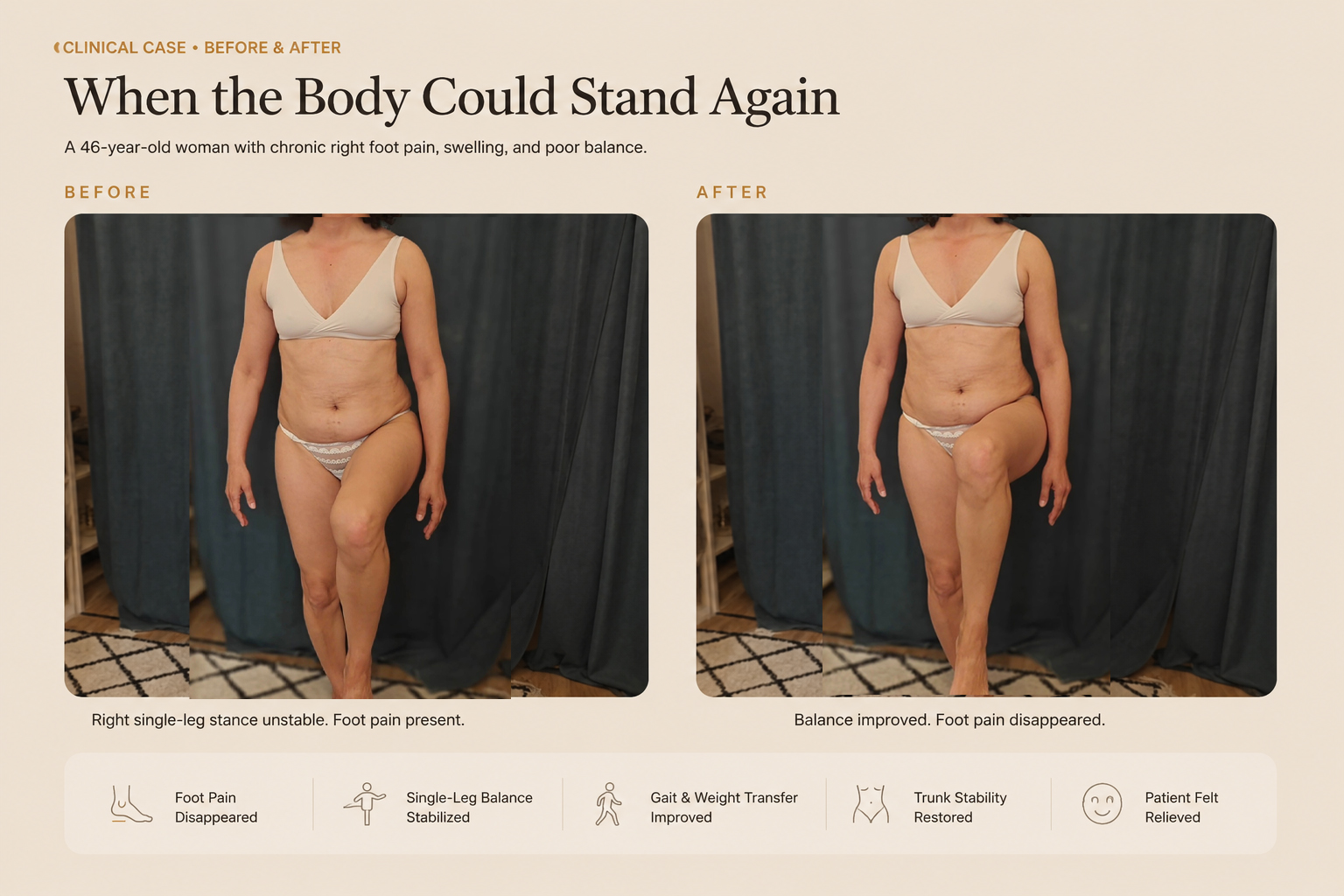 Pattern Demonstration Case · Lower Limb
The Foot Was Not the Problem
A case showing how foot pain may reflect a whole-body pressure and compensation pattern.
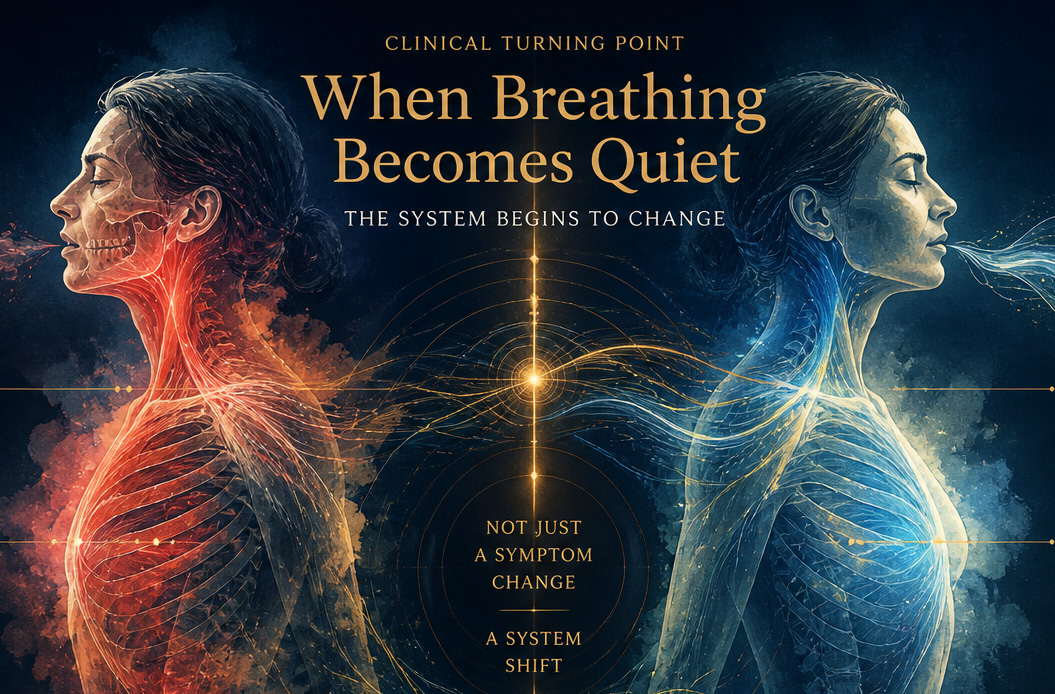 Clinical Case · System Regulation
When Breathing Becomes Quiet
A reflection on breathing, autonomic regulation, and visible systemic change.
CONTINUE LEARNING
Learn how to read patterns before treating symptoms
Module 1 · Foundations
Understand why Fasciapuncture® begins with clinical reasoning and systemic regulation.
TrainingModule 2 · Diagnostic Reading
Learn how to observe posture, breathing, fascia tension, and protective patterns.
AtlasClinical Pattern Atlas
Explore the pattern system behind Fasciapuncture® clinical reasoning.