A Clinical Case with Visual Evidence
1 Patient Presentation
A patient presented with significant restriction in shoulder elevation for more than one month.
-
Shoulder elevation limited
-
Pain during movement
-
Physiotherapy three times per week without improvement
Despite regular physiotherapy, the mechanical block persisted.
2 Clinical Observation
Assessment revealed:
-
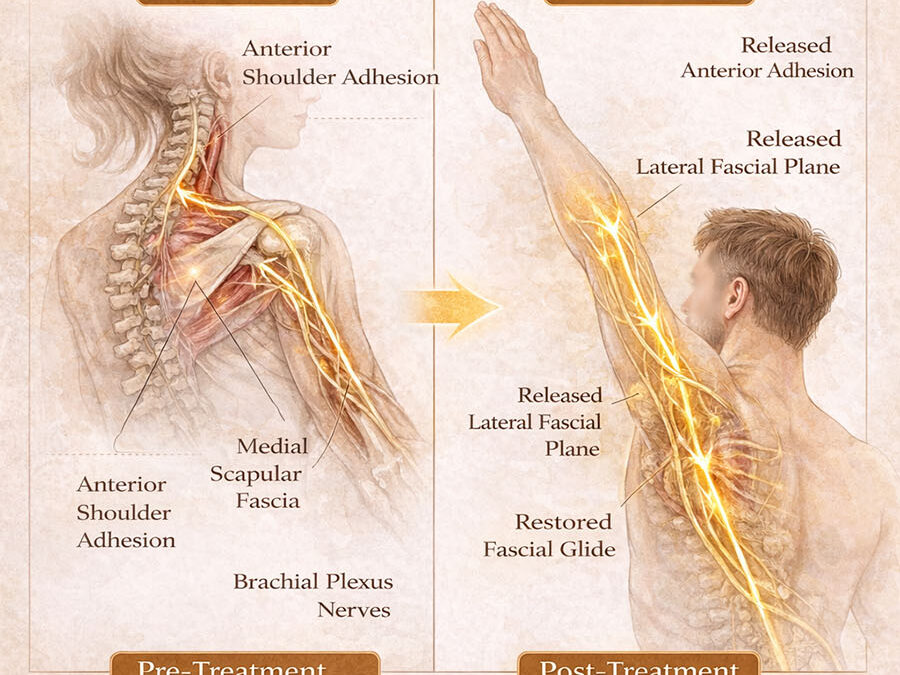
fascial tension along the anterior shoulder
-
restriction in the lateral fascial chain
-
adhesion affecting gliding between superficial and deep fascial layers
一句总结:
The limitation appeared mechanical rather than inflammatory.
3 Treatment Strategy
A Fasciapuncture® intervention targeted key fascial anchors responsible for restricting shoulder elevation.
The goal was:
-
release fascial adhesions
-
restore tissue glide
-
reduce nociceptive irritation
4 Visual Clinical Evidence
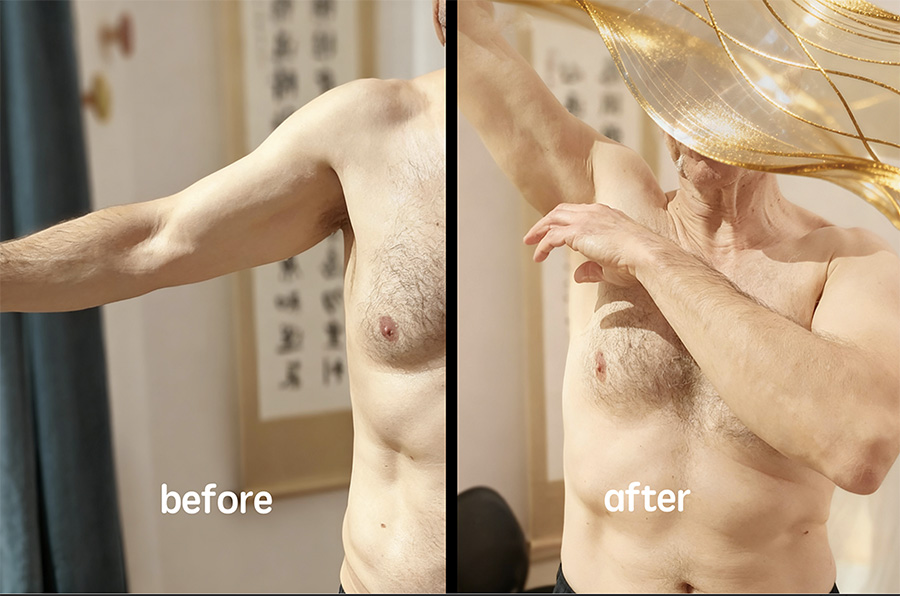
Before and After Fasciapuncture®
Immediately after the session, the patient regained full shoulder elevation without the previous mechanical restriction.
5 Clinical Response
✨ The response was immediate.
-
arm elevation restored
-
mechanical block disappeared
-
movement became smooth
6 Physiological Interpretation
The rapid change does not result from force or manipulation.
It results from:
-
restoration of fascial glide
-
reduction of nociceptive irritation
-
normalization of movement pathways
When the fascial planes regain mobility, the joint often recovers its function immediately.
7 Clinical Insight
In many shoulder limitations, the primary restriction lies in fascial adhesions rather than in the joint itself.