FASCIAPUNCTURE® CONDITION MAP
Face
Tension
A fascia-based view of facial tightness, jaw pressure, eye strain, cranio-cervical restriction, autonomic overload, and protective tension patterns.
CLINICAL PERSPECTIVE
Face tension is not always a face problem.
The face often reveals what the body can no longer hide. Jaw pressure, facial tightness, eye strain, and feelings of blockage may emerge when tension accumulates through the neck, breathing becomes restricted, and the nervous system remains unable to fully release protective patterns.
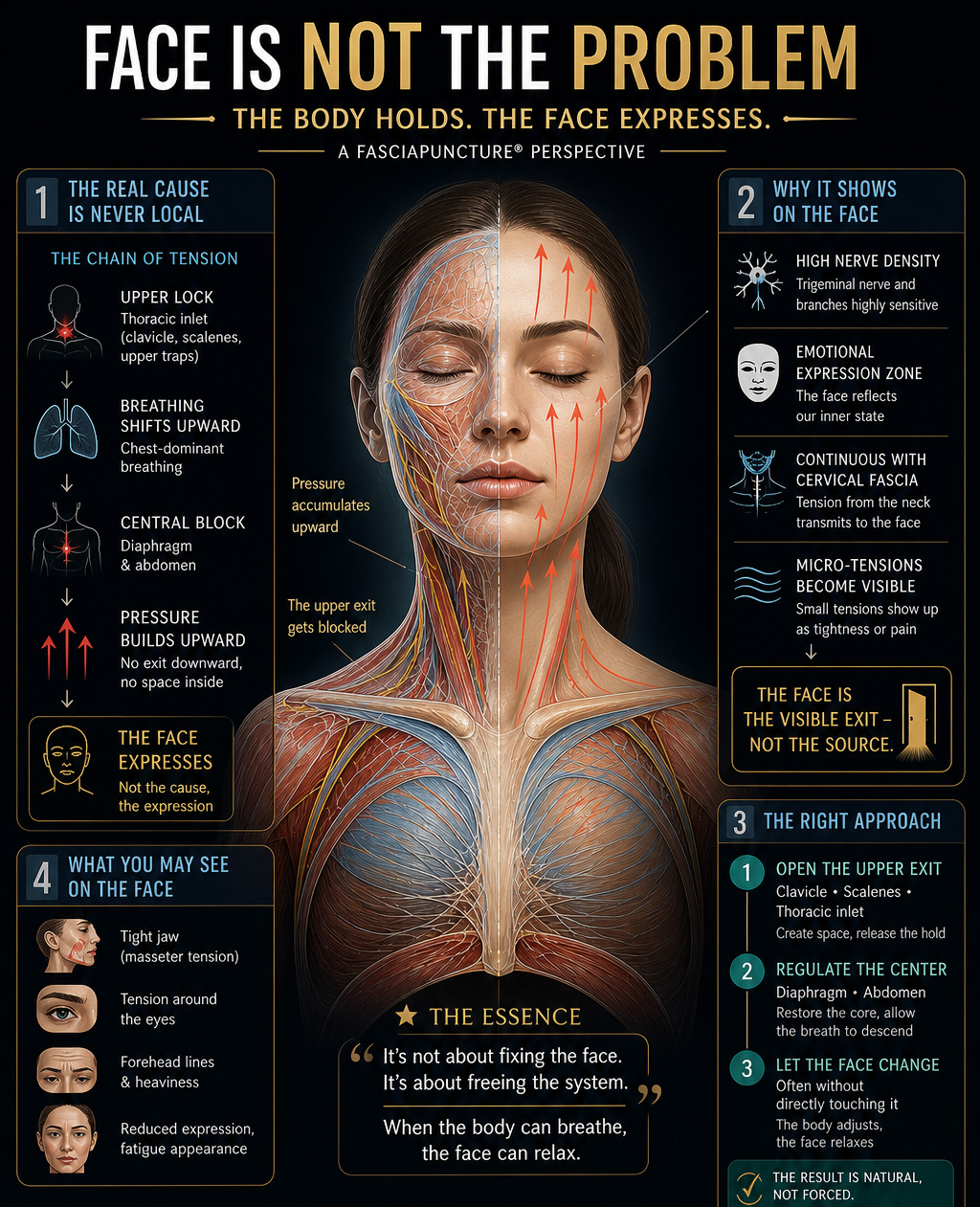
A fascia-based view of facial tightness, jaw pressure, eye strain, cranio-cervical restriction, autonomic overload, and protective tension patterns.
CLINICAL INSIGHT
The face may be where the system speaks.
Many people describe a strange feeling of tension “everywhere,” but especially in the face. They may feel pressure around the eyes, stiffness in the jaw, heaviness in the forehead, or a sensation that the face cannot fully relax.
From a Fasciapuncture® perspective, this is often not a purely local facial problem. The face may simply be where the body reveals a deeper lack of freedom.
COMMON PRESENTATIONS
How facial tension may appear
Facial tension can appear through the jaw, eyes, forehead, expression, or as part of a larger whole-body tension pattern.
Jaw Tightness
Clenching, stiffness, or a sense that the jaw never fully releases.
Eye & Forehead Pressure
Tension around the eyes, brow, temples, or upper face.
Expression Feels Held
The face may feel less natural, less soft, or emotionally blocked.
Whole-Body Tension
The face becomes the most visible part of a global tension pattern.
KEY IDEA
The face is an expression zone.
The face is highly innervated, emotionally expressive, and deeply connected to the neck, chest, breathing system, and cervical fascia.
When the upper body becomes locked, when breathing rises, or when the central axis loses space, tension may travel upward and appear through the face.
The face is not always the source of tension. Sometimes, it is the place where the system speaks.
THE PATTERN
From systemic tension to facial expression
Treating only the face may bring temporary relief. But if the system remains locked, the tension often returns.
Upper Exit Restriction
The neck, jaw, thoracic inlet, and skull base may become restricted.
02Breathing Moves Upward
Breathing becomes high, shallow, and unable to descend.
03Central Axis Loses Space
The midline, abdomen, and diaphragm no longer transmit pressure smoothly.
04Face Expresses Pressure
Pressure appears through the jaw, eyes, forehead, and facial expression.
FASCIAPUNCTURE® APPROACH
We do not start by forcing the face to relax.
Open the Upper Exit
We assess the thoracic inlet, clavicular region, and cervical-fascial passages to see whether the upper system can release.
Restore the Central Axis
The diaphragm, abdomen, and midline are observed as key areas that may allow pressure to descend and breathing to become quieter.
Let the Face Change
When the system regains space, the face often softens naturally — sometimes without direct facial treatment.
Verify Regulation
We observe breathing, facial softness, jaw tone, eye pressure, and whole-body ease as clinical markers.
CLINICAL EXAMPLE
“I have blockages and tensions everywhere, especially in my face.”
This type of complaint often indicates that the face is not isolated. The clinical priority is to understand how the body distributes tension: where it is locked, where it compensates, and where the system may need an entry point.
The goal is not cosmetic correction. The goal is to help the body regain regulation, movement, and internal space.
WHY THIS IS DIFFERENT
Local treatment is not always enough.
A local approach focuses on the visible area: facial muscles, jaw, skin, or expression. A systemic approach asks a deeper question:
Why is the face carrying this tension?
We look for:
Breathing restriction
Neck and thoracic inlet tension
Jaw–cervical fascia connection
Diaphragm and abdominal pressure
Global fascial compensation patterns
RELATED PATTERNS
Patterns often connected to facial tension
Upper Exit Block
Neck, jaw, skull base, and upper-body pressure restriction.
PATTERNCranial Fascial Tension
Facial tightness, eye pressure, forehead tension, and cranial load.
PATTERNJaw-Neck Lock
Jaw pressure, cervical tension, and facial expression holding.
PATTERNAutonomic Dysregulation
Stress, vigilance, breath holding, and facial protective tone.
RELATED CONDITIONS
Clinical entry points connected to this case
RELATED CASES
Where the body holds and the face expresses
When the Throat Finally Opened Again
Migraine, reflux, globus sensation, neck tension and anxiety interpreted through an Upper Exit Block pattern.
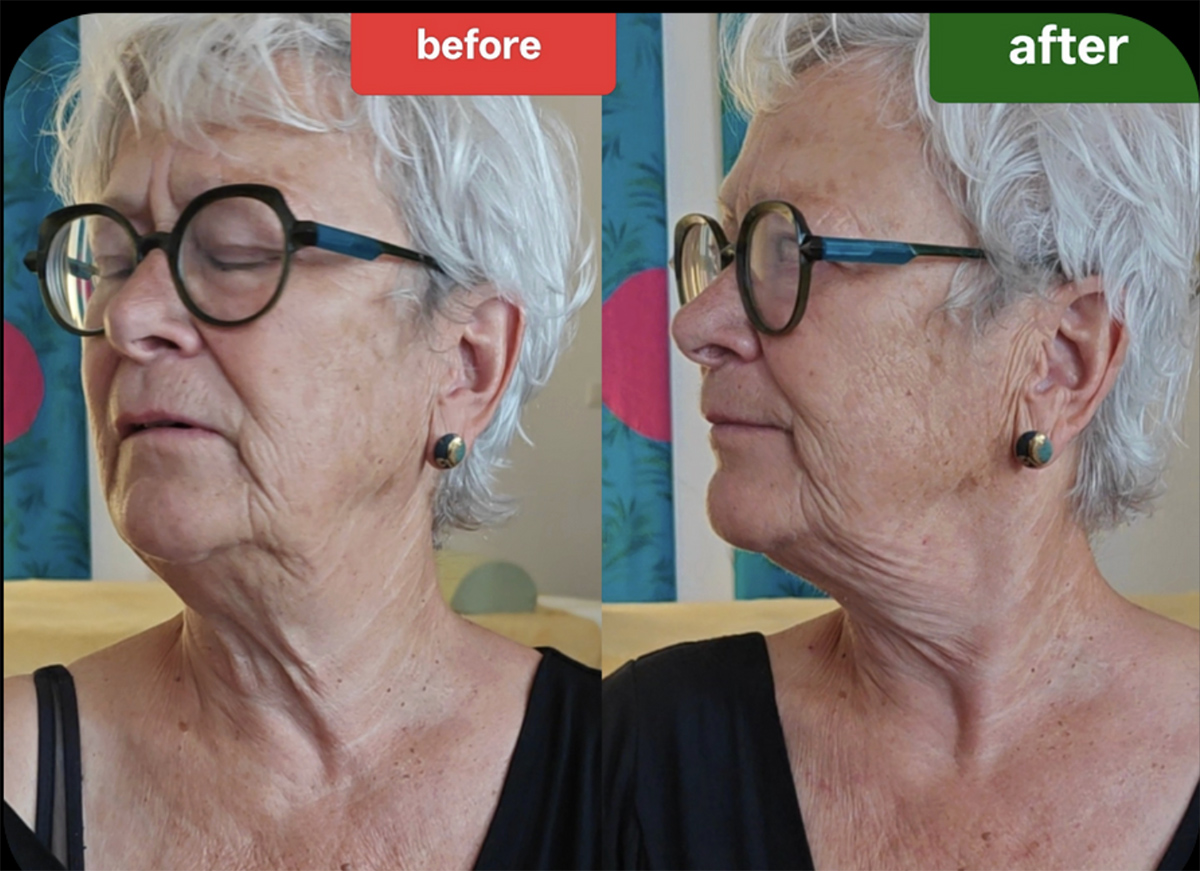
When the Neck Was Not the Whole Story
A clinical case where neck numbness, facial symptoms, abdominal pressure, reflux, constipation, and disturbed sleep were viewed through a broader pattern of protection and regulation.
Read Case →When a Headache Is Not Only in the Head
A case showing how frontal and orbital headache may reflect a deeper pressure and axis pattern.
When Stress Becomes Pain
A clinical interpretation of stress, autonomic activation, fascial tension, and protective regulation.
FASCIAPUNCTURE® CLINICAL MAP
Facial tension may be the visible part of a deeper pattern.
Fasciapuncture® offers a clinical way to read the system before treating the symptom.
Book a Consultation