
FASCIAPUNCTURE® SIGNATURE CLINICAL CASE
When Tinnitus Was Not Only About the Ear
A long-standing tinnitus case where emotional shock, sleep disruption, cervical tension, and autonomic imbalance appeared to be more important than the ear itself.
Chronic Tinnitus
Autonomic Dysregulation
Emotional Shock
Sleep Improved First
CLINICAL TURNING POINT ATLAS
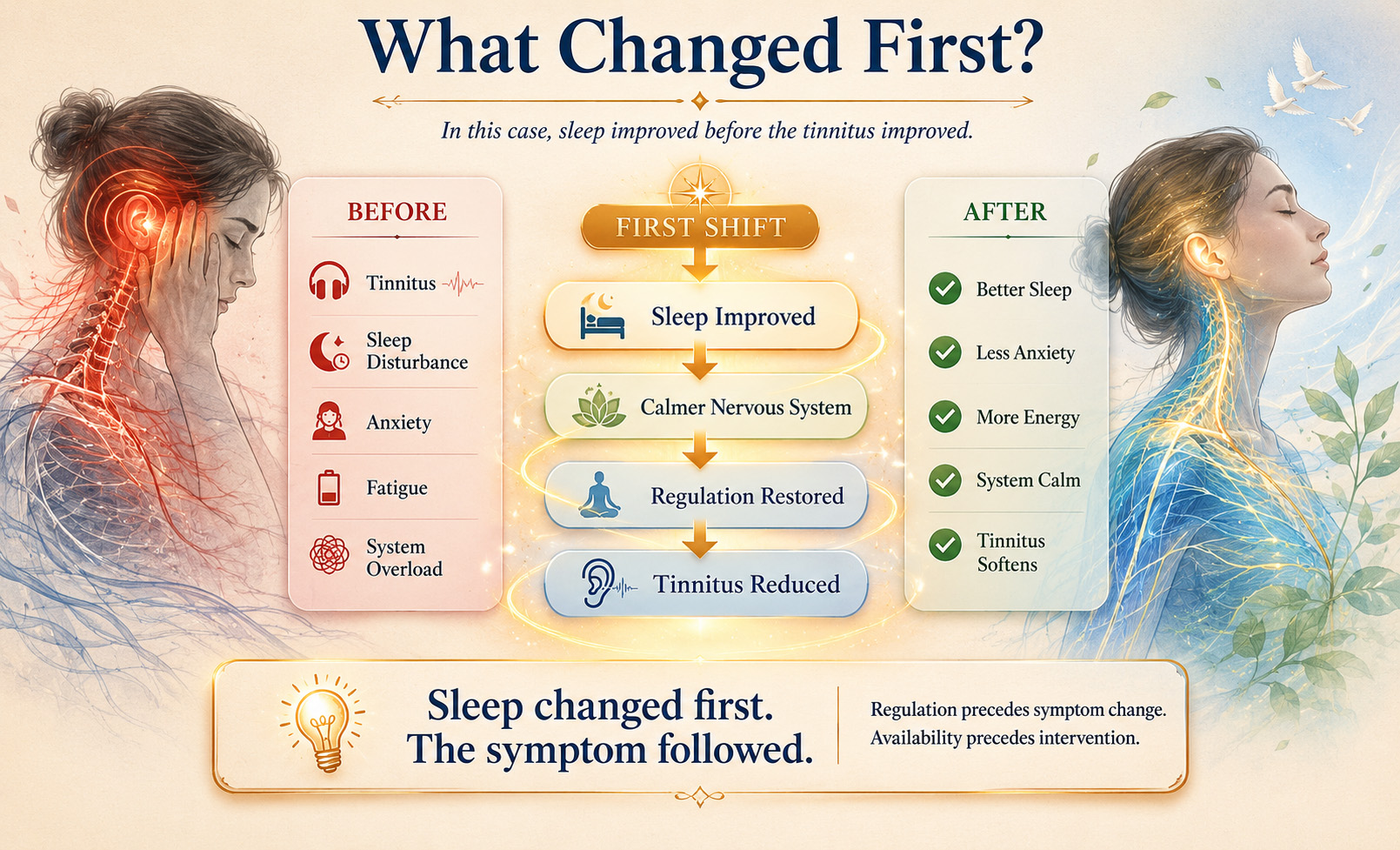
Sleep changed first. The symptom followed.
CLINICAL OPENING
The ear was not the whole story.
Many people seek help for tinnitus because of the sound. Yet in clinical practice, the sound may be only one part of a larger regulatory story.
This woman had been living with tinnitus for years. The symptom began approximately one year after the loss of her mother.
Over time, the ringing became more intrusive, sleep deteriorated, anxiety increased, and the nervous system appeared unable to settle.
The clinical question was not only: “Why is the ear ringing?”
The deeper question became: “Why can the system no longer regulate?”
INITIAL SYSTEM STATE
The symptom appeared inside a broader protective state.
Tinnitus
Persistent ringing affecting daily comfort and emotional stability.
Sleep Disturbance
Frequent awakenings and difficulty returning to sleep.
Emotional Shock
The symptom appeared after a significant emotional loss.
System Regulation
The body appeared unable to return easily to a resting state.
PATTERN ATLAS
The tinnitus was read through regulation, not only through the ear.
Autonomic Dysregulation
Persistent activation, sleep disruption, and reduced recovery capacity.
Cervical Axis Tension
Head-neck regulation pathways appeared overloaded.
Upper Exit Block
Thoracic and cervical tension may influence cranial regulation.
Global Protective State
The system remained organized around vigilance rather than recovery.
BEFORE & AFTER CLINICAL ATLAS
What changed first was not the sound. It was sleep.
Before
- Persistent tinnitus
- Frequent night waking
- Anxiety and internal tension
- Reduced energy
- Difficulty recovering after stress
After 6 Sessions
- Sleep improved
- Night awakenings reduced
- Emotional calm increased
- Energy improved
- Tinnitus intensity progressively decreased
The first visible change was the return of sleep and regulation. The tinnitus began to reduce after the system became more available.
ENTRY STRATEGY
The treatment did not chase the ear.
The therapeutic approach did not target the ear directly. Instead, the intervention focused on restoring regulatory availability within the fascial system.
Cervical and cranio-cervical regulation
Reduction of global tension patterns
Support for autonomic rebalancing
Minimal and precise fascial entry points
CLINICAL TURNING POINT
Regulation changed before symptom intensity changed.
A significant observation emerged during follow-up: the patient’s sleep improved before the tinnitus improved.
This sequence suggested that the system was reorganizing before the symptom expression became quieter.
Regulation preceded symptom change.
Availability preceded intervention.
WHAT BECAME VISIBLE
The system began to settle.
Sleep
More continuous sleep with fewer night awakenings.
Emotion
Less anxiety and less internal tension.
Energy
Improved daytime vitality and recovery capacity.
Tinnitus
Progressive reduction in perceived intensity.
CLINICAL REFLECTION
The symptom may be the last thing to change.
This case illustrates a recurring observation within Fasciapuncture®: the body often changes in a specific sequence.
Sleep → Autonomic Regulation → Recovery Capacity → Symptom Reduction
The tinnitus was not treated as an isolated auditory disorder. It was understood as a signal of a system struggling to reorganize after long-term stress and emotional shock.
KEY LEARNING POINTS
What this case teaches
Do Not Chase the Symptom
Tinnitus may reflect a larger regulatory pattern.
Observe Sleep First
Sleep often reveals system readiness and recovery capacity.
Regulation Before Resolution
The body may reorganize before symptoms improve.
CONNECTED CLINICAL MAP
From tinnitus to system regulation
RELATED CONDITIONS
Conditions connected to this case
RELATED CASES
Continue exploring similar clinical patterns
CONTINUE LEARNING