
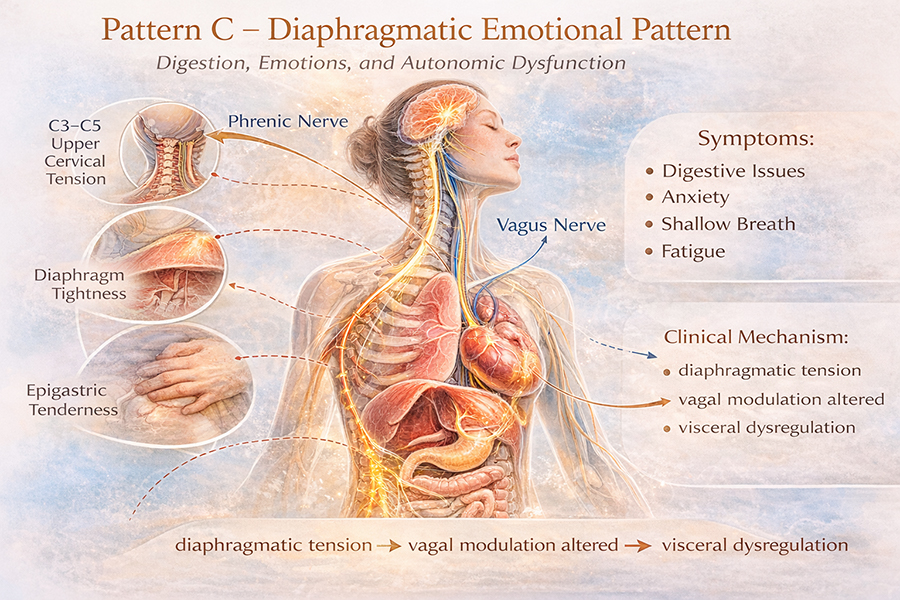
This clinical case illustrates a common pattern of autonomic dysregulation associated with diaphragmatic fascial tension.
1 Patient Profile
-
Age: 38
-
Sex: Female
-
Occupation: Nurse
-
Main Complaint: Anxiety, shallow sleep, chest tightness, abdominal bloating
-
Duration: Several months
-
Trigger / Onset: Progressive stress and internal tension
-
Previous Treatments: Osteopathic sessions with temporary relief
The patient sought Fasciapuncture® after experiencing persistent anxiety and a feeling of being “out of phase” with her own body.
2 Clinical Observation
During the consultation, the patient appeared visibly unsettled and emotionally fragile.
Observed signs included:
-
shallow breathing pattern
-
chest and rib tension
-
difficulty settling in the chair
-
emotional release during the first moments of conversation
Palpation suggested tension in several fascial regions:
-
suboccipital fascia
-
cervical fascia
-
upper thoracic fascial plane
-
rib and diaphragmatic tension
These patterns suggested autonomic instability associated with cervico-thoracic fascial tension.
3 Fascia-Based Interpretation
From a fascial perspective, symptoms such as anxiety, shallow breathing, and digestive discomfort may reflect autonomic dysregulation rather than primary structural disease.
In this case, tension in the cervical and thoracic fascial chains may influence:
-
the sympathetic chain along the cervical spine
-
breathing mechanics
-
vagal tone regulation
The patient’s symptoms were not localized pathology but reflected a broader imbalance within the fascial–autonomic interface.
4 Treatment Strategy
Fasciapuncture® intervention focused on restoring fascial balance in key regulatory zones:
-
cervical fascial tension release
-
upper thoracic fascial decompression
-
diaphragmatic fascial relaxation
The goal was not to treat symptoms directly but to reduce fascial tension affecting autonomic regulation.
5 Clinical Response
Within minutes of the intervention, several physiological responses were observed:
-
spontaneous sighing
-
deeper breathing
-
repeated swallowing reflex
-
audible intestinal movement
-
progressive emotional calm
The patient gradually became quieter and more settled.
These signs suggested rapid parasympathetic activation and autonomic rebalancing.
6 Physiological Interpretation
Such responses are frequently observed when fascial tension affecting the autonomic nervous system begins to release.
The sequence often includes:
-
breathing release
-
vagal activation (swallowing reflex)
-
digestive activity
-
overall systemic calming
When key fascial tensions are reduced, the nervous system may shift from defensive activation toward physiological regulation.
7 Clinical Insight
Many patients presenting with anxiety, shallow breathing, or digestive discomfort show no clear structural pathology.
However, fascial tension in cervical and thoracic regions may influence autonomic balance and systemic regulation.
Clinical Reflection
In certain patients, emotional and visceral symptoms may reflect fascial-autonomic imbalance rather than primary psychological disorder.