
FASCIAPUNCTURE® SIGNATURE CLINICAL CASE
When Her Hands Became Free Again
A seamstress who lived from the work of her hands arrived with painful, swollen fingers and wrist pain. Instead of treating only the hands, the cervical–arm pathway was released. After three sessions, her hands returned — and years later, the change was still there.
For someone who works alone as a seamstress, losing the hands does not only mean pain. It means losing the ability to live.
CLINICAL OPENING
She came because her hands were failing her.
She owned a small sewing workshop and worked alone. Her hands were not only part of her body — they were her livelihood.
When she first came, both hands were painful. The fingers were red and swollen, several joints were inflamed, and the wrists were painful. Daily work had become difficult. For a seamstress, this was not a small complaint.
If the hands could no longer work, her independence and source of income would be threatened.
INITIAL SYSTEM STATE
What was visible at the beginning
Local hand presentation
Both hands were painful, with red and swollen fingers. The wrists were also painful, and fine manual work had become increasingly difficult.
Life impact
As a seamstress working alone, her hand function was essential. The problem was not only pain, but the fear of losing her ability to work.
PATTERN ATLAS
The hands were speaking, but the neck was part of the story.
Cervical Axis Tension
The cervical region appeared to organize tension into the upper limb pathway.
Neuro-Fascial Irritation
Pain and inflammation in the hands suggested irritation along a broader neuro-fascial chain.
Upper Limb Fascial Restriction
The arms and hands were not treated as isolated parts, but as the end of a continuous pathway.
BEFORE & AFTER CLINICAL ATLAS
From painful hands to free expression
Before
- Both hands painful
- Red and swollen fingers
- Wrist pain
- Reduced confidence using the hands
- Work activity under threat
After
- Hand pain resolved
- Finger swelling calmed
- Wrist pain disappeared
- Manual work resumed normally
- Result remained stable years later
ENTRY STRATEGY
The treatment did not begin at the hands.
Although the complaint was in the hands, the treatment strategy focused first on the cervical region and the pathway from the neck through the arm.
During treatment, she felt a strong sensation travelling from the cervical area down the arm and into the hand. This response confirmed that the hands were not isolated from the upper body system.
The clinical intention was not to force the inflamed joints, but to restore transmission through the cervical–arm–hand pathway.
CLINICAL TURNING POINT
After approximately three sessions, the hands changed.
The pain decreased, the swelling calmed, and the hands gradually returned to normal use. For her, the result was extraordinary because the hands were the center of her daily life and professional survival.
She later began telling others about the experience and introduced many new people to the clinic.
WHAT BECAME VISIBLE
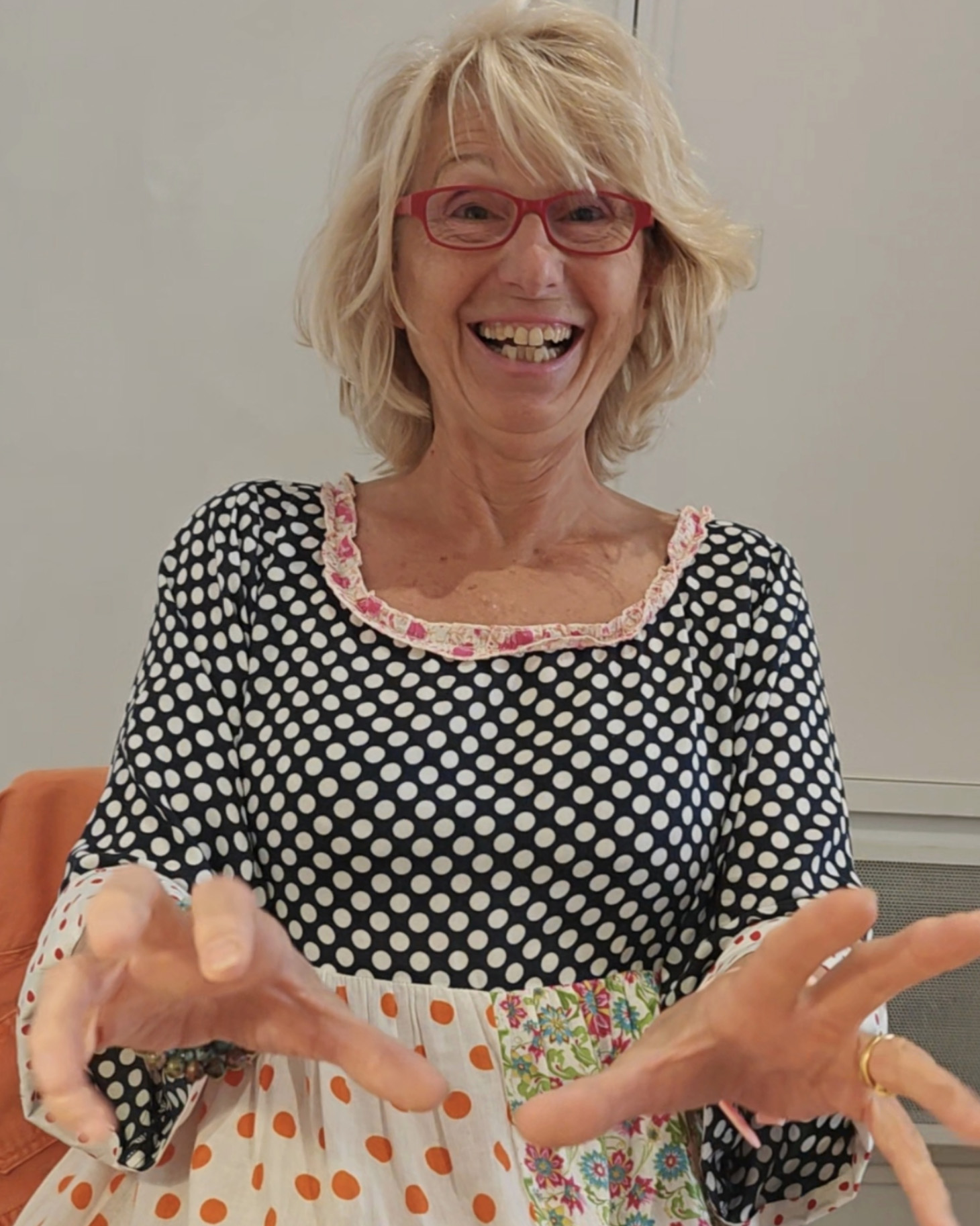
Years later, the evidence was not medical language. It was her smile.
Hands open
She could freely use both hands while speaking and expressing herself.
Work preserved
Her capacity to continue sewing and working independently was maintained.
Trust transmitted
She spoke about the treatment to others and became a source of referral.
“Every time I come, I feel I walk better when I leave than when I arrived.”
CLINICAL REFLECTION
The hand was the symptom. The pathway was the key.
This case reminds us that distal pain is not always a local problem. In this situation, the hands expressed the suffering, but the cervical and upper limb pathway appeared to organize the dysfunction.
The most meaningful result was not only that the pain improved quickly. It was that years later, the patient was still using her hands freely, smiling, working, and telling the story to others.
KEY LEARNING POINTS
What this case teaches
Pain location is not always the origin.
The hands were painful, but the therapeutic entry point was found higher along the cervical–arm pathway.
Function is more than symptom relief.
For a seamstress, restored hand function meant restored independence, work, and confidence.
Durability matters.
A clinical result becomes more meaningful when it remains visible years later.
Trust travels through lived experience.
Her referrals came not from explanation, but from what she had personally experienced in her own body.
CONNECTED CLINICAL MAP
Where this case belongs in the Fasciapuncture® clinical map
RELATED CASES
More cases connected to the upper limb pathway
CONTINUE LEARNING