
SIGNATURE CLINICAL CASE · SYSTEM REGULATION
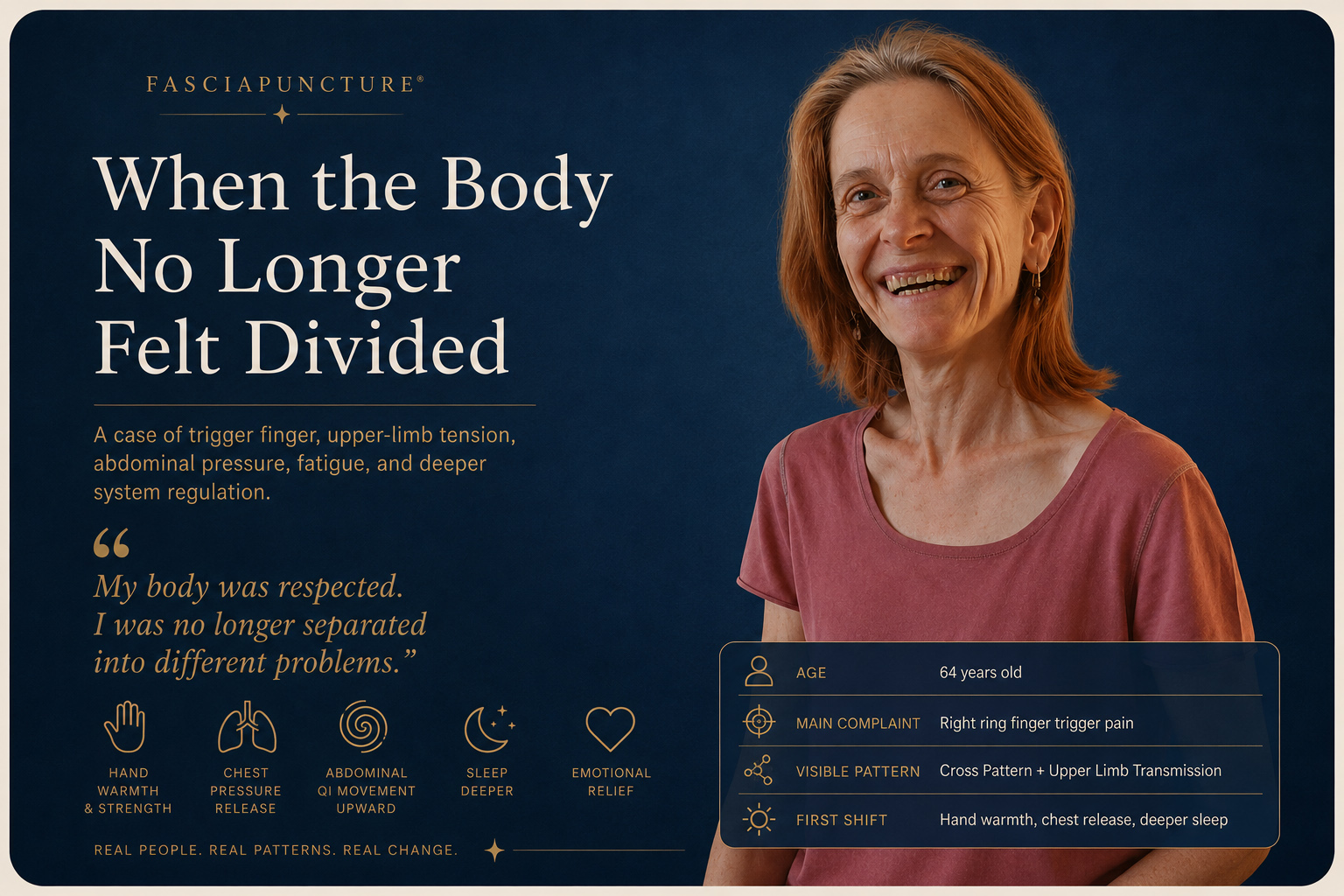
When the Body No Longer Felt Divided
A clinical case of trigger finger, right arm tension, left hip pain, abdominal pressure, chest restriction, fatigue, and emotional sadness — where a local hand symptom revealed a deeper system pattern.
CLINICAL OPENING
The finger was not alone
The patient came with pain and triggering of the right ring finger. At first sight, this could easily be understood as a local tendon or pulley problem.
But her body was telling a wider story: right foot pain, left hip pain, right shoulder and arm tension, right wrist discomfort, digestive pressure, early waking around 4 a.m., fatigue, sadness, nasal dryness, and loss of vitality.
In Fasciapuncture®, the finger was not treated as an isolated mechanical failure. It was read as the visible end-point of a larger fascial and regulatory pattern.
INITIAL SYSTEM STATE
A body carrying pressure in several directions
Physical presentation
The patient reported pain in the right foot, left hip, right shoulder, right arm, right wrist, and right ring finger with triggering. The hand felt stiff, painful, and less powerful.
Systemic presentation
She also described digestive discomfort, abdominal pressure, early waking around 4 a.m., fatigue, lack of motivation, sadness, and a general sense that her body no longer moved freely.
PATTERN ATLAS
The clinical map behind the symptoms
Cross Pattern
Left hip pain and right shoulder-arm symptoms suggested a diagonal load transmission between pelvis and shoulder girdle.
Upper Limb Transmission
Right shoulder, arm, wrist, and ring finger symptoms formed a continuous upper-limb fascial pathway rather than separate local problems.
Abdominal Pressure
The patient felt pressure in the abdomen, as if internal movement and upward circulation were blocked.
Thoracic Restriction
Chest pressure suggested that breathing, abdominal movement, and upper limb freedom were linked through the thoracic system.
System Exhaustion
Fatigue, early waking, sadness, and lack of enthusiasm suggested reduced regulatory capacity rather than only mechanical pain.
BEFORE & AFTER CLINICAL ATLAS
Observable regulation changes
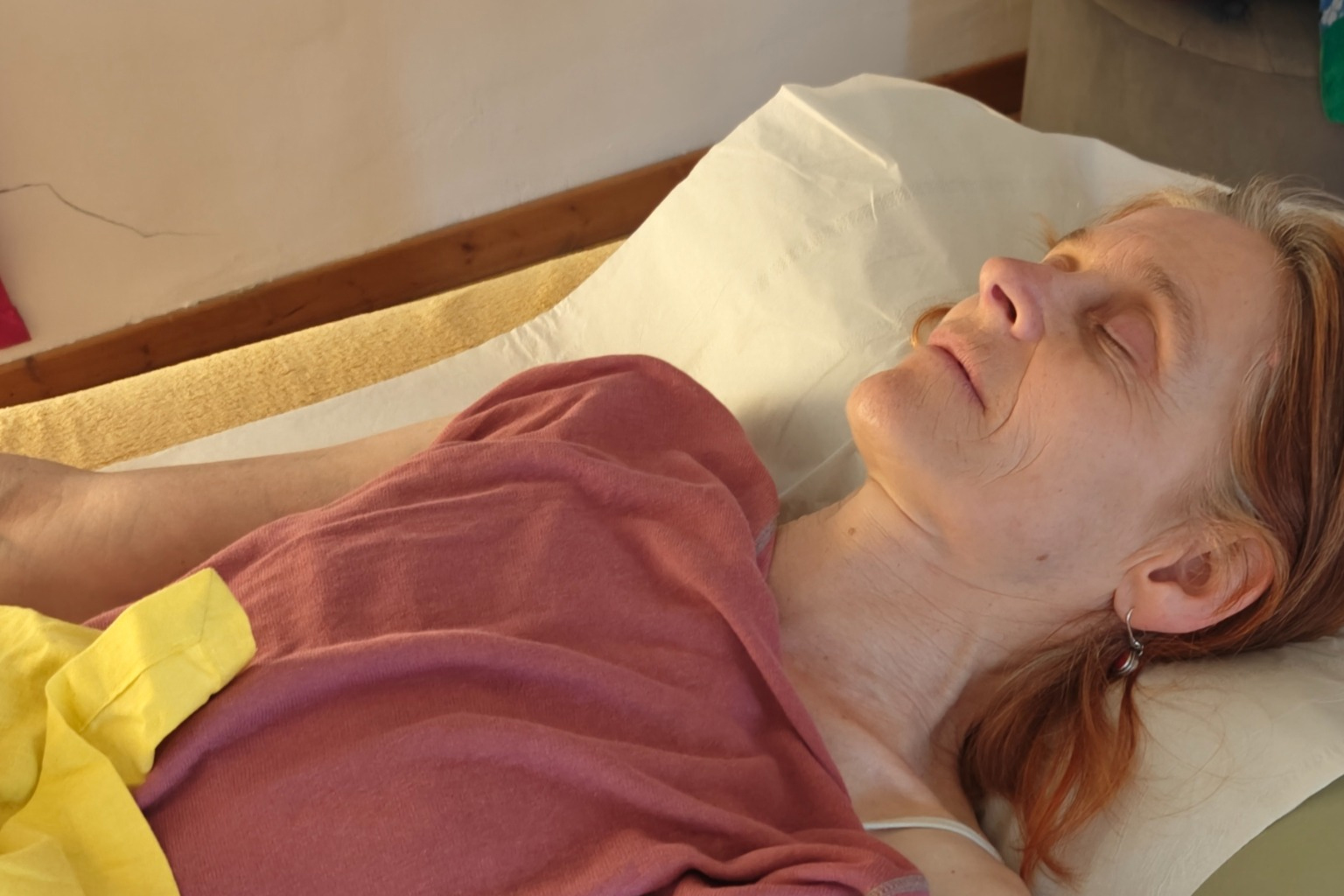
Before / During Treatment
- Facial expression beginning to soften
- Jaw and forehead less guarded
- Shoulders settling into the table
- Breathing becoming quieter
- Body entering a calmer internal state
After Treatment
- Brighter facial expression
- Natural smile and emotional release
- Shoulders visibly lower
- Chest more open
- Hand felt warmer, stronger, and more alive
ENTRY STRATEGY
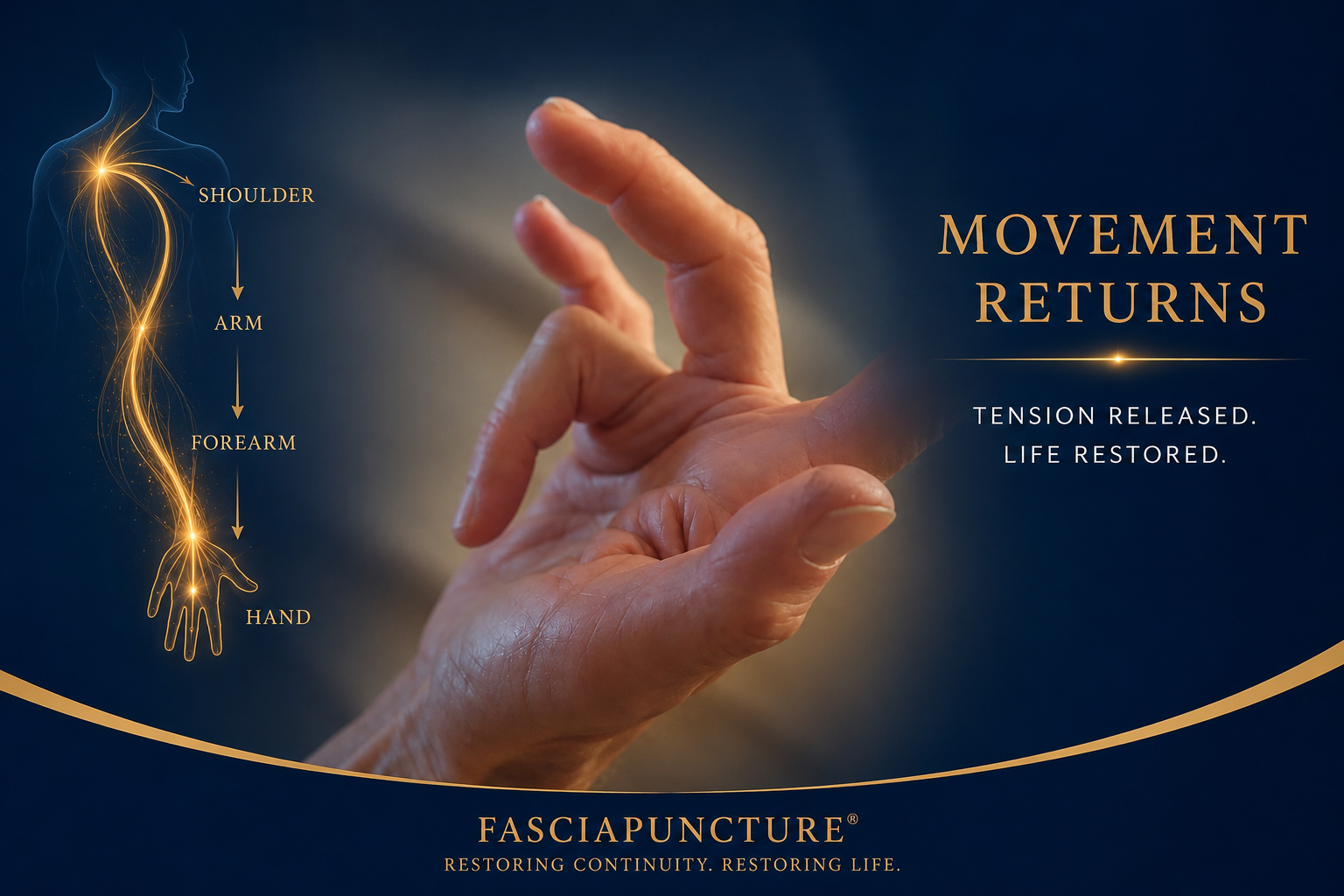
From shoulder to hand
The treatment did not begin from the disease name. It began from palpation of fascial restriction and tension pathways.
The shoulder and upper limb were read as part of the same functional chain leading toward the wrist and ring finger.
Local tight fascial points were released with minimal intervention, allowing the hand to regain warmth, movement, and strength.
CLINICAL TURNING POINT
The hand became alive again
After one session, the patient reported that the trigger pain in the finger had improved by about eight points, and finger mobility had improved by about five points.
More importantly, she described that the whole hand felt more alive, warmer, stronger, and less stiff.
At the same time, the pressure in the chest released, the abdominal qi felt able to move upward, and sleep began to become deeper.
WHAT BECAME VISIBLE
Signs of system regulation
Hand
Warmer, stronger, less painful, less rigid, and more responsive.
Chest
Pressure softened, allowing breathing and upper-body movement to feel easier.
Abdomen
The patient felt that the pressure in the abdomen could finally move upward.
Sleep
Sleep became deeper, suggesting a shift in autonomic regulation.
Expression
Her face became brighter, softer, and more emotionally open.
Body perception
She felt that her body was understood as one connected system.
“My body was respected. I was no longer separated into different problems.”
CLINICAL REFLECTION
A local symptom revealed a connected body
This case shows why trigger finger should not always be read only as a local finger disorder. The ring finger was the visible symptom, but the clinical pathway involved the shoulder, arm, wrist, chest, abdomen, sleep, and emotional state.
The most meaningful change was not only the reduction of pain. It was the patient’s feeling that her symptoms finally belonged to the same body.
In Fasciapuncture®, this is often where treatment becomes deeply reassuring: the body is no longer divided into isolated complaints, but read as a living system seeking regulation.
KEY LEARNING POINTS
What this case teaches
1. The finger may be the end-point
Triggering of the finger may reflect local restriction, but also a larger upper-limb fascial transmission pattern.
2. Shoulder release may change the hand
When shoulder and arm tension reduce, distal hand movement may become freer.
3. Warmth is a clinical sign
The return of warmth in the hand may indicate improved circulation, tissue openness, and autonomic regulation.
4. Emotional relief matters
When the patient feels understood as a whole person, the nervous system may shift toward safety and recovery.
CONNECTED CLINICAL MAP
How this case connects to the Fasciapuncture® system
Global Protective State
A long-term physiological state in which the body remains organized around vigilance, adaptation, and protection long after the original threat has passed.
PATTERNAbdominal Pressure
Internal pressure, blocked movement, and regulation through the core.
PATTERNThoracic Restriction
Chest pressure, breathing limitation, and upper-body transmission.
PATTERNSystem Exhaustion
Fatigue, low vitality, early waking, and reduced recovery capacity.
PATTERNCompensation Loop
When several body regions adapt around unresolved tension.
RELATED CONDITIONS
Symptoms connected to this case
Hand Pain
When hand symptoms reflect local and upper-limb fascial restriction.
Shoulder Pain
When shoulder tension transmits into the arm, wrist, and hand.
Hip Pain
When pelvic imbalance contributes to cross-body compensation.
Fatigue
When physical symptoms appear with reduced vitality and recovery.
RELATED CASES
Other cases where the body became connected again
When the Abdomen Finally Let Go
A case showing how abdominal guarding, breathing, pelvic load, and walking pattern may shift together.
When the Body Remembers How to Rest
A systemic regulation case where sleep, fatigue, and nervous system tension began to soften.
The Foot Was Not the Problem
A clinical case showing how distal pain may reveal a wider fascial and postural compensation pattern.
CONTINUE LEARNING
Learn to read the system behind the symptom
This case belongs to the Fasciapuncture® clinical reasoning system: observing symptoms, reading patterns, identifying entry points, and respecting the body as one connected whole.