FASCIAPUNCTURE® CONDITION MAP
Foot Expansion & Toe Tension
A fascia-based clinical perspective on toe tension, forefoot compression, tight toe spaces, foot gripping, and loss of pressure distribution through the foot.
CORE READING
The foot may hurt because it can no longer spread pressure.
Toe pain and forefoot tension may not be only local. Tight toe spaces, plantar fascial density, calf tension, pelvic compensation, and protective walking may all participate.
CLINICAL OPENING
When the toes can no longer open
Many people feel pain, stiffness, burning, pressure, or tightness around the toes and forefoot. The spaces between the toes may feel compressed, dense, or difficult to release. Walking may become less fluid, and the foot may feel as if it is gripping the ground instead of spreading naturally.
In Fasciapuncture®, this is often read as a loss of distal expansion. The toes are not only small joints at the end of the foot. They are part of how the whole body distributes pressure into the ground.
WHAT PATIENTS MAY FEEL
Common expressions of toe and forefoot tension
Toe tension may appear as pain, stiffness, gripping, compression, or difficulty spreading the foot.
Toe pain
Pain around one or several toes, often during walking, standing, shoe pressure, or after long activity.
Tight toe spaces
The spaces between the toes may feel dense, compressed, sensitive, or difficult to separate.
Forefoot compression
Pressure in the front of the foot, often with a feeling that the foot cannot spread on the ground.
Toe gripping
The toes may grip the ground unconsciously during walking, standing, balance, or protective movement.
Plantar tension
Tightness under the foot may connect the toes, arch, heel, calf, and posterior chain.
Walking discomfort
The foot may feel less stable, less open, or less able to roll smoothly during gait.
WHY IT MAY NOT BE ONLY LOCAL
The toes are part of pressure distribution
The toes are the final contact points between the body and the ground. They help distribute pressure, adapt to balance, and complete the movement of the foot during walking.
When the foot can no longer spread, pressure may become trapped in the forefoot, toes, arch, heel, calf, knee, or pelvis. The toe spaces may become dense and sensitive because the foot is no longer transmitting load freely.
This is why toe pain may improve when the foot, calf, pelvis, and gait are read as one connected system.
PROTECTIVE WALKING
When the foot grips instead of spreads
Some people do not realize that their toes are constantly gripping. This may happen after pain, injury, instability, stress, pelvic imbalance, heel pain, or long-term compensation.
In Fasciapuncture®, toe gripping is often interpreted as a protective strategy. The foot is trying to stabilize the body, but over time the strategy itself may create pain, stiffness, and fascial density in the forefoot.
CLINICAL RESPONSE
Small spaces can create visible change
In clinical practice, releasing dense fascial tension between the toes may sometimes create rapid changes in foot comfort, toe opening, standing balance, and walking quality.
The change may be visible because the toes are not isolated. When distal pressure begins to spread again, the calf, knee, hip, pelvis, and gait may also respond.
RELATED CLINICAL PATTERNS
Patterns often involved in toe and forefoot tension
Fasciapuncture® reads toe symptoms through foot pressure, posterior chain tension, pelvic organization, gait, and compensation.
Posterior Compression
When posterior chain tension affects the calf, heel, plantar fascia, and toe pressure.
02Compensation Loop
When the toes become the final expression of a repeated protective strategy.
03Cross Compensation Loop
When asymmetrical loading changes foot pressure, toe gripping, and gait.
04Pelvic Lock
When pelvic restriction changes load transfer through the hip, knee, foot, and toes.
05Scar Restriction
Scar-related protection may influence gait, foot contact, and distal pressure.
06Neuro-Fascial Irritation
When sensitive nerves and dense fascia contribute to burning, tingling, or local toe pain.
FASCIAPUNCTURE® APPROACH
We do not only treat the painful toe
In Fasciapuncture®, the painful toe or forefoot is important, but it is not always the only place to begin. We observe toe spacing, plantar tension, calf density, heel load, knee alignment, pelvic balance, and walking pattern.
The aim is to restore foot expansion, reduce protective gripping, improve pressure distribution, and help the foot reconnect with the whole lower limb chain.
LOWER LIMB CLUSTER
Related lower limb condition pages
Toe tension often connects with heel pain, knee load, calf tension, pelvic balance, and walking compensation.
Heel & Foot Pain
Heel and foot pain may reflect gait compensation, posterior chain tension, and pressure redistribution.
Explore Heel & Foot →Knee Pain
Knee pain may appear when load from the pelvis and foot converges through the lower limb.
Explore Knee Pain →Hip Pain
Hip and pelvic restriction may change how pressure reaches the foot and toes.
Explore Hip Pain →Sciatic Pain
Sciatic-type symptoms may involve lumbar, pelvic, posterior chain, and leg fascia.
Explore Sciatic Pain →Posterior Compression
Posterior chain tension may affect the calf, heel, plantar fascia, and toes.
Explore Pattern →Pelvic Lock
Pelvic restriction may change gait, foot pressure, and toe gripping patterns.
Explore Pattern →CLINICAL EVIDENCE
Cases where the foot began to spread again
Clinical cases can show how toe tension, foot pressure, gait, and lower limb compensation may change together.

When the Foot Was Not the Whole Story
A clinical reading of foot pain through gait, pelvis, posterior chain, and pressure redistribution.
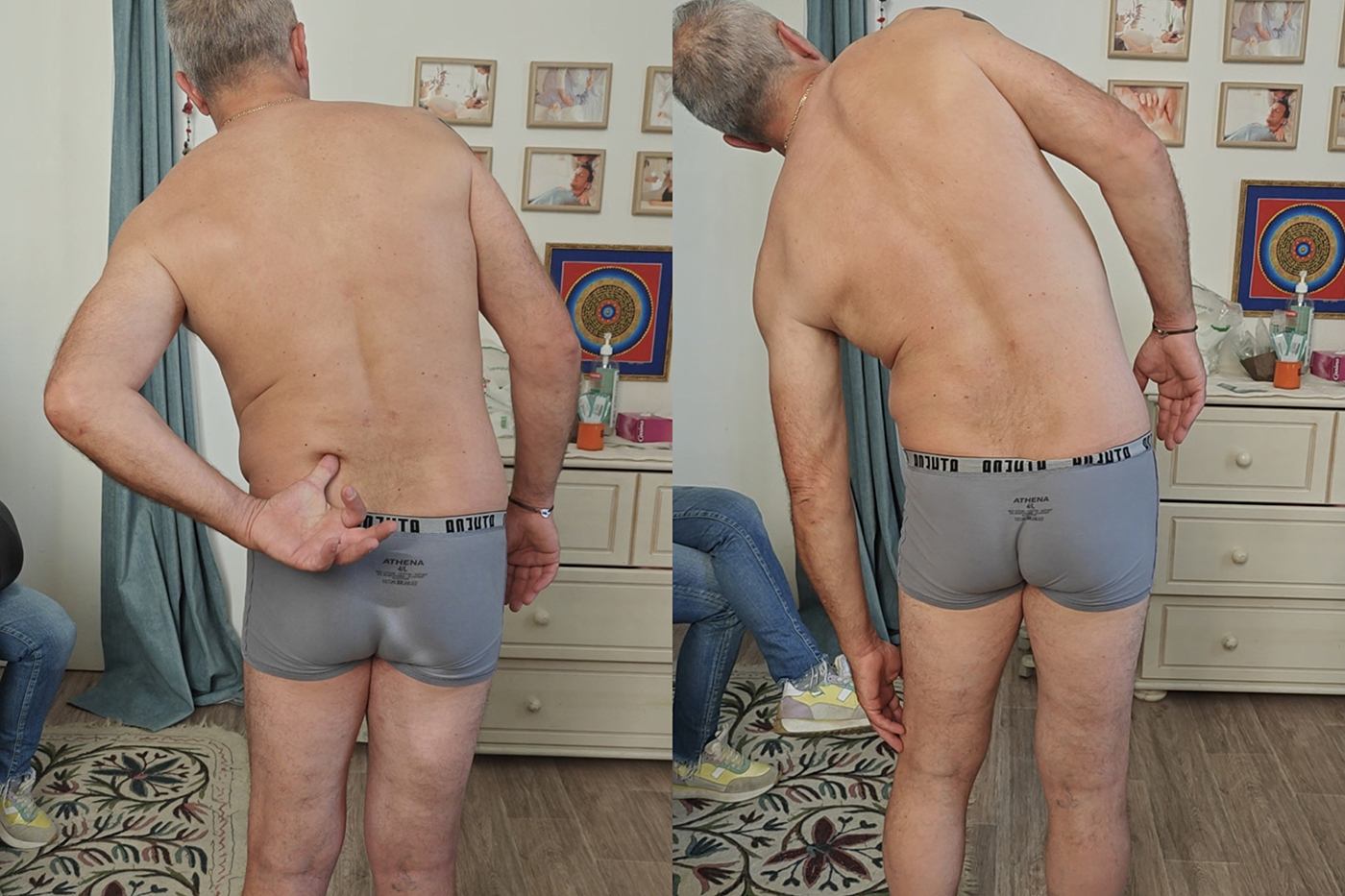
When Walking Became Easier Again
A case showing how lower limb loading may change when protective compensation is reduced.
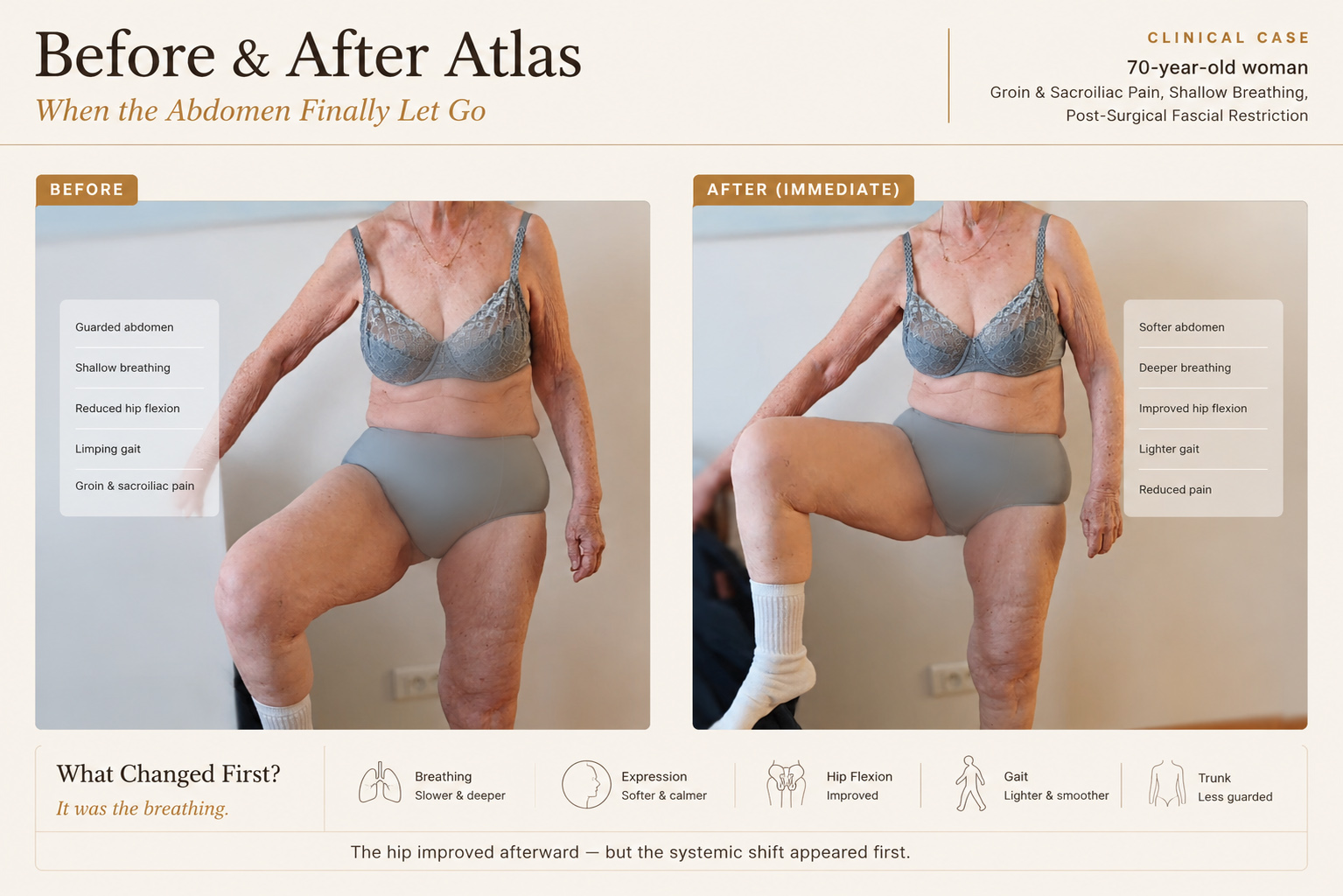
When the Abdomen Finally Let Go
A case showing how abdominal and pelvic protection may influence walking and lower limb transmission.
TRAINING CONNECTION
Learn to read the foot before treating the toe
Toe tension is a precise example of why Fasciapuncture® begins with pattern recognition, pressure distribution, and movement reading.
Fasciapuncture® Training Pathway
Understand the method, the clinical map, and the transition from local symptoms to pattern-based reasoning.
CLINICAL ASSESSMENTModule 2 · Myofascial Diagnosis
Learn how to observe posture, palpate fascial tension, and identify functional chains behind pain.
LOWER LIMBModule 10 · Lower Limb Disorders
Explore thigh, knee, calf, ankle, foot mechanics, gait patterns, and lower limb Fasciapuncture® strategies.
CLINICAL MAP
The toes may be where pressure gets trapped. The story may involve the whole chain.
Explore how Fasciapuncture® reads toe tension through fascia, foot expansion, gait, posterior chain tension, and pressure redistribution.