
FASCIAPUNCTURE® CLINICAL MAP
Digestive Tension
Digestive discomfort, bloating, reflux, and abdominal pressure may sometimes reflect more than the digestive tract itself. In Fasciapuncture®, they are read through fascia, breathing, pressure, and autonomic regulation.
CLINICAL VIEW
When digestion reflects pressure and regulation
In Fasciapuncture®, digestive tension is not understood only as a local digestive complaint. It may reflect how the abdominal wall, diaphragm, pelvis, thoracolumbar fascia, and autonomic nervous system regulate pressure.
When the system remains guarded, digestion may feel heavy, compressed, reactive, or unstable. The abdomen may not simply be “bloated” — it may be holding pressure.
COMMON PRESENTATIONS
How digestive tension may appear
These signs may appear alone or together, often shifting with stress, fatigue, breathing, posture, or pelvic pressure.
Bloating
The abdomen may feel expanded, dense, pressured, or unable to soften.
Reflux or acid discomfort
Upper abdominal pressure and diaphragm restriction may influence digestive comfort.
Abdominal pressure
A sensation of internal pressure may reflect guarding, fascia tension, or poor pressure distribution.
Post-meal fatigue
Eating may reveal reduced regulatory capacity when the system is already overloaded.
Slow transit
Digestive rhythm may slow when abdominal tone, autonomic state, and movement are restricted.
Stress-related digestion
Digestive symptoms may intensify when the nervous system cannot down-regulate.
FASCIA-ORIENTED VIEW
The abdomen as a pressure chamber
The abdomen is not only a container for organs. It is also a dynamic field of pressure, breath, fascial tone, visceral mobility, and autonomic response.
When the diaphragm, abdominal wall, lumbar fascia, and pelvis cannot coordinate, digestive symptoms may persist even when the digestive tract is not the only issue.
The symptom may be digestive. The pattern may be systemic.
RELATED PATTERNS
Patterns frequently connected to digestive tension
Abdominal Pressure
Internal pressure, bloating, guarding, and abdominal density may belong to one pressure regulation pattern.
Explore Pattern →Diaphragm Restriction
Breath restriction may affect reflux, abdominal pressure, and visceral mobility.
Explore Pattern →Core Block
When the center cannot transmit pressure and movement smoothly, digestion may feel compressed or stagnant.
Explore Pattern →Autonomic Dysregulation
Stress, vigilance, poor sleep, and digestive reactivity may remain linked.
Explore Pattern →Pelvic Protection
Pelvic guarding, urinary discomfort, and digestive tension may shift together.
Explore Pattern →System Exhaustion
When recovery capacity is low, digestion may become sensitive, slow, or unstable.
Explore Pattern →CLINICAL CASES
Where digestive tension becomes visible
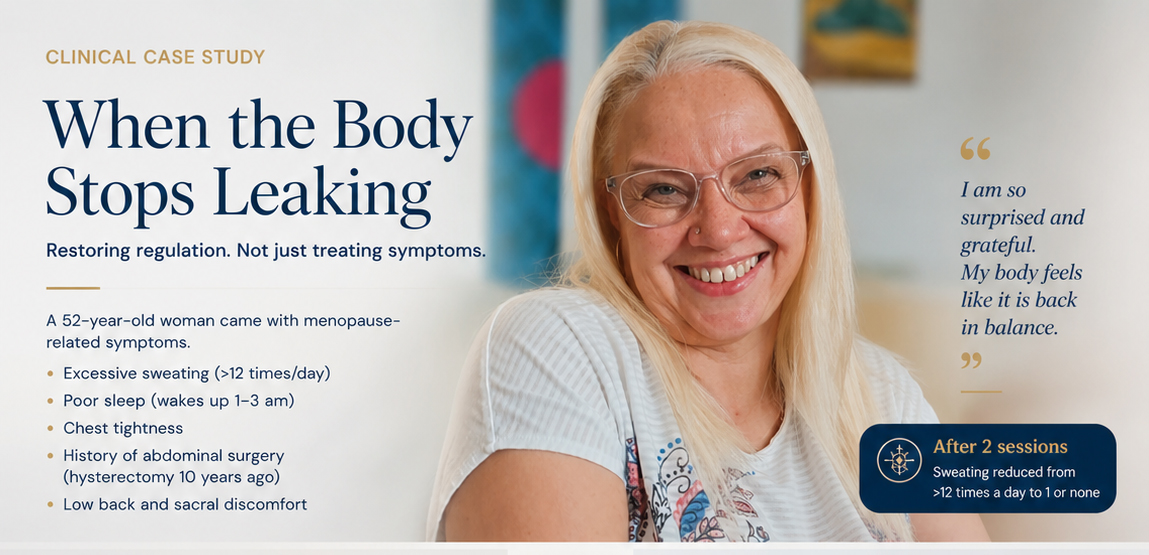
When the Body Stops Leaking
A menopause-related sweating case showing how abdominal tension, breathing restriction, sleep, and systemic regulation may shift.
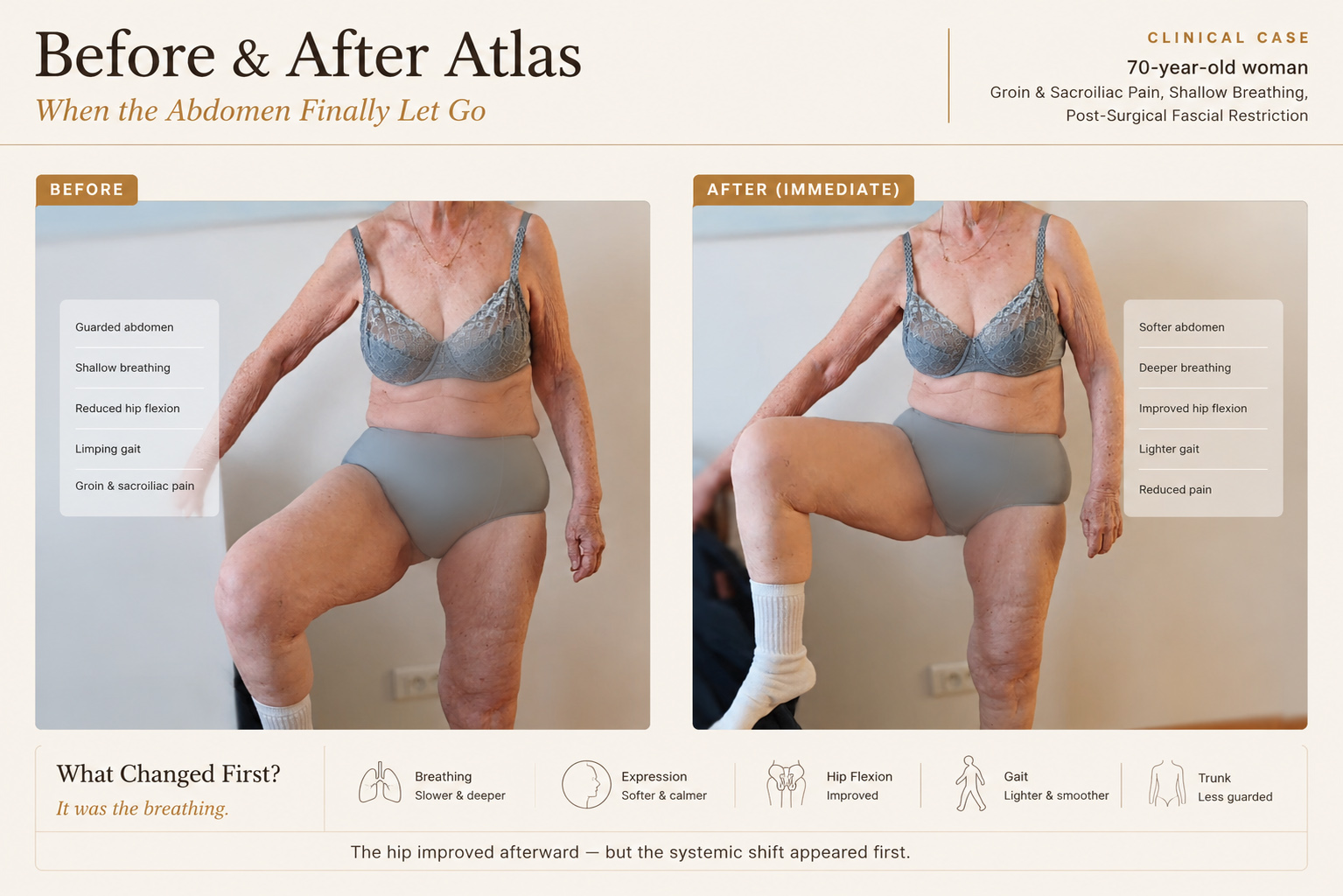
When the Abdomen Finally Let Go
A guarded walking and groin pain case where abdominal protection revealed a deeper anterior holding strategy.
When Life Became Beautiful Again
A 68-year-old woman with chronic coldness, restless legs, poor sleep, and years of caregiving stress gradually rediscovered warmth, vitality, trust, and joy.
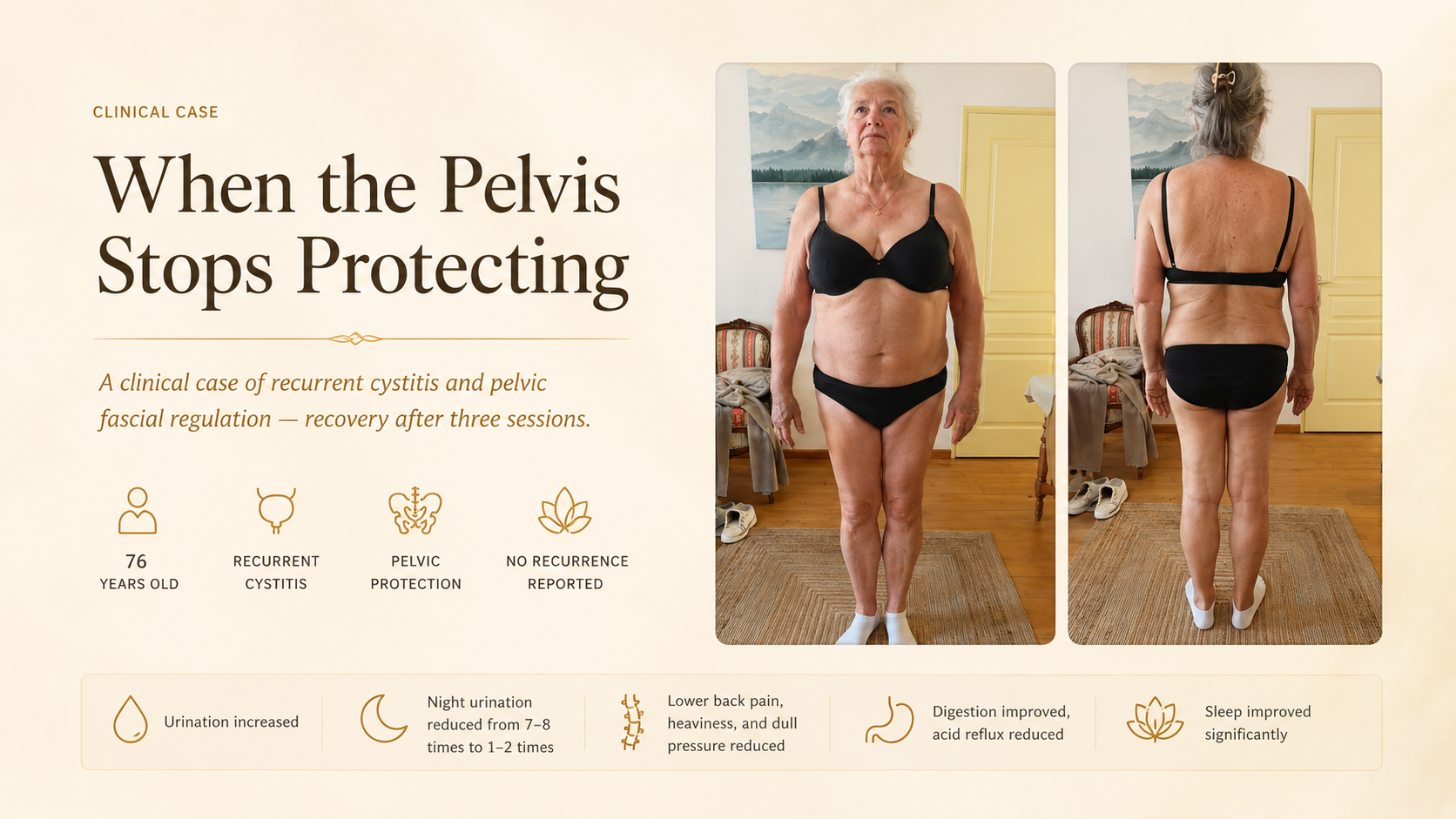
When the Pelvis Stops Protecting
A recurrent cystitis case showing how pelvic tension, digestion, low back heaviness, and regulation may shift together.
CONNECTED CONDITIONS
Digestive tension rarely stands alone
Abdominal pressure, breathing restriction, fatigue, sleep disturbance, pelvic guarding, and emotional tension often appear together as part of a broader protective state.
Chronic Fatigue
When the abdomen remains tense, the system may spend too much energy holding protection instead of restoring recovery.
Explore Condition →Sleep Disorders
Digestive pressure and diaphragmatic restriction may keep the nervous system alert when the body should be resting.
Explore Condition →Abdominal Pressure
Digestive tension often appears with a deeper abdominal holding pattern, where breath, pressure, and visceral comfort are linked.
Explore Condition →Pelvic Tension
Abdominal guarding may transmit downward into the pelvis, influencing pelvic comfort, lower back pressure, and internal protection.
Explore Condition →Stress & Anxiety
The digestive system often reflects emotional vigilance, sympathetic activation, and a body that has difficulty feeling safe.
Explore Condition →Low Back Pain
Abdominal tension may change lumbar pressure, pelvic load transfer, and the way the lower back carries the body.
Explore Condition →CLINICAL BOUNDARY
This is not a replacement for medical care
Persistent digestive symptoms, unexplained weight loss, bleeding, fever, severe abdominal pain, vomiting, or sudden changes in bowel habits require appropriate medical evaluation.
This page does not diagnose or treat digestive disease. It offers a fascia-oriented way to understand how digestive discomfort may connect with pressure, breathing, posture, and nervous system regulation.
FASCIAPUNCTURE® CLINICAL MAP
From digestive discomfort
to pressure and regulation.
Explore how abdominal pressure, diaphragm restriction, pelvic protection, and autonomic regulation may shape digestive symptoms.