
FASCIAPUNCTURE® PATTERN LIBRARY
Upper Exit Block
Upper Exit Block is a Fasciapuncture® clinical pattern involving the relationship between the neck, clavicle, upper thorax, jaw, cranio-cervical fascia, breathing, and body regulation. This pattern may be observed alongside neck tension, headaches, migraine, dizziness, tinnitus, sleep disturbance, and persistent upper-body guarding.
The body cannot fully descend into calm.
When the upper body remains held, pressure may stay around the neck, head, jaw, and chest instead of spreading into a more regulated state.
WHAT IT MEANS
Not a symptom. A pressure gate.
Upper Exit Block describes a clinical pattern where the upper body remains guarded, compressed, or unable to release. It may involve the clavicle, anterior neck fascia, scalenes, upper thorax, jaw, suboccipital region, and cranial fascia.
In this pattern, the body may remain organized around vigilance and protection. Breathing may stay high, the head may feel loaded, and recovery may become more difficult.
PATIENTS MAY DESCRIBE
How Upper Exit Block can feel
Head Pressure & Heavy Head Feeling
A sensation of pressure around the head, temples, forehead, eyes, or difficulty feeling light and clear.
Neck & Clavicle Tension
The neck feels tight, the shoulders rise, and the upper chest has difficulty softening.
Breathing Restriction
Breathing may remain high in the chest instead of descending toward the abdomen and lower ribs.
Sleep Disturbance
The body may feel tired, but still unable to enter deep recovery.
Dizziness, Tinnitus & Sensory Load
Some people report dizziness, ear symptoms, sensory sensitivity, or feeling overwhelmed.
Anxiety-Like Body Tension
The body may remain internally activated even when the person wants to relax.
CLINICAL INSIGHT
The problem is not always in the head.
Symptoms may appear in the head, face, ears, jaw, sleep, or emotional state. However, the clinical pattern may involve the body's ability to release pressure through the upper body.
In Fasciapuncture®, we do not separate each symptom. We observe how fascia, movement, breathing, and regulation organize together.
RELATED CONDITIONS
Conditions often connected with this pattern
REGULATION MARKERS
What we often observe in the body
Before regulation
- High chest breathing
- Rigid neck rotation
- Clavicle or anterior neck tension
- Jaw or facial holding
- Head pressure or sensory overload
- Difficulty settling into rest
Signs of release
- Breathing becomes deeper
- Chest and shoulders soften
- Face and eyes relax
- Neck movement becomes easier
- Head feels lighter
- The body enters a quieter state
CLINICAL CASES
Where the pattern becomes visible
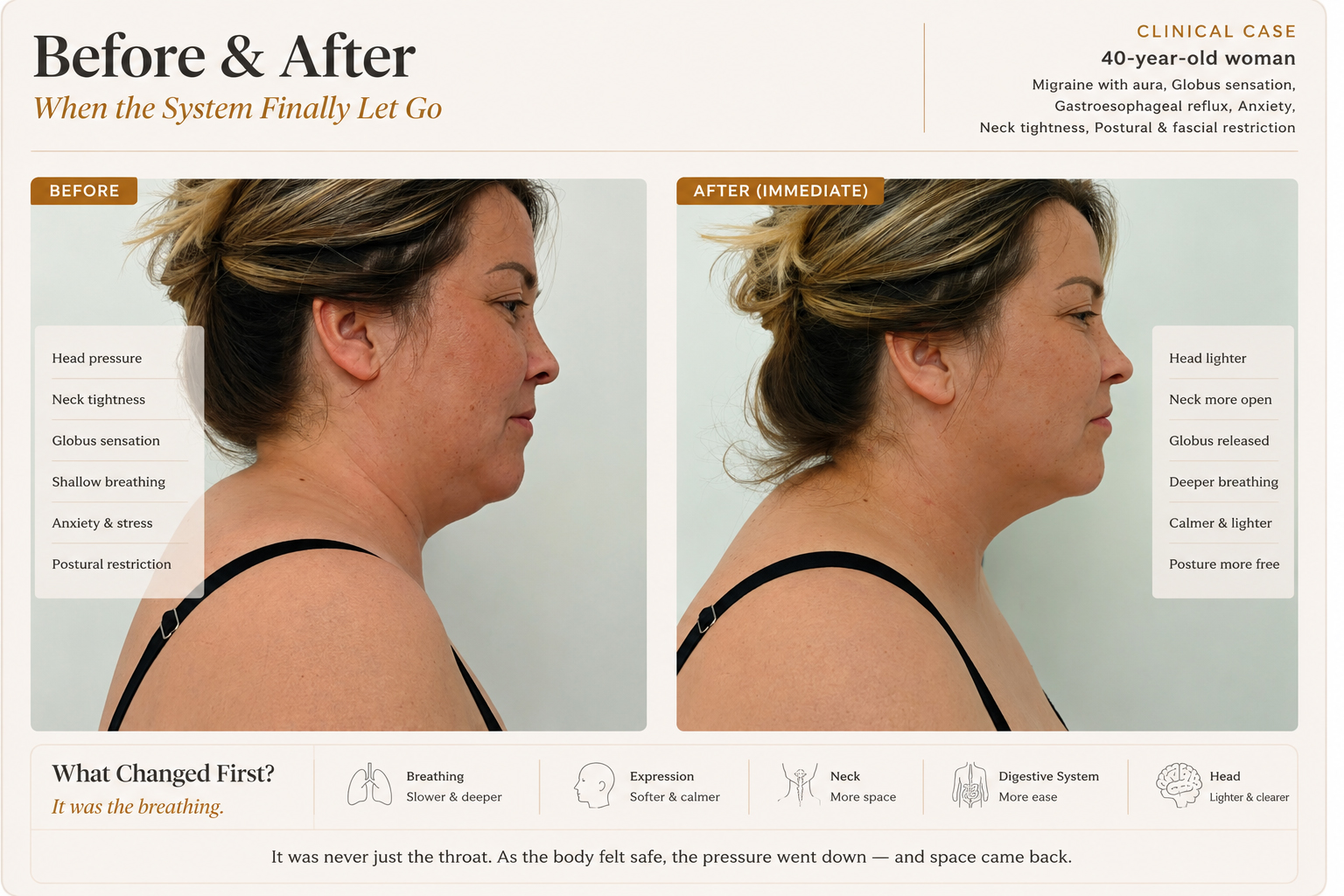
It Was Never Only the Throat
A 40-year-old woman with migraine, reflux, anxiety, neck tension, and persistent throat obstruction experienced immediate breathing relief when the pressure finally began to descend.
Read Case →
When Smoking Becomes a Nervous System Regulator
A clinical story exploring shallow breathing, cervical tension, chronic internal stress, and the body’s difficulty settling into rest.
Read Case →
When Sleep Slowly Returns
After nearly twenty years of poor sleep, headaches, fatigue, heaviness, and anxiety, the body slowly began to recover its ability to rest.
Read Case →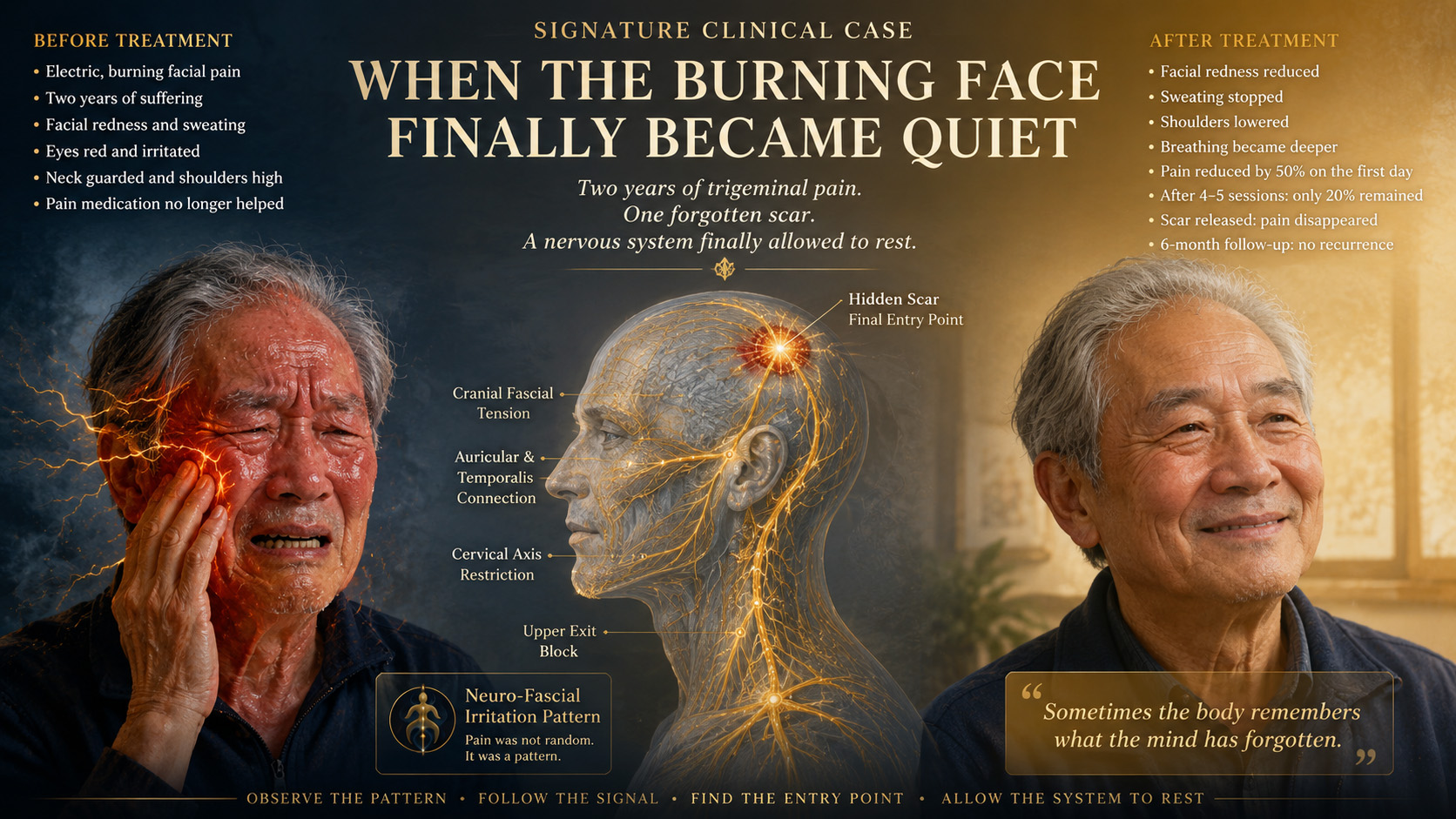
When the Burning Face Finally Became Quiet
A seventy-year-old man endured two years of severe burning facial pain, facial redness, sweating, and cervical guarding. As neuro-fascial tension gradually released, the pain diminished session by session until a tiny forgotten scalp scar revealed the final entry point and the remaining pain disappeared.
Read Case →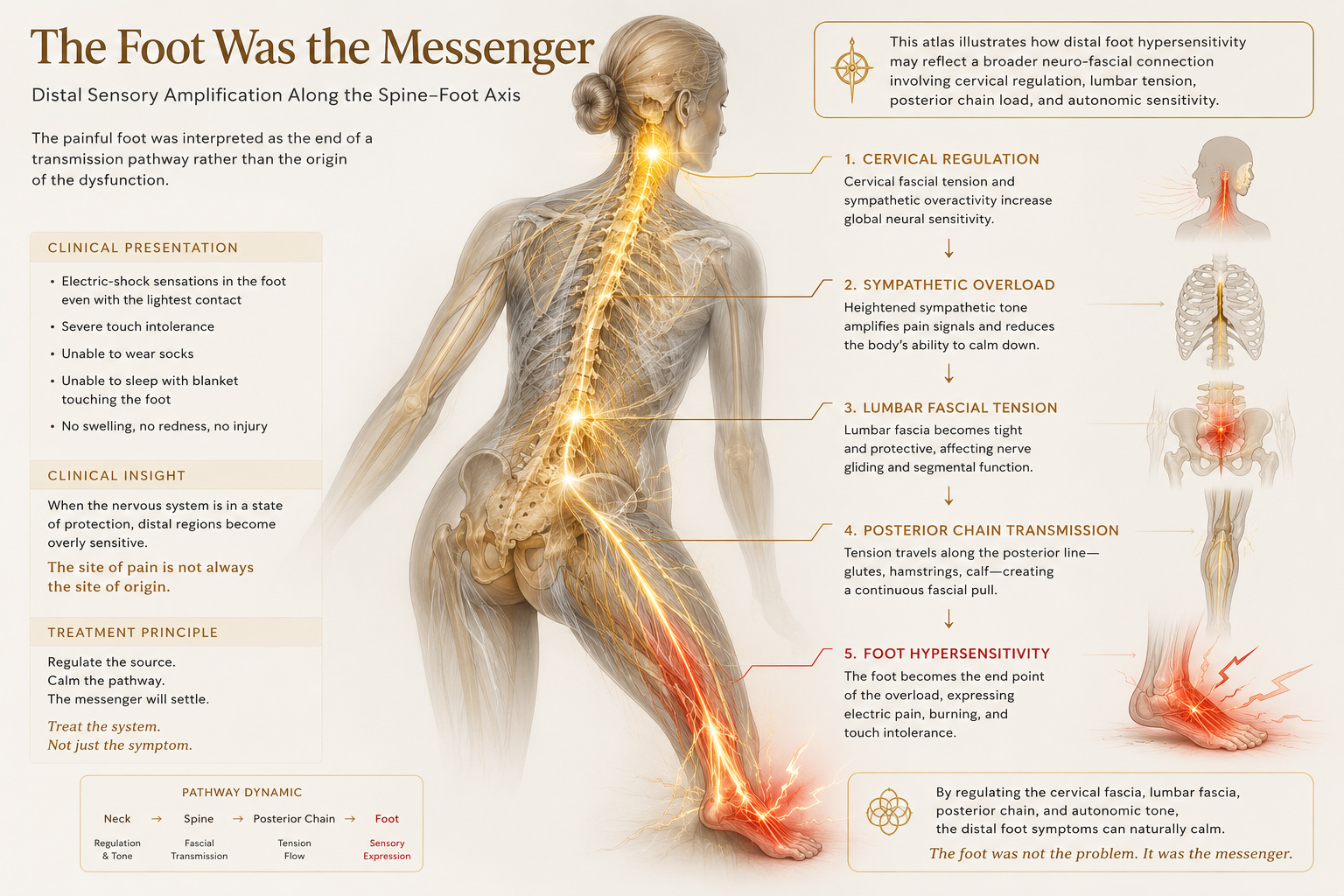
The Foot Was the Messenger
The pain appeared in the foot, but the source was not local. A case of severe sensory hypersensitivity showing how neuro-fascial regulation can calm touch intolerance, improve sleep, restore vitality, and help a patient return to normal life.
Read Case →
Facial Tension and Neck Release
A future case cluster linking face, jaw, neck, and regulation response.
Explore Facial Tension →TRAINING CONNECTION
This pattern belongs to clinical perception.
In the Fasciapuncture® training, Upper Exit Block is not taught as a fixed protocol. It is a clinical reasoning pattern: observe, palpate, test, release, and verify the system response.
“When the upper body stops defending, the whole system can begin to descend.”
Does your symptom belong to an Upper Exit Block pattern?
Fasciapuncture® reads symptoms through the body’s deeper organization of tension, pressure, breathing, and regulation.
Book a consultation