FASCIAPUNCTURE® CLINICAL THINKING
Longevity Is a Rhythm, Not a Performance
A clinical reflection on time, care, adaptability, and the quiet intelligence of recovery.
Modern life often treats longevity as something to optimize. But in clinical reality, the body does not last through performance alone. It lasts through rhythm.
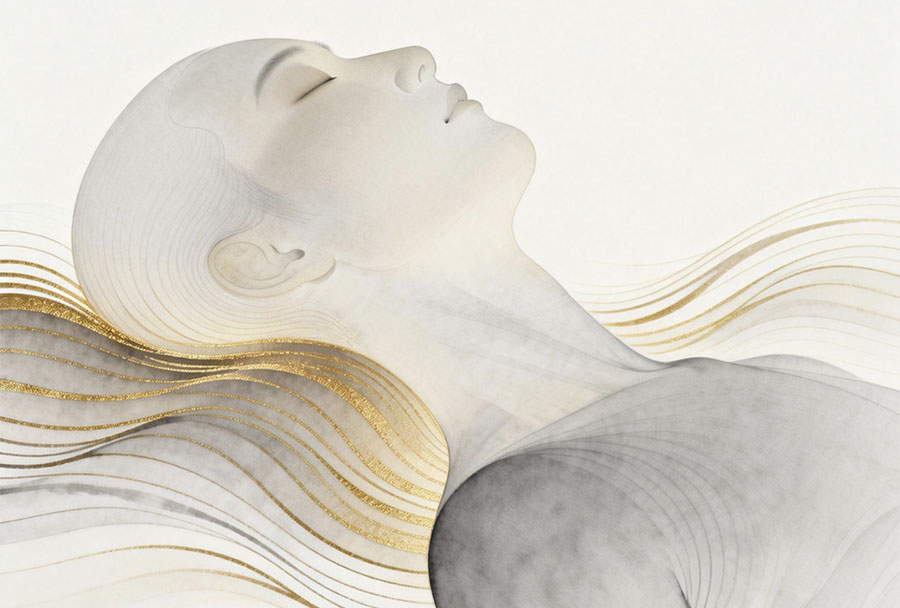
Longevity is not built by endless effort, but by the body’s ability to recover, adapt, and return.
THE RHYTHM SERIES
A Clinical Reflection on Time and Care
Modern life often treats longevity as a result of performance.
More discipline. More control. More optimization.
As if life were something to conquer, rather than something to pace.
In clinical reality, longevity does not belong to the strongest, the fastest, or the most relentless.
CORE PRINCIPLE
Performance Is Short-Term
Performance is built on effort. Rhythm is built on alternation.
- action and recovery
- movement and stillness
- expression and integration
- activation and repair
When one side disappears, the system does not become more efficient. It becomes fragile.
What looks like endurance is often delayed exhaustion.
CLINICAL MAP
Performance and Rhythm Create Different Futures
Output Without Return
Effort
↓
Control
↓
Overriding Signals
↓
Delayed Exhaustion
Adaptation With Recovery
Action
↓
Recovery
↓
Integration
↓
Adaptability
BIOLOGICAL RHYTHM
The Body Lives in Cycles, Not Deadlines
The human body does not function in straight lines. It follows cycles.
- circadian rhythms
- hormonal cycles
- nervous system oscillations
- phases of activity and repair
- breathing, rest, digestion, and recovery patterns
Longevity emerges when these cycles are respected — not overridden.
You can push against rhythm for a time. But time always responds.
CLINICAL OBSERVATION
Why So Many High Performers Burn Out Early
In practice, I often meet people who have done everything “right”.
They train. They work. They persist.
Yet their bodies show early signs of depletion.
Not because they lacked discipline, but because discipline replaced listening.
CLINICAL DISTINCTION
Longevity Is Not About Doing Less
This is a common misunderstanding.
Choosing rhythm does not mean withdrawing from life. It means engaging without consuming everything.
It means knowing when effort builds and when it erodes.
It means allowing recovery to be part of strength, not its opposite.
A CLINICAL VIEW OF AGING
Aging Is Not Simply the Result of Time
Aging is not the result of rest. It is often the result of unrepaired accumulation.
Small deficits, repeated daily, shape the future more than dramatic events.
Longevity is rarely lost in a single moment. It is slowly traded for intensity.
- sleep debt
- chronic sympathetic activation
- unresolved inflammation
- repeated muscular guarding
- poor recovery after effort
- loss of breathing depth and internal rhythm
FASCIAPUNCTURE® LENS
Why Intervention Is Possible
CLINICAL PROBLEM
Clinical Intensity Is Often Mistaken for Effectiveness
Short-term results are sometimes achieved at long-term cost.
A treatment can create change, yet still burden the system if rhythm, recovery, and adaptability are not respected.
Fasciapuncture® is built on rhythmic intervention — knowing when to enter, when to wait, and when to stop.
but because regulation is still accessible —
if we enter at the right level.
RELATED CLINICAL PATTERNS
This reflection belongs to the wider Clinical Map
System Exhaustion
When long-term effort exceeds recovery and the body loses its capacity to regenerate.
SYSTEMIC REGULATIONAutonomic Dysregulation
When activation and recovery no longer alternate in a stable rhythm.
FOUNDATIONAL PATTERNGlobal Protective State
When the body remains organized around vigilance, adaptation, and protection.
INFLAMMATORY LOADChronic Inflammatory Overload
When repeated unresolved stress leaves the system unable to fully settle.
CLINICAL IMPLICATION
Intervention Becomes Sustainable Over Time
By working through fascia as a regulatory medium, the method supports adaptability rather than forcing correction.
This matters for both patients and practitioners.
If treatment only produces intensity, the body may respond briefly. But if treatment restores rhythm, the system may begin to reorganize from within.
- less force
- better timing
- clearer observation
- more respect for recovery
- greater long-term adaptability
RHYTHM AS CARE
Rhythm Is an Act of Care
Respecting rhythm is not passive.
It requires attention, restraint, and sometimes courage — especially in a culture that celebrates excess.
But rhythm is what allows the body to remain adaptable.
FINAL THOUGHT
Life Is Not Asking Us to Prove Anything
Life is asking us to last.
Not by performing endlessly, but by learning when to pause, when to recover, and when to move again.
Longevity is not a performance.
and rhythm is something we can still relearn.
CONTINUE EXPLORING
Learn to read rhythm before correcting the body
Fasciapuncture® reads symptoms not only as isolated problems, but as signs of rhythm, protection, recovery, and adaptability within the whole system.