
A Fascial Perspective on Tension, Pressure, and Body Reorganization
Introduction
In clinical practice, abdominal protrusion is often interpreted as a matter of weight, fat accumulation, or lack of muscle tone.
However, experience with fascia-oriented approaches repeatedly shows another reality:
Many visible changes in body shape are not caused by excess tissue, but by chronic tension and altered pressure regulation.
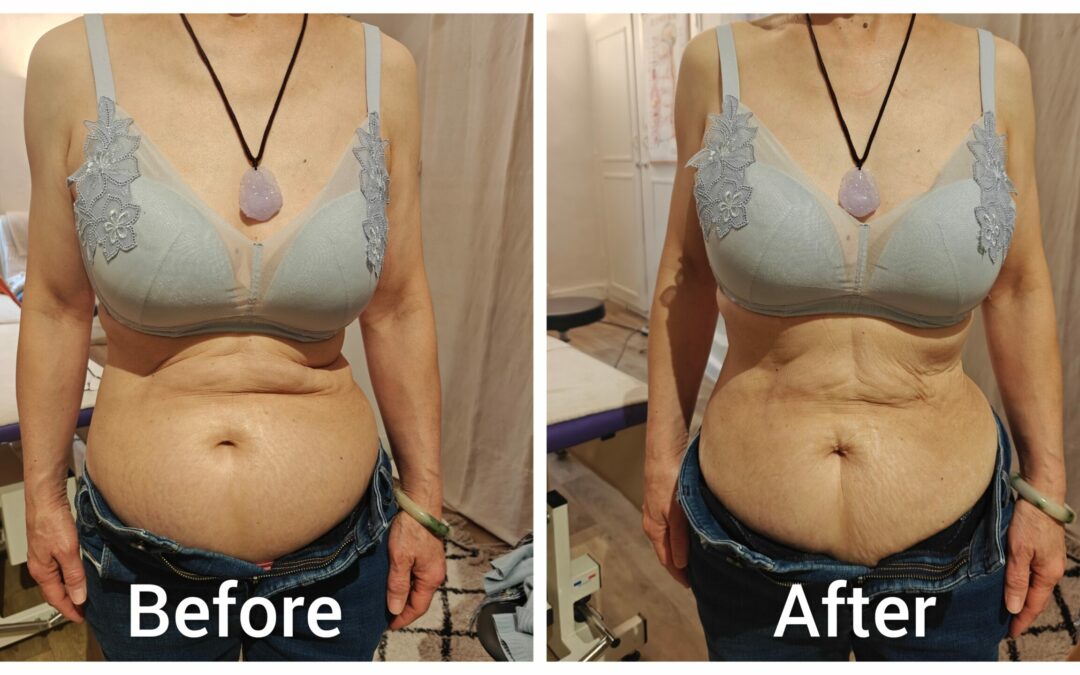
This case illustrates how releasing deep fascial tension can lead to an immediate and visible reorganization of the trunk — without dieting, exercise, or cosmetic intervention.
Initial Observation
Before the session, This person presented with:
-
A distended and heavy-looking abdomen
-
Compression in the lower rib cage
-
Reduced waist definition
-
A dense, compact appearance of the thoraco-abdominal region
-
Limited vertical tone in the back
Importantly, this appearance was not linked to recent weight change.
Palpation revealed marked fascial density and reduced tissue adaptability, particularly in the abdominal and thoracolumbar regions.
From a fascial standpoint, this pattern often reflects:
-
Chronic tension within the abdominal fascia
-
Restricted diaphragmatic mobility
-
Altered pressure distribution between thorax, abdomen, and pelvis
Therapeutic Approach
A Fascial-Oriented Intervention
The session did not aim to “flatten” the abdomen or correct appearance.
Instead, the focus was on:
-
Releasing deep fascial tension affecting the thoraco-abdominal system
-
Restoring mobility between fascial layers
-
Reducing internal pressure constraints
-
Allowing the diaphragm and trunk to regain natural adaptability
No force was applied.
No structure was manipulated aggressively.
The intervention followed the body’s own tension lines.
Immediate Changes Observed
After the session, several changes became visible:
-
The abdominal wall appeared softer and less projected
-
The rib cage descended naturally
-
The waistline re-emerged
-
The back regained vertical definition
-
Overall posture appeared lighter and more balanced
These changes occurred without any removal of tissue or volume.
The body simply reorganized itself once tension was released.
Clinical Interpretation
Shape as a Reflection of Tension
From a fascial perspective, body shape is not static.
It reflects the balance — or imbalance — of tension, pressure, and adaptability within the connective tissue system.
When fascia loses its ability to glide and adapt, the body compensates by:
-
Increasing internal pressure
-
Creating rigid postural patterns
-
Redistributing load in a visible way
Once this tension is reduced, the body often changes its form spontaneously, as seen in this case.
A Note on Interpretation
This case does not represent weight loss or cosmetic reshaping.
It illustrates a functional change in tissue behavior and postural organization.
The images are shared with consent and serve to document fascial and postural adaptation, not aesthetic outcomes.
Conclusion
This case highlights an essential principle of fascial work:
When tension patterns change, the body often changes its appearance — without being forced to do so.
Understanding these mechanisms allows practitioners to address the root of many “shape-related” complaints, rather than their visible expression alone.