SIGNATURE CLINICAL CASE · UPPER EXIT BLOCK
When the Neck Could Finally Let Go
A Fasciapuncture® clinical case showing how neck heaviness, headache, breathing restriction, poor sleep, and visible cervico-thoracic tension may reflect a deeper protective pattern.
CLINICAL OPENING
The neck was carrying more than posture
A 69-year-old woman came with chronic tension at the base of the neck, frequent headaches, poor sleep, a heavy sensation in the head, and a feeling that breathing could not fully rise or expand.
Visually, the cervico-thoracic junction appeared thickened and overloaded. It could easily be described as a postural hump.
But in Fasciapuncture®, this visible change was not interpreted as a cosmetic or isolated postural issue.
It was read as the shape of long-term protection.
INITIAL SYSTEM STATE
A body held in the upper chest and neck
Presenting Signs
- Frequent headache
- Heavy sensation in the head
- Poor sleep
- Shortness of breath or difficulty getting air upward
- Chronic neck and shoulder tension
- Visible thickening at the neck-shoulder junction
- Forward-head and upper thoracic protective posture
Clinical Impression
The neck did not appear to be the only problem.
The whole upper system looked compressed: the head felt heavy, the breathing was restricted, the shoulders held upward, and the cervico-thoracic junction carried a long-term protective load.
PATTERN ATLAS
The visible neck fullness was only one part of the pattern
Upper Exit Block
The cranio-cervical and thoracic outlet region appeared overloaded, limiting the free passage of breathing, pressure, and regulation.
Cervical Axis Tension
Long-term cervical tension may contribute to head heaviness, headache, and restricted neck movement.
Thoracic Restriction
Upper chest and rib cage restriction may create the sensation that breath cannot fully rise or expand.
System Exhaustion
Poor sleep, head heaviness, and chronic protective tone may reflect a system that has been holding too long.
BEFORE & AFTER CLINICAL ATLAS
The visible shape softened when the system released
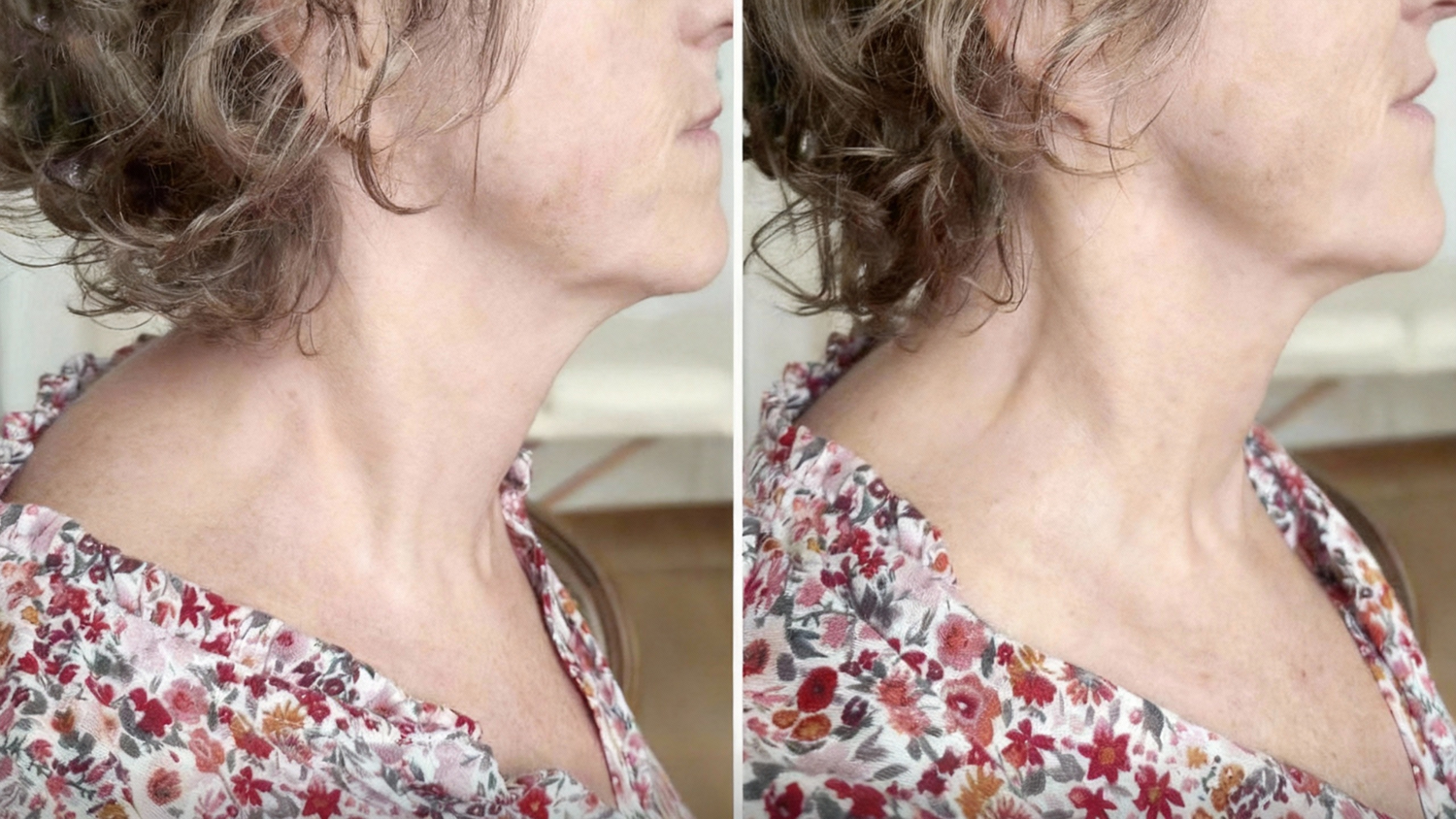
Before
- Visible fullness at the cervico-thoracic junction
- Forward-head protective posture
- Upper neck compression
- Shoulders held upward
- Breathing felt restricted
After
- Neck base appeared softer
- Head carriage became lighter
- Shoulders descended
- Breathing became easier
- The upper body looked less guarded
ENTRY STRATEGY
The treatment did not chase the hump
The visible neck fullness was not treated as the primary target.
The clinical strategy focused on releasing the protective tension around:
- the cervico-thoracic junction
- deep cervical fascia
- upper thoracic restriction
- shoulder and scapular tension
- respiratory and upper outlet pressure
The goal was not to flatten a shape mechanically, but to help the system stop holding.
CLINICAL TURNING POINT
The first change was the breath
During and after the release, the most meaningful shift was not only the visible change at the neck.
The patient felt the breath open. The head became lighter. The neck and shoulders no longer felt as compressed.
This suggested that the visible cervico-thoracic fullness was part of a broader pressure and protection pattern, rather than only a local tissue problem.
WHAT BECAME VISIBLE
The body looked less guarded
Breathing
The breath became easier and less blocked in the upper chest.
Head
The sensation of heaviness reduced as the upper outlet softened.
Neck
The cervico-thoracic junction appeared less thick and less compressed.
Shoulders
The shoulders descended and the upper body appeared calmer.
CLINICAL REFLECTION
The visible hump was not the whole story
This case reminds us that visible tissue accumulation or postural change may represent more than local structure.
In this patient, the neck-shoulder region expressed years of protection, respiratory restriction, cervical load, and systemic fatigue.
The clinical value was not simply that the neck looked different.
The deeper shift was that the body no longer needed to hold the same way.
KEY LEARNING POINTS
What this case teaches
- The neck base may express long-term protective tension.
- Head heaviness may be linked to upper outlet restriction.
- Breathing difficulty may reflect thoracic and cervical fascial compression.
- Visible posture is often the result, not the origin.
- Releasing the system may change the visible structure.
- Fasciapuncture® reads the protection pattern behind the shape.
CONNECTED CLINICAL MAP
This case connects neck, breathing, sleep, and systemic regulation
Upper Exit Block
The upper body behaves as if pressure cannot freely pass through the neck and chest.
Cervical Axis Tension
The head and neck axis carries excess load and contributes to headache or heaviness.
Thoracic Restriction
The rib cage and upper chest remain guarded, affecting breath and comfort.
System Exhaustion
Poor sleep and chronic heaviness may reflect a body that has been holding for years.
RELATED CONDITIONS
Conditions connected to this case
Neck Tension
When cervical tension reflects a deeper fascial holding pattern.
Headache
A fascia-based view of head pressure, cervical load, and cranial tension.
Breathing Restriction
When breath feels blocked by thoracic, cervical, and upper outlet tension.
Sleep & Regulation
How chronic tension may interfere with rest, recovery, and nervous system balance.
RELATED CASES
Other cases from the Clinical Evidence Library
When Breathing Became Quiet Again
A case showing how systemic regulation may appear first through the breath.
When the Neck Was Holding the Head
A clinical story of headache, cervical load, and fascial release.
From Survival to Breathing Again
A regulation-based case where the body softened after years of protection.
Explore More Clinical Cases
Continue through the Fasciapuncture® Clinical Evidence Library.
CONTINUE LEARNING
Learn to read the protection behind the posture
This case connects directly to clinical pattern reading, upper exit restriction, cervical axis tension, and systemic regulation.
Module 2 · Clinical Pattern Reading
Learn how to observe posture, palpate fascial tension, and identify the functional chains behind symptoms.
Module 4 · Cranio-Cervical Syndromes
Explore head, neck, jaw, dizziness, headache, tinnitus, and upper cervical fascial patterns.
Upper Exit Block
Understand how pressure, breathing, and cervical tension accumulate around the upper outlet.
System Exhaustion
Read chronic fatigue, poor sleep, heaviness, and protective tension as part of systemic regulation.