FASCIAPUNCTURE® SIGNATURE CLINICAL CASE
When Movement Returned
A triathlete who stopped all sports for over a month discovered that restoring lumbar-pelvic freedom changed the movement she thought she had lost.
Cette fois, c’est un miracle.
CLINICAL OPENING
When the hip was not the whole story
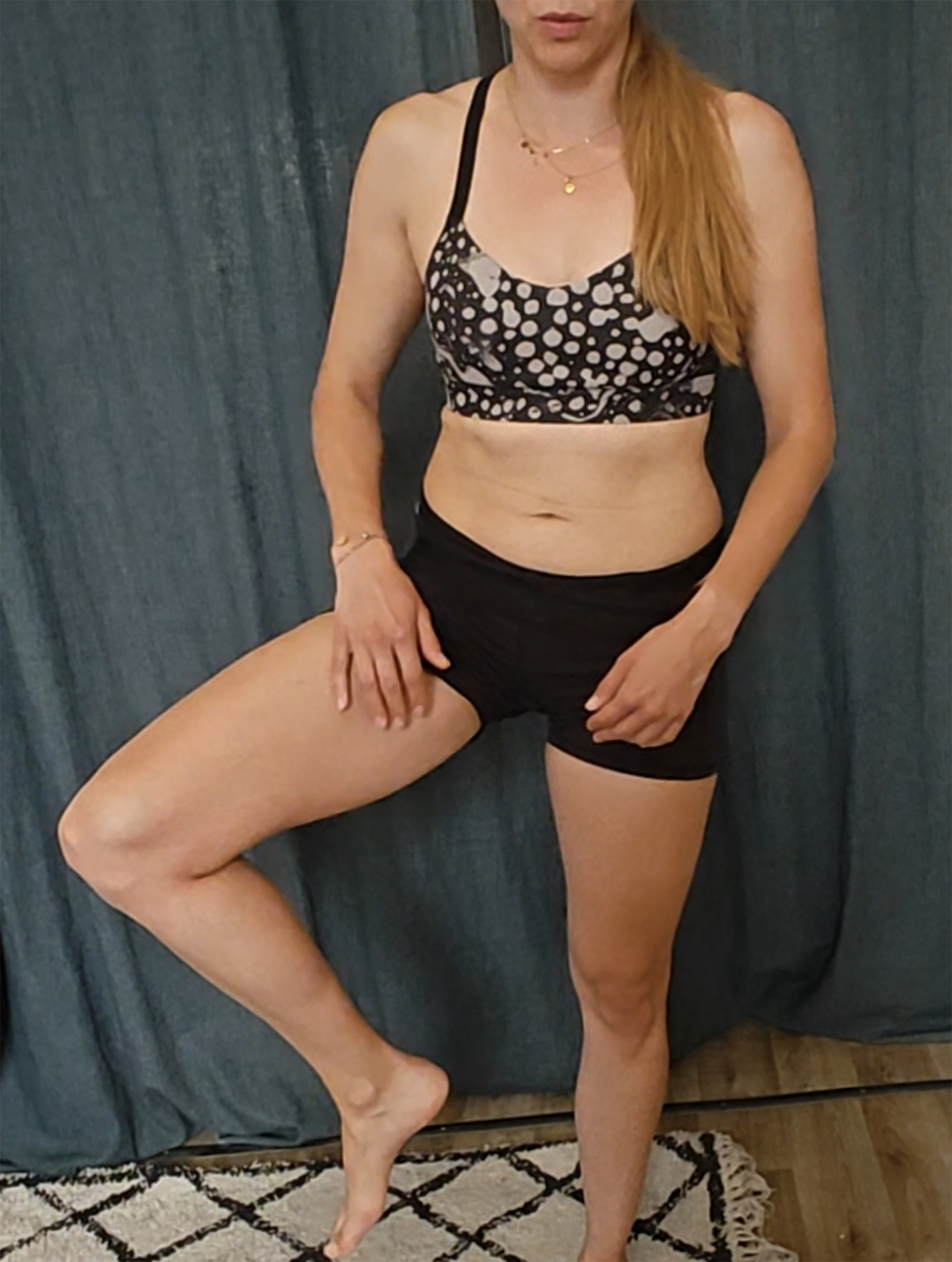
For more than a month, she had stopped doing what she loved. Running became painful. Movement became cautious. The more she tried to open the hip, the more restricted it felt.
As a triathlete, she knew her body well. She also knew something was wrong. What she did not expect was that the problem might not begin in the hip itself.
INITIAL SYSTEM STATE
A body that could no longer trust the movement
Main Complaint
Right hip pain after triathlon.
Activity Limitation
Sports stopped for more than one month.
Visible Restriction
Unable to fully open the right leg.
Body Strategy
Pelvic guarding and protected movement pattern.
PATTERN ATLAS
The hip appeared as the complaint, but the pelvis held the key
Pelvic Lock
The pelvis appeared fixed during movement, limiting the natural opening of the hip.
Compensation Loop
The body organized around restriction, protection, and altered movement strategy.
Posterior Compression
Lumbar-pelvic tension appeared to influence the freedom of the lower limb.
BEFORE & AFTER CLINICAL ATLAS
The return of hip opening
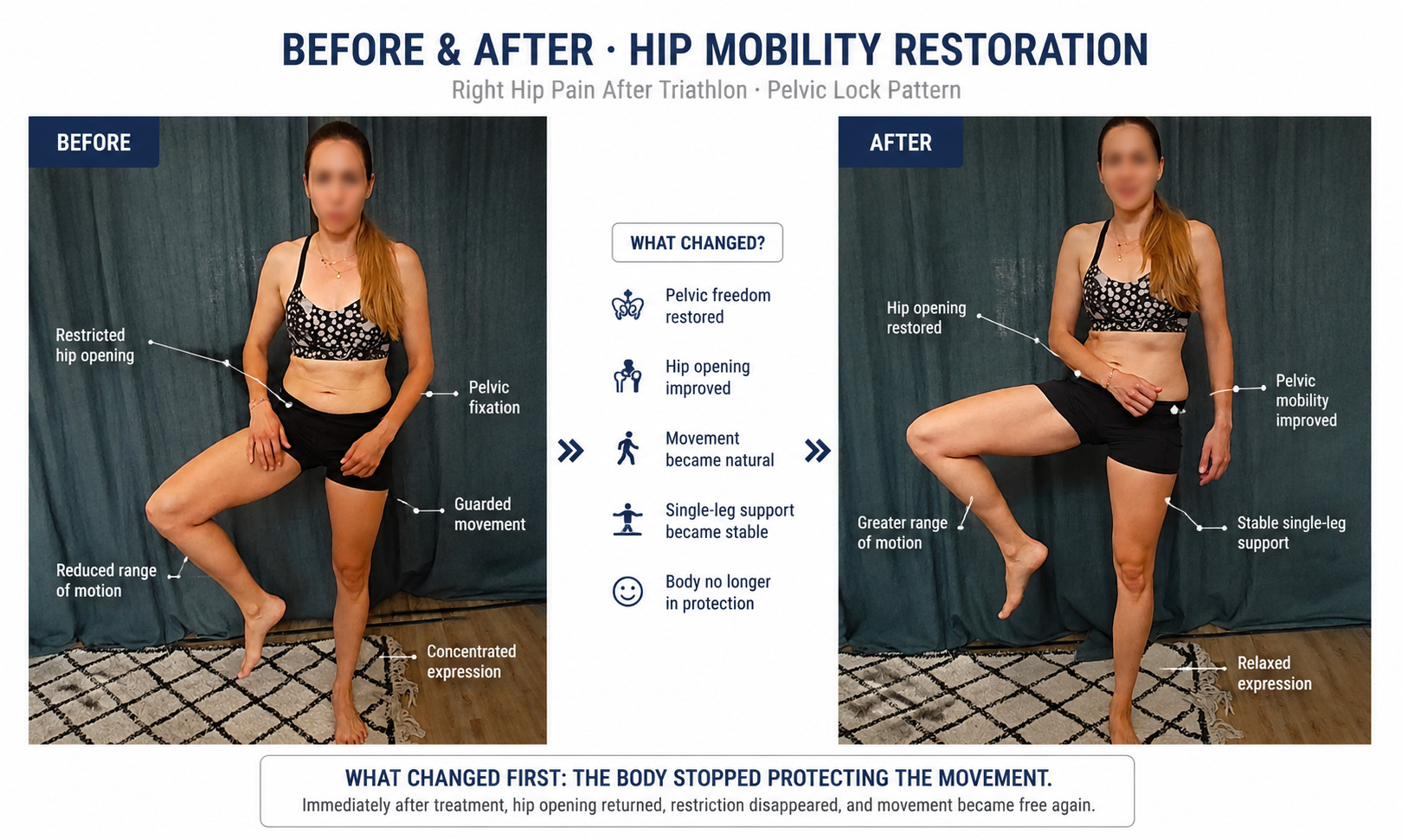
Before
- Restricted hip opening
- Pelvic fixation
- Guarded movement
- Reduced range of motion
- Concentrated facial expression
After
- Hip opening restored
- Pelvic mobility improved
- Greater range of motion
- Stable single-leg support
- Relaxed facial expression
ENTRY STRATEGY
Not forcing the hip open
The treatment did not focus on forcing the hip to open. The clinical strategy was to restore mobility through the lumbar-pelvic region and reduce the protective tension that was limiting the movement.
The objective was simple: help the body trust the movement again.
CLINICAL TURNING POINT
The movement returned immediately
Immediately after treatment, the patient repeated the same movement. The difference was visible.
The hip opened. The leg lifted. The restriction disappeared. More importantly, the movement no longer looked protected.
WHAT BECAME VISIBLE
Functional recovery before explanation
Movement
Hip mobility returned visibly.
Stability
Single-leg support became easier and more natural.
Confidence
The patient immediately recognized the difference.
Expression
The face softened and surprise appeared.
CLINICAL REFLECTION
The second session changed belief
The first consultation improved symptoms. The second consultation changed belief.
Athletes are often difficult to convince because they know their bodies well. When movement changes, they know immediately.
This case reminds us that pain is not always the most important clinical outcome. Sometimes the most important outcome is the return of a movement the body no longer trusted.
KEY LEARNING POINTS
What this case teaches
Pain is not always where the problem begins.
The hip was painful, but the lumbar-pelvic system appeared central.
Movement restriction may be protective.
The body may limit motion when it does not feel safe.
Pelvic freedom can change hip function.
Restoring the pelvis may immediately restore lower-limb movement.
Functional recovery builds trust.
The visible return of movement helped the patient believe what changed.
CONNECTED CLINICAL MAP
Condition → Pattern → Clinical Shift
Hip Pain
PatternPelvic Lock
PatternCompensation Loop
Movement Restoration
RELATED CASES
Other cases of restored movement
CONTINUE LEARNING