
PATTERN DEMONSTRATION CASE
When the Pelvis Stops Protecting
A clinical case of recurrent cystitis, pelvic protective tension, lumbosacral density, and regulation recovery after three sessions.
CLINICAL ATLAS
Pelvic Protective Pattern
CLINICAL PRESENTATION
A Five-Year Pattern of Recurrence
A 76-year-old woman presented with a five-year history of recurrent cystitis. Her symptoms had repeatedly returned after stopping antibiotic treatment.
Her condition was characterized by frequent urination, irritation, pelvic discomfort, and repeated episodes of urinary infection.
Additional context included hypertension, low body weight, and a generally fragile system.
Clinically, the question was not only why infection appeared, but why the pelvic system remained in a protective state.
INITIAL OBSERVATION
The Pelvis Was Holding Defense
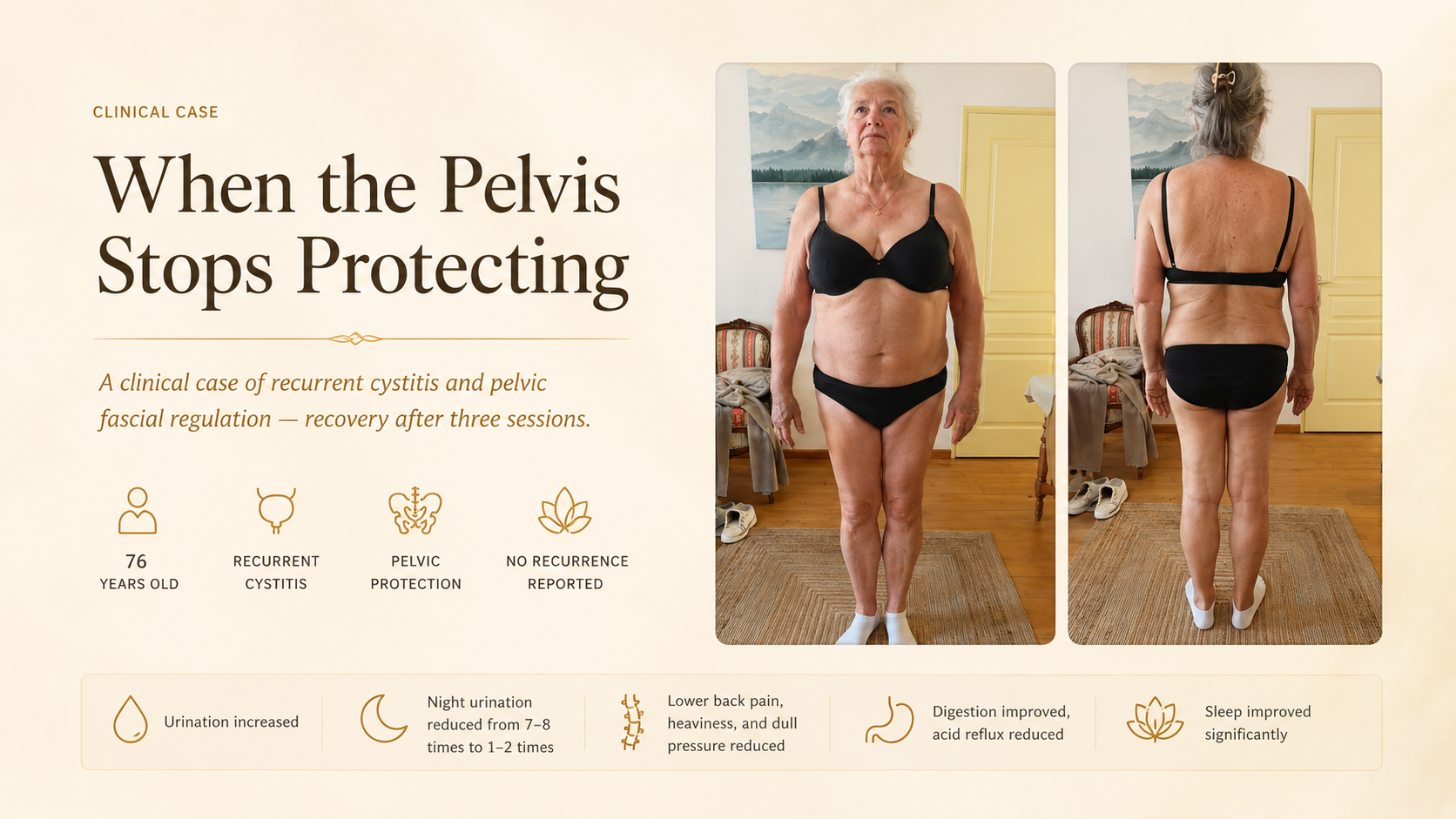
From a fascia-oriented perspective, several findings suggested a sustained protective pattern in the pelvic and lumbosacral region.
- Significant tension in the sacral region
- Pelvic asymmetry with anterior tilt
- Increased density in the lumbosacral fascia
- Persistent high tone in the system
- Reduced adaptability around the abdominal and pelvic regions
The pulse presented as tense and strong, suggesting that the body was not simply weak, but held in a state of persistent internal defense.
PATTERN READING
Not Only Infection — A Protective System
This presentation suggested that the condition was not purely local or infectious in nature.
From a Fasciapuncture® perspective, recurrent cystitis may sometimes reflect a pelvic protective pattern, where fascial tension, autonomic vigilance, and pressure regulation remain unresolved.
The bladder was not treated as an isolated organ. It was understood within a larger pelvic regulation pattern.
INTERVENTION STRATEGY
Treating the Conditions Around the Symptom
The initial strategy did not focus on stimulating the bladder directly. Instead, the treatment prioritized the surrounding regulatory environment.
- Reducing global tension
- Regulating the lumbosacral and abdominal regions
- Releasing pelvic protective tone
- Improving fascial adaptability around the pelvis
- Avoiding direct stimulation of sensitive pelvic structures
The goal was not to suppress a symptom, but to help the body recover the conditions in which regulation could return.
THREE-SESSION EVOLUTION
How the System Became Quieter
Immediate Release
After the first session, the patient reported a significant increase in urination, a sensation of release, and emotional reassurance. She expressed genuine surprise at the change.
Pelvic Tone Settled
The second session continued to work through the lumbosacral, abdominal, and pelvic regulation pattern. The system appeared less reactive and more available for change.
Regulation Stabilized
After the third session, the overall pelvic protective state appeared calmer. The clinical focus shifted from immediate release toward maintaining regulation.
PATIENT FEEDBACK
After Three Sessions, the Recurrence Did Not Return
According to the patient’s feedback after three sessions, the urinary infection had not returned.
She also reported that her lower back felt much lighter. The previous sensations of pain, heaviness, and dull pressure had clearly decreased.
Her urination increased, and her sleep improved significantly. Before treatment, she could wake seven to eight times per night to urinate. After the sessions, this reduced to only one or two times per night.
Her digestion also improved noticeably, and acid reflux became much less pronounced.
The change was not limited to the urinary tract. The whole pelvic–lumbar–digestive regulation pattern became quieter.
CLINICAL INSIGHT
When Protection Becomes the Pattern
In recurrent cystitis, symptoms may persist not only because of local infection, but because the pelvic system remains in protection.
Fasciapuncture® does not replace appropriate medical care for infection. However, it may offer a clinical way to understand the body’s protective tension, pressure patterns, and regulatory state.
Treatment begins not by chasing the symptom, but by restoring the conditions in which the body can change.
A NOTE ON INTERPRETATION
This Case Does Not Replace Medical Diagnosis
Recurrent urinary infection requires appropriate medical evaluation and follow-up. This case is presented as a clinical reflection on pelvic fascial regulation and systemic protection patterns.
The objective is not to claim direct treatment of infection, but to document how pelvic tension, lumbosacral density, and autonomic tone may participate in a recurring symptom environment.
CONTINUE EXPLORING