
SIGNATURE CLINICAL CASE
When the Body Could Stand Again
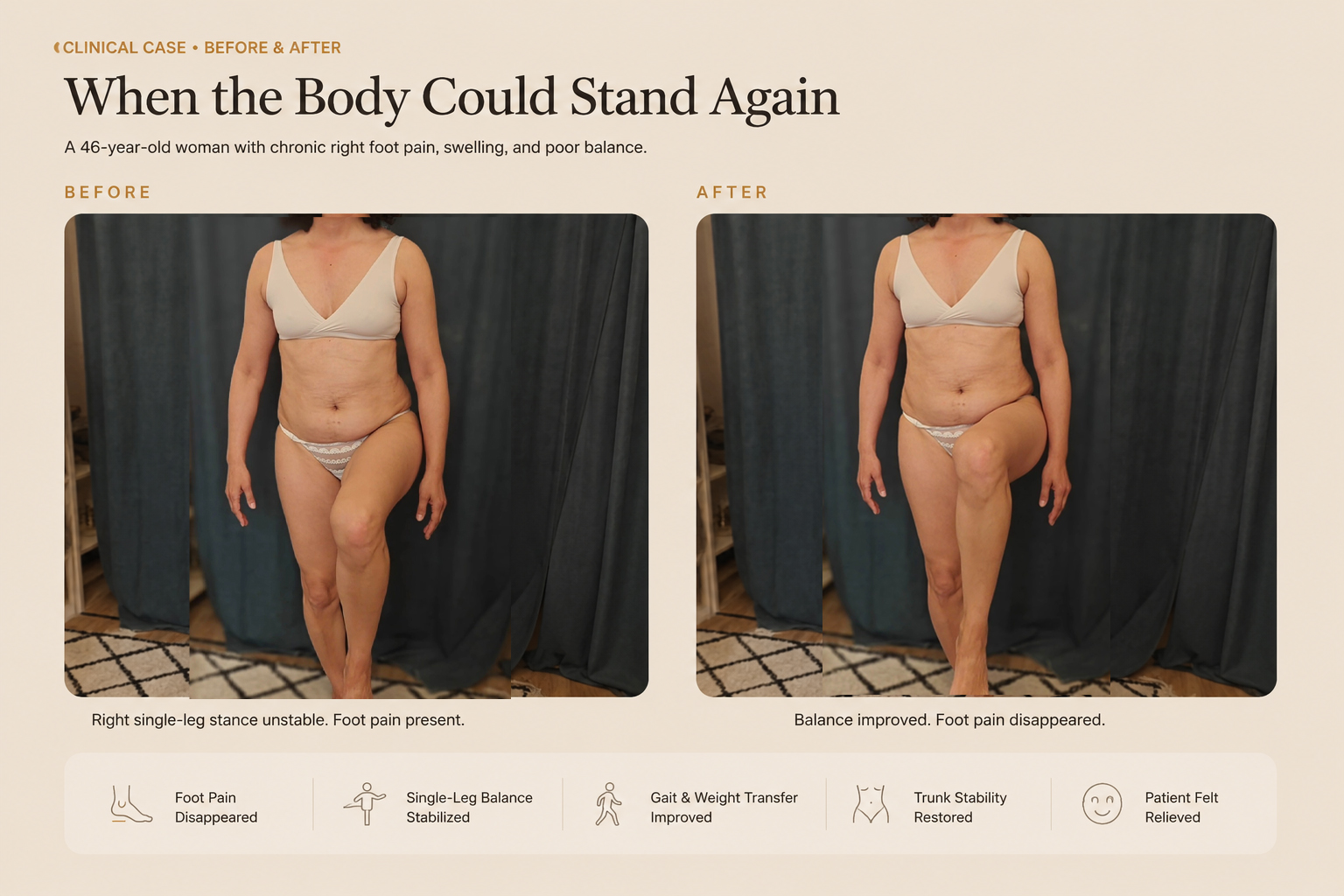
A 46-year-old woman came with three years of right lateral foot pain, swelling, difficulty walking uphill, and poor single-leg balance — where the foot appeared to be carrying a deeper instability pattern.
FUNCTIONAL RE-TEST
The Foot Was Painful — But the Body Could Not Stabilize
Her right foot had been swollen since 2023 and later became painful. Medical injections did not bring meaningful improvement, and surgery had been suggested. Yet the external appearance of the foot was almost normal, and the range of motion was preserved.
THE CLINICAL TURNING POINT
The First Question Was Not the Foot
The painful area looked structurally available. The ankle moved well, and the foot did not present an obvious local limitation.
But when she stood on one leg, the right side was unstable. This suggested that the foot was not the origin of the problem, but the final compensation point of a deeper postural strategy.
INITIAL SYSTEM STATE
The System Was Losing Its Center
Foot
Right lateral foot pain, swelling since 2023, pain when walking uphill or climbing stairs, and reduced ability to exercise.
Balance
Right single-leg standing was unstable, suggesting a failure of central support and weight transfer.
Spine
History of scoliosis and brace use during adolescence, with lateral spinal compensation and occasional low back pain.
System
Anxiety, episodic high blood pressure, stress, heavy menstruation, and ten kilograms of weight gain over one year.
PATTERN READING
The Foot Was Carrying What the Center Could Not Hold
Core block and abdominal pressure
Deep anterior chain tension
Psoas-related stabilization failure
Lumbar side-bending compensation
Right lateral foot overloading
Stress-related systemic guarding
ENTRY STRATEGY
Treatment Did Not Begin at the Foot
Release the inner cervical region to reduce upper compensatory holding.
Open the mid-abdominal pressure zone and restore core availability.
Release the central lumbar region to reduce spinal side-load.
Address the psoas and deep anterior chain stabilization pattern.
Re-test single-leg balance and foot pain after systemic release.
WHAT BECAME VISIBLE
The System Shifted Before the Foot Was Treated
CLINICAL REFLECTION
Foot Pain Is Sometimes the End of the Story — Not the Beginning
This case illustrates how chronic foot pain may reflect a deeper instability pattern rather than a local foot problem.
When the center cannot organize weight, the foot may become the final point of compensation. It grips, absorbs, and protects — until it becomes painful.
CONNECTED CLINICAL MAP