Smoking Was Not the Problem
It was the system that could not rest.
A 74-year-old artist came with concerns about cholesterol and the wish to stop smoking. But beneath the smoking habit, her body revealed a deeper pattern: shallow breathing, cervical tension, upper chest restriction, fatigue, red eyes, and a nervous system that had been holding itself up for years.
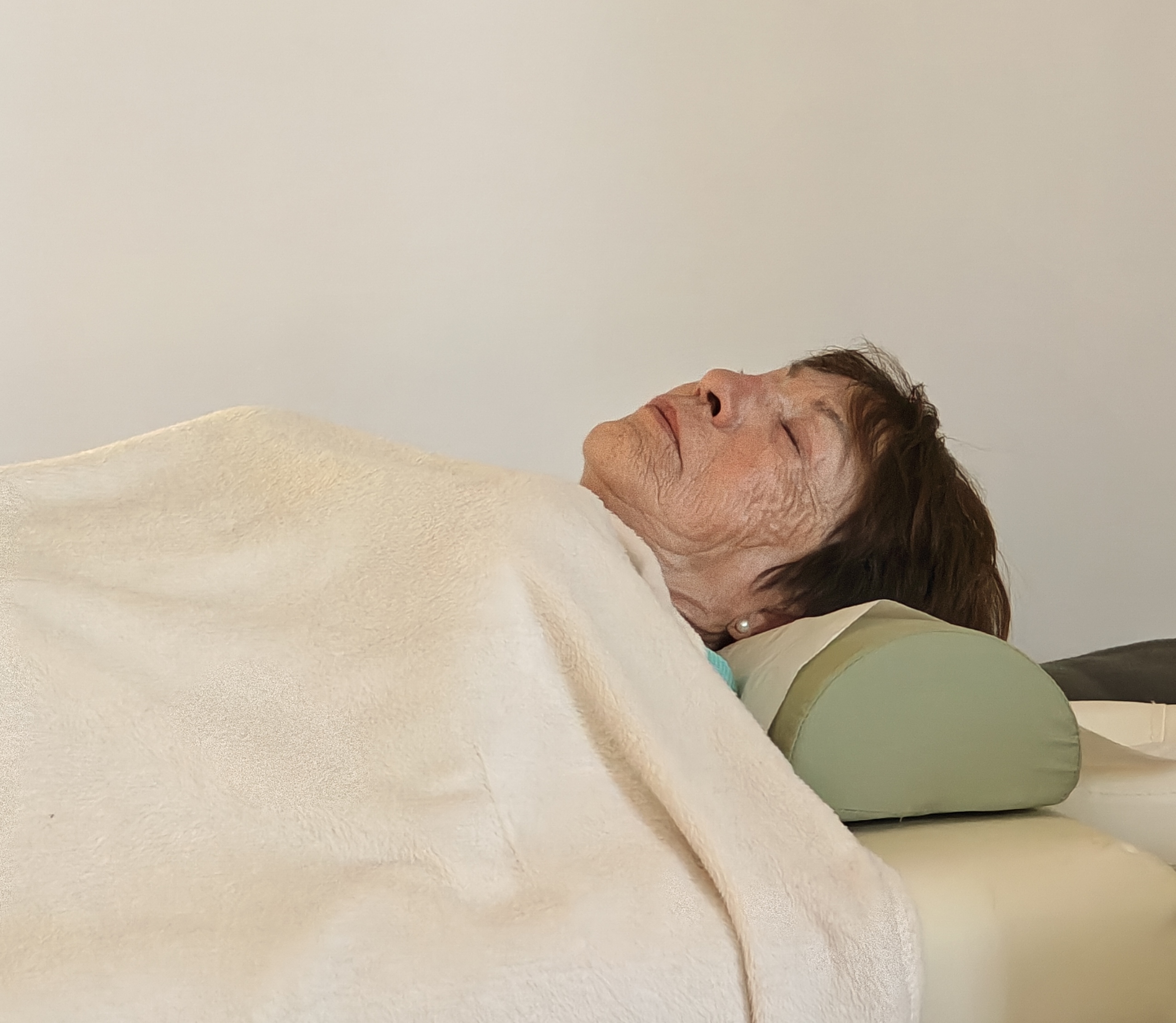
After the session, her breathing softened, her face relaxed, and a quiet smile returned.
“The goal was not to force the body to stop smoking. The goal was to help the body no longer need smoking as a regulator.”
A Body That Had Been Holding Itself Up
She was 74 years old, an artist, sensitive and expressive. She wished to stop smoking and was concerned about cholesterol. But when observing her body, the smoking habit did not appear as an isolated issue.
Her breathing was shallow and audible. Her neck was tense. She woke around 3 a.m., had a tendency toward constipation, felt tired, and showed redness in the eyes. She also had an old history of right facial paralysis from 2001, with remaining asymmetry around the eye and mouth.
Clinical signs observed
- Shallow and loud breathing
- Cervical and thoracic inlet tension
- Waking around 3 a.m.
- Redness in the eyes
- Fatigue and difficulty settling
- Old facial paralysis with residual facial tension
- Constipation tendency and lumbosacral discomfort
Smoking as an Artificial Regulator
In some long-term smokers, smoking is not only a habit. It may also become a way for the nervous system to regulate tension, breathing rhythm, emotional pressure, and internal restlessness.
This does not mean smoking is healthy. It means that before asking the body to stop, we must understand what function smoking has been serving.
In her case, the deeper pattern appeared to be an Upper Exit Block associated with diaphragmatic suspension and sympathetic overactivation. Her body was not simply addicted. It was unable to fully descend into rest.
Helping the System Descend
The treatment did not begin by fighting the smoking habit. It began by helping the body feel safe enough to release its upper tension.
The focus was placed on the subclavicular region, anterior scalene area, thoracic inlet, upper abdominal midline, and the sensation of diaphragmatic descent.
When the Breath Became Quiet
During the session, her breathing gradually descended. The sound of breathing became softer. Her facial expression became more peaceful, and the redness in her eyes visibly decreased.
This type of change is not only local. It reflects a shift in the whole regulatory state of the body. The person is no longer held upward by tension. The system begins to settle.
Shallow, loud breathing
Deeper, quieter breathing
Red eyes and facial tension
Softer expression and calmer gaze
Respecting the Rhythm of the Body
Smoking cessation should not always be approached as a battle of willpower. For some people, especially older patients with long-term nervous system tension, stopping too abruptly may remove a regulator before the body has found another way to settle.
In this case, the recommendation was to respect the rhythm of the body: not to force, not to punish, but to gently help the system discover another way to regulate itself.
Healing does not always begin with force. Sometimes it begins with helping the body feel safe enough to let go.
From Symptom Control to System Regulation
Fasciapuncture® does not aim to fight the symptom directly. It observes how the body organizes tension, how breathing is held, how the nervous system protects itself, and how a person may have adapted over many years.
In this perspective, the question is not only: “How can we stop smoking?”
The deeper question is: “Can the body feel safe enough that it no longer needs smoking to regulate itself?”
Connected Pages
Explore Fasciapuncture® Clinical Reasoning
This case belongs to the Fasciapuncture® Clinical Evidence System, where symptoms are understood through patterns, regulation, breathing, fascia, and the body’s capacity to restore balance.
Explore Conditions Explore Patterns